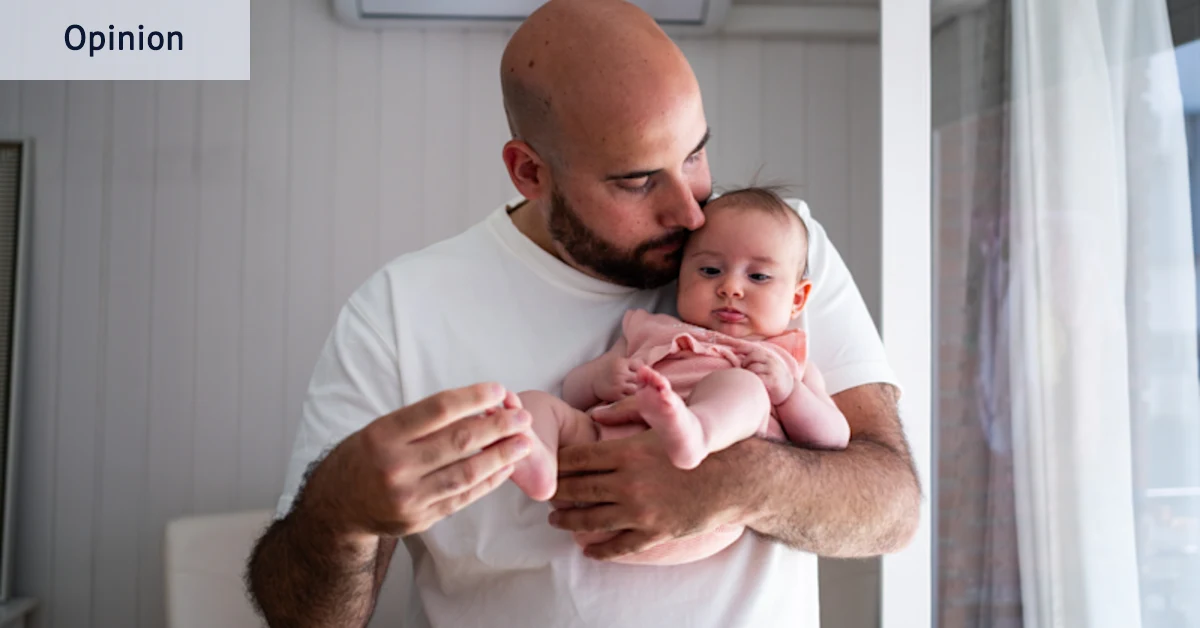
On the whole, men I’ve spoken to – like women – want children. But a host of issues, from housing to mental health, is getting in the way
“W
hy aren’t women having babies?” It’s the question on everyone’s lips as the fertility rate plummets to a record low in England, Scotland and Wales. A range of answers are always trotted out, from the entirely reasonable (childcare and housing costs; the motherhood career penalty) to the ludicrous (being so dim about our own fertility that we wake up one day realising we’ve left it too late). Yet perhaps it’s time we ask not only “why aren’t women having babies?”, but also “why aren’t men?”
Men are largely invisible in the birthrate debate. It’s ironic that amid all the pontificating and the policy ideas for encouraging more women to have babies – a conversation often being had by men – the other half of humanity is strikingly underexamined. Part of the problem is an absence of data: like many European countries, we don’t really have any on male fertility. Without data, we only have half the picture.
So what do we know? Well, we know what is driving the birthrate crisis is not really people having fewer children, but far fewer people becoming parents at all. As the demographer Stephen J Shaw recently wrote, childlessness is on the rise despite the fact that most people still say that they want children. He highlighted how unplanned childlessness – or involuntary infertility – could often be down to simply not being able to find the right partner. This makes sense in light of what is being termed a “relationship recession” or a “mating gap”. People are simply not coupling up like they used to.