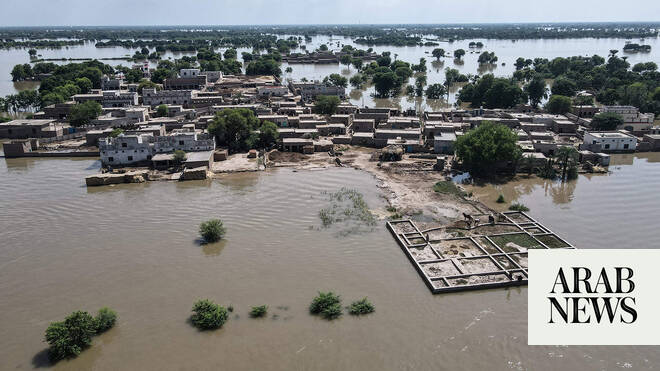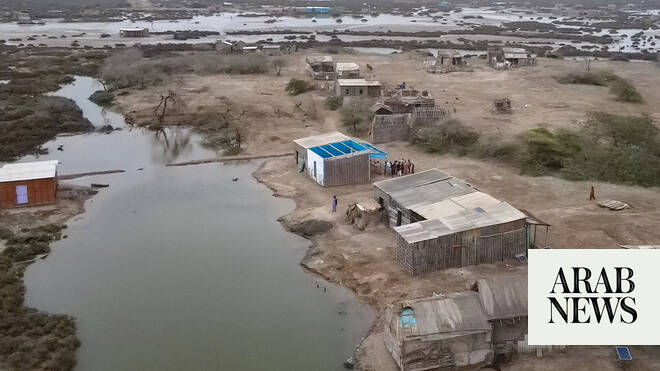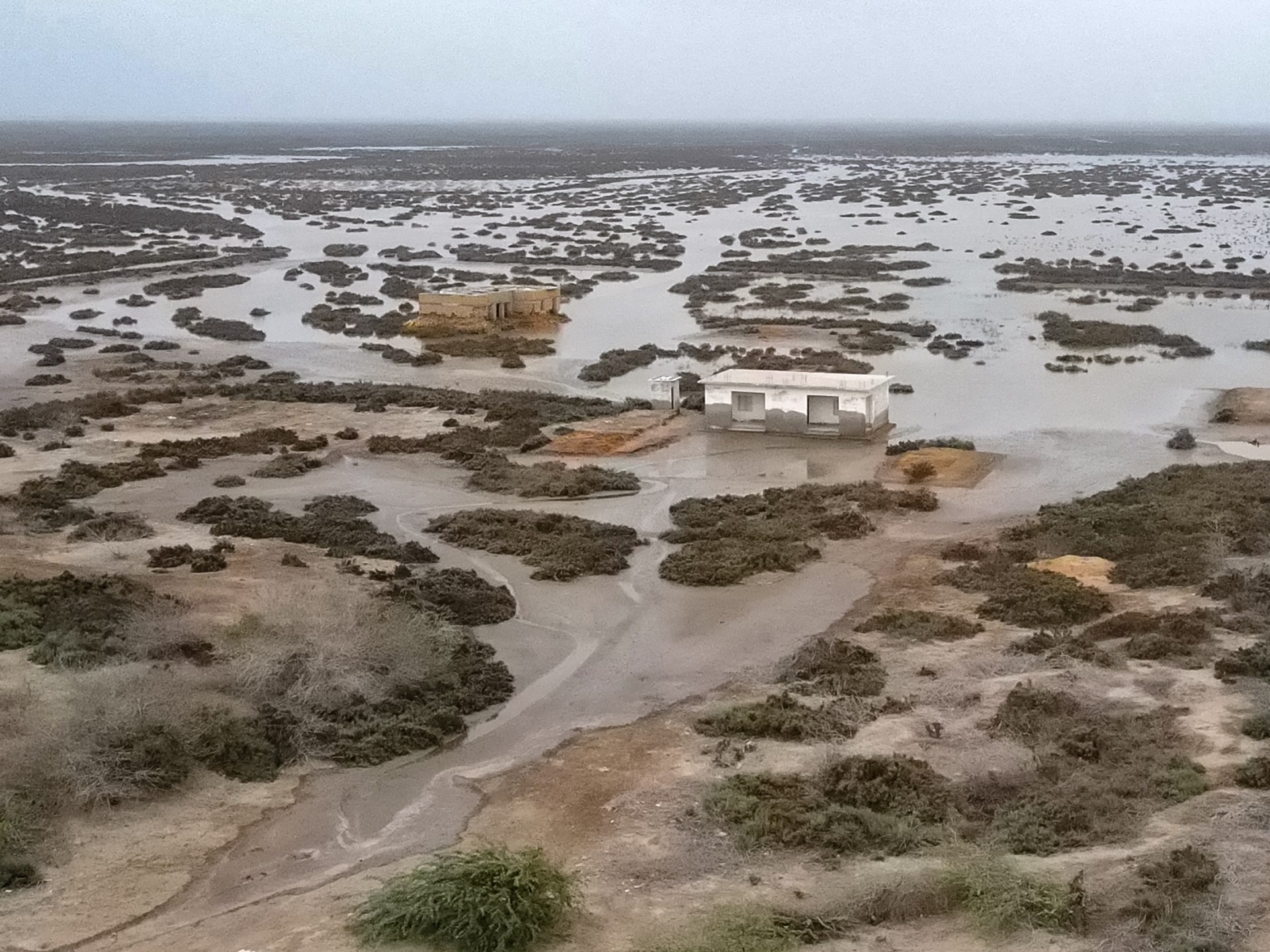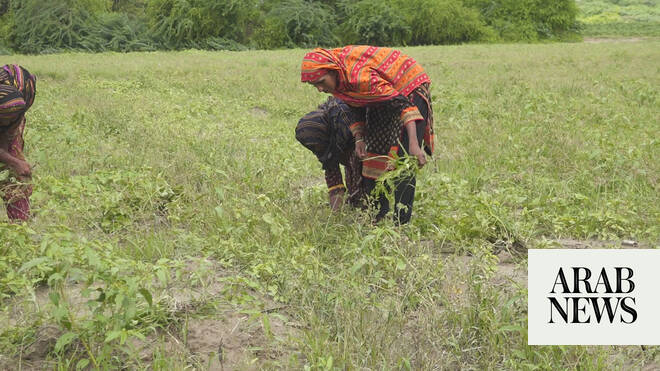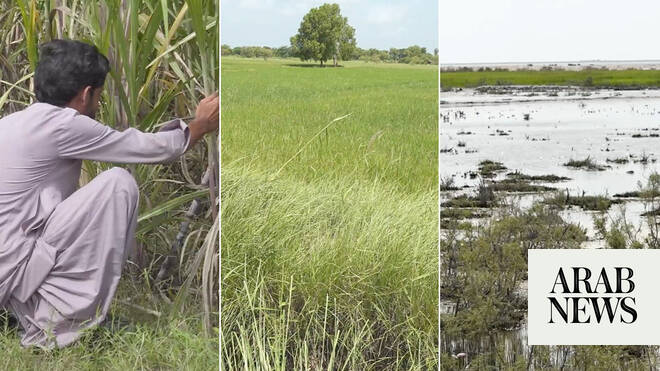
BADIN, Sindh: Gul Muhammad Mandhro has watched three-quarters of his farmland in coastal Badin, southern Pakistan, disappear to the Arabian Sea over the past two decades, forcing a shift from sugarcane to salt-tolerant staples such as rice and wheat.
Once known as Pakistan’s “sugar state” for its cane fields and cluster of mills, Badin district is now at the forefront of a climate-driven crisis. Sea intrusion and shrinking freshwater flows from the Indus River have left soils too saline for sugarcane, accelerating a decline that farmers say is reshaping rural livelihoods and output along the coast.
“This area was very fertile, but it has been badly affected because of the sea and cyclones,” the 71-year-old farmer, who once worked as a schoolteacher, told Arab News.
“I owned nearly 200 acres of agricultural land which has now shrunk to 50 acres,” he added, saying he now plants more climate-resilient rice and wheat on what remains of his land.
According to the Sindh Chamber of Agriculture (SCA), Badin and neighboring Thatta district have lost nearly two million hectares (about 5 million acres) of farmland to sea intrusion over the past three decades.