A supercharged vaccine that remains in the lymph nodes for weeks is likelier to generate more antibody variations, strengthening the immune response.
A team at MIT and the Scripps Research Institute has made important progress toward vaccines that can protect against HIV, and potentially other diseases, with a single dose.
The researchers treated mice with a vaccine that combines two different adjuvants, materials that help stimulate the immune system—one incorporating a compound previously developed by Scripps professor Darrell Irvine.
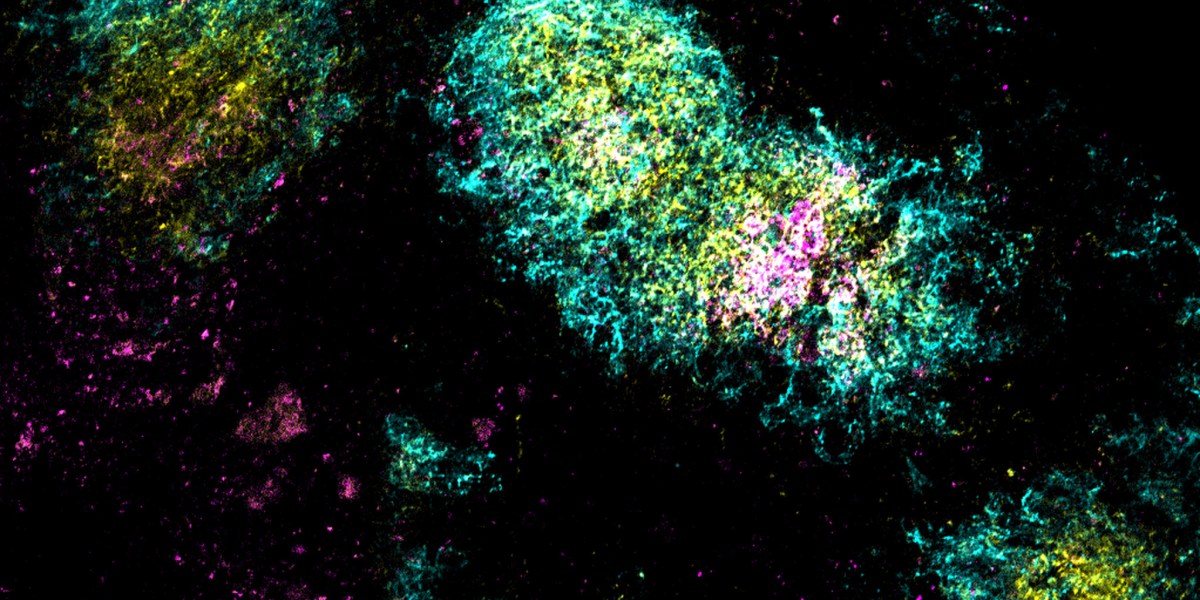
Irvine and MIT professor J. Christopher Love, the senior authors of a paper on the work, had found that the combination helped generate more robust immune responses. In the new paper, they showed that the dual-adjuvant vaccine accumulated in the lymph nodes, where white blood cells known as B cells encounter antigens and undergo rapid mutations that generate new antibodies. The vaccine’s antigens remained there for up to a month, allowing the immune system to build up a much greater number and diversity of antibodies against the HIV protein than the vaccine given alone or with one adjuvant.
“When you think about the immune system sampling all of the possible solutions, the more chances we give it to identify an effective solution, the better,” Love says.