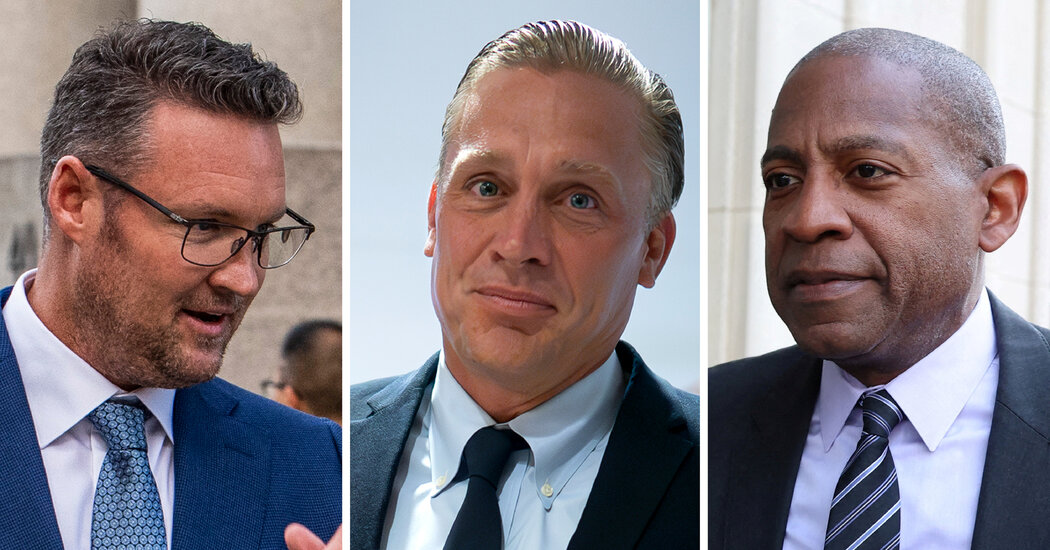
AdvertisementSKIP ADVERTISEMENTYou have a preview view of this article while we are checking your access. When we have confirmed access, the full article content will load.Devon Archer, Trevor Milton and Carlos Watson were convicted in fraud schemes totaling hundreds of millions of dollars. Now, they will not be required by the government to pay back victims.Listen · 6:51 min From left, Trevor Milton, Devon Archer and Carlos Watson all allied themselves with President Trump as they pursued pardons for white-collar fraud.Credit...Photographs by Brittainy Newman/Associated Press, J. Scott Applewhite/Associated Press and Brendan McDermid/ReutersBy Kenneth P. VogelKenneth P. Vogel has covered the clemency grants issued by President Trump and former President Biden, and their effects.Sept. 19, 2025The Securities and Exchange Commission this week dropped civil enforcement cases that could have led to penalties totaling hundreds of millions of dollars against three men who were previously granted clemency by President Trump.The cases had been brought before Mr. Trump took office this year. Each involved people who later allied themselves with him as they pursued pardons for white-collar frauds that, according to juries in criminal cases, cheated victims out of huge sums.Devon Archer, who was convicted in connection with a scheme targeting pension funds and a Native American tribal entity, was ordered to pay nearly $60 million in forfeiture and restitution.Trevor Milton was found guilty of lying about the supposed technical achievements of his electric truck maker Nikola. Prosecutors recommended that he pay more than $660 million back to shareholders.Carlos Watson, who was convicted of defrauding investors in his digital media company Ozy Media, was assessed penalties of nearly $97 million.All were spared from serving prison time and paying the overwhelming majority of their criminal restitution obligations when Mr. Trump granted pardons to Mr. Archer and Mr. Milton and commutations to Mr. Watson and Ozy.And now, the S.E.C. action means that they will not have to pay any additional civil penalties to the government (though the dismissals leave open the possibility of private civil lawsuits from victims). Nor will they face restrictions that the commission had sought on their ability to work in securities-related positions.The dismissals of the civil cases further underscore how Mr. Trump has used the levers of power to help affluent allies who have found themselves crosswise with the federal government he now leads.A White House official said that the decisions were made by the S.E.C., and referred a request for comment to the commission.An S.E.C. spokesman declined to comment on the moves. Instead, he pointed to the commission’s joint filings with the defendants’ lawyers that cast the dismissals, which need to be approved by judges, as an “exercise of its discretion” that do “not necessarily reflect the commission’s position on any other case.”Thank you for your patience while we verify access. If you are in Reader mode please exit and log into your Times account, or subscribe for all of The Times.Thank you for your patience while we verify access.Already a subscriber? Log in.Want all of The Times? Subscribe.AdvertisementSKIP ADVERTISEMENT
The S.E.C. Drops Efforts to Recoup Funds From Trump Clemency Recipients
Devon Archer, Trevor Milton and Carlos Watson were convicted in fraud schemes totaling hundreds of millions of dollars. Now, they will not be required by the government to pay back victims.
500 words~2 min read