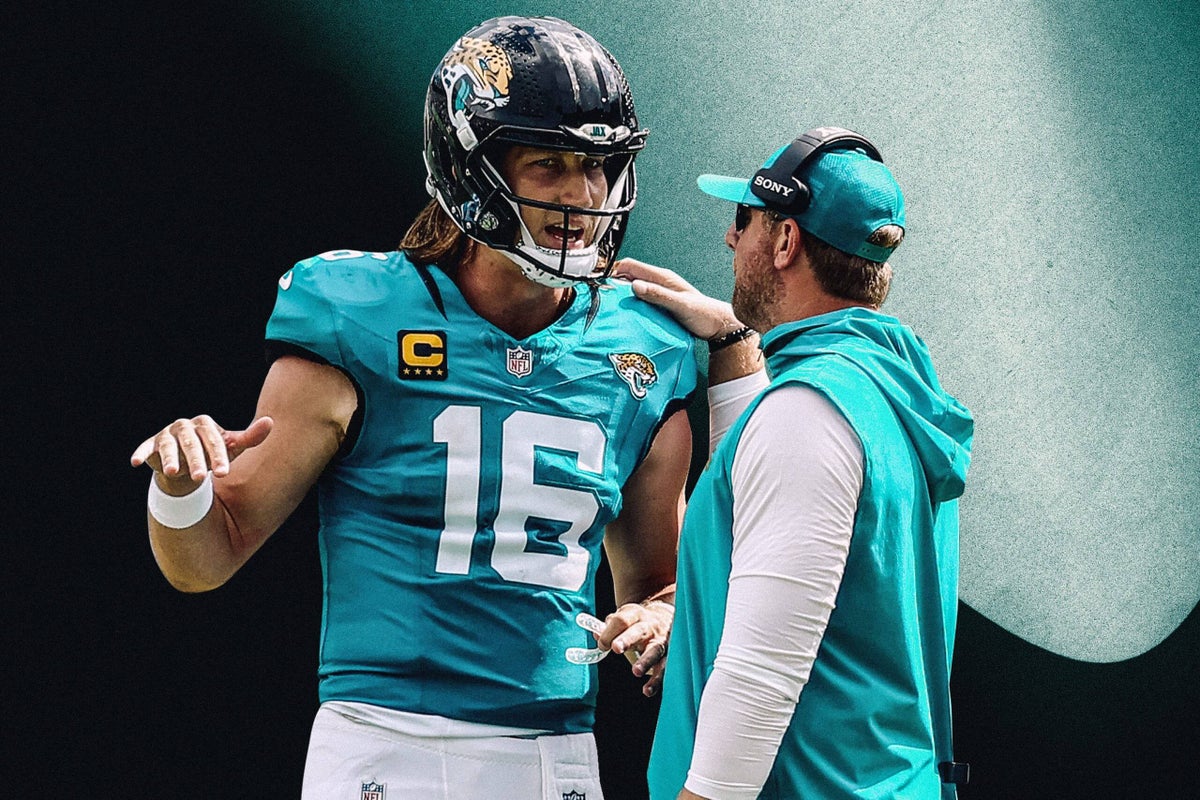
Editor’s note: This story is part of Peak, The Athletic’s desk covering leadership, personal development and performance through the lens of sports. Follow Peak here.A few months ago, a reporter asked Liam Coen, the first-year head coach of the Jacksonville Jaguars, how he planned to build culture. A typical question that usually elicits a typical response.Instead, Coen referenced a 2010 study by a pair of scientists at the University of California, Berkeley.The study was titled “Tactile communication, cooperation, and performance: an ethological study of the NBA.” In it, the two scientists from Berkeley, Michael Kraus and Dacher Keltner, closely observed the 2008-2009 NBA season, looking for a link between physical touch and team success. They concluded that the teams with players who gave each other the most high fives, hugs and pats on the back won more.Coen called it an example of “the power of touch.” He explained that he viewed touch as an essential part of team chemistry, and whether it was a fist bump or a high five, he thought touch could bring people together.For example, he discussed children and how they express themselves through physical gestures. That, he said, was the open and celebratory environment he wanted to create in his first year.“There’s a whole study about it that I thought was interesting,” Coen said. “Because for us to actually be connected, we’ve got to be able to high-five and celebrate and have a good time together. That’s what we’re trying to do.”It could be easy to mock an NFL coach for prioritizing hugs and high fives, but as it turns out, the study’s findings are a popular — and sometimes debated — topic inside professional sports.“I’ve heard about it everywhere I’ve been, every organization,” said Joe Boylan, a longtime NBA assistant coach. “There’s always somebody who brings it up and references it.”Like Coen, the researchers behind the study believe that touch matters. But why? Or how much? And does it align with the lived experience of players and coaches?As graduate students at Berkeley, Kraus and Keltner learned about touch in one of their lab classes. The idea that touch is a critical part of how we communicate interested Kraus.At the time, Kraus, a doctoral student in Berkeley’s social psychology program, was playing a lot of pickup basketball. He began to think about the guys he had played with and what had worked as a team.“If you’re playing well in general and you like playing with each other, there’s just a shorthand to communicating that involves touch,” he said.That sparked an idea for a study. He and Keltner began making phone calls to the NBA league office, hoping to speak with anyone who could give them approval to analyze players’ and coaches’ behaviors involving touch. They finally reached somebody in the archives who gave the go-ahead to record games.
What is the ‘power of touch?’ An NFL head coach believes it can help his team win
A study concluded that teams that gave each other the most high-fives, hugs and pats won more. The finding is a topic of debate in sports.
1,284 words~6 min read