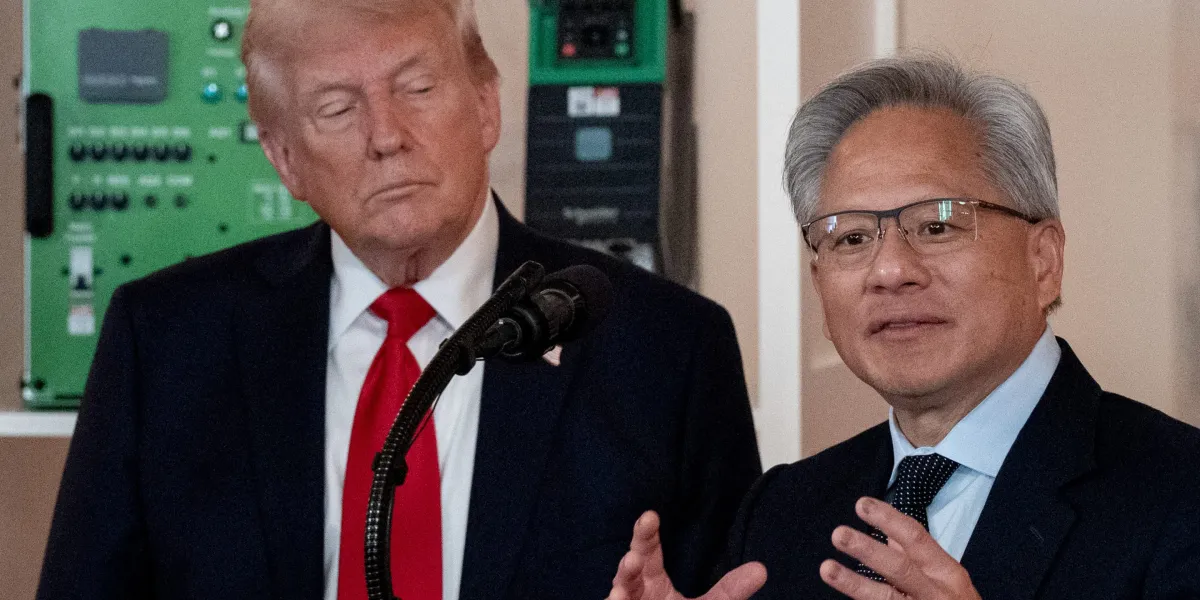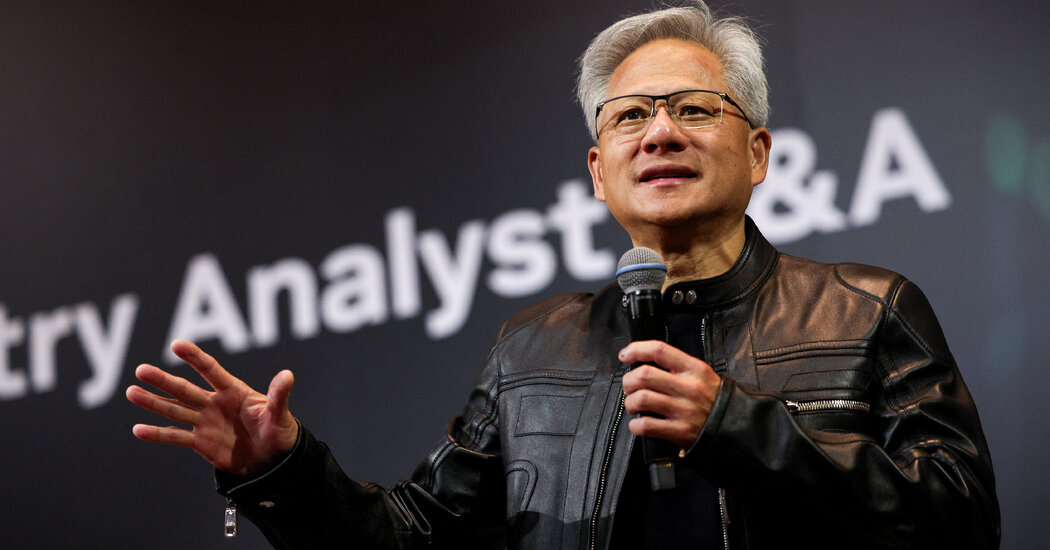
AdvertisementSKIP ADVERTISEMENTYou have a preview view of this article while we are checking your access. When we have confirmed access, the full article content will load.The deal between the chipmakers, whose fortunes have diverged sharply, includes plans to collaborate on technology to power artificial intelligence.Listen · 7:26 min Jensen Huang, the chief executive of Nvidia, has become a technology industry superstar. He joined President Trump on a state visit to Britain this week.Credit...I-Hwa Cheng/Agence France-Presse — Getty ImagesSept. 18, 2025Nvidia, the world’s dominant maker of artificial intelligence chips, said on Thursday that it would invest $5 billion in its struggling rival, Intel, in a deal that illustrates how booming demand for A.I. has reshaped the global technology industry.The deal is a lifeline for Intel and highlights a reversal of fortune between the two Silicon Valley companies. Once an industry leader, Intel has struggled to keep up with technology shifts to mobile devices and A.I. Last month, the Trump administration agreed to buy a roughly 10 percent stake in the company to bolster its shaky financial position.Nvidia, by contrast, has become geopolitically significant and the world’s most valuable public company, producing the key chips needed for developing A.I. Jensen Huang, the company’s chief executive, is an industry superstar and joined President Trump in Britain this week for a state dinner at Windsor Castle.But as companies like Microsoft and Oracle pour hundreds of billions of dollars into A.I. data centers, Nvidia and Intel set aside their longstanding rivalry to make artificial intelligence chips that allow customers to tap into both companies’ engineering expertise and software systems.News of the deal sent Intel’s shares soaring more than 25 percent to $31.79 on Thursday, while Nvidia’s stock rose about 3 percent. The value of the U.S. government’s stake in Intel, which it purchased for $20.47 a share late last month, also immediately increased.The partnership between the two American chipmakers comes as China tries to reduce its dependence on U.S. chip technology and manufacture more semiconductors domestically. On Thursday, the Chinese technology giant Huawei said it was expanding A.I. chip development, which could challenge Nvidia.Thank you for your patience while we verify access. If you are in Reader mode please exit and log into your Times account, or subscribe for all of The Times.Thank you for your patience while we verify access.Already a subscriber? Log in.Want all of The Times? Subscribe.AdvertisementSKIP ADVERTISEMENT
Nvidia to Buy $5 Billion Stake in Intel, Giving Rival a Lifeline
The deal between the chipmakers, whose fortunes have diverged sharply, includes plans to collaborate on technology to power artificial intelligence.
396 words~2 min read