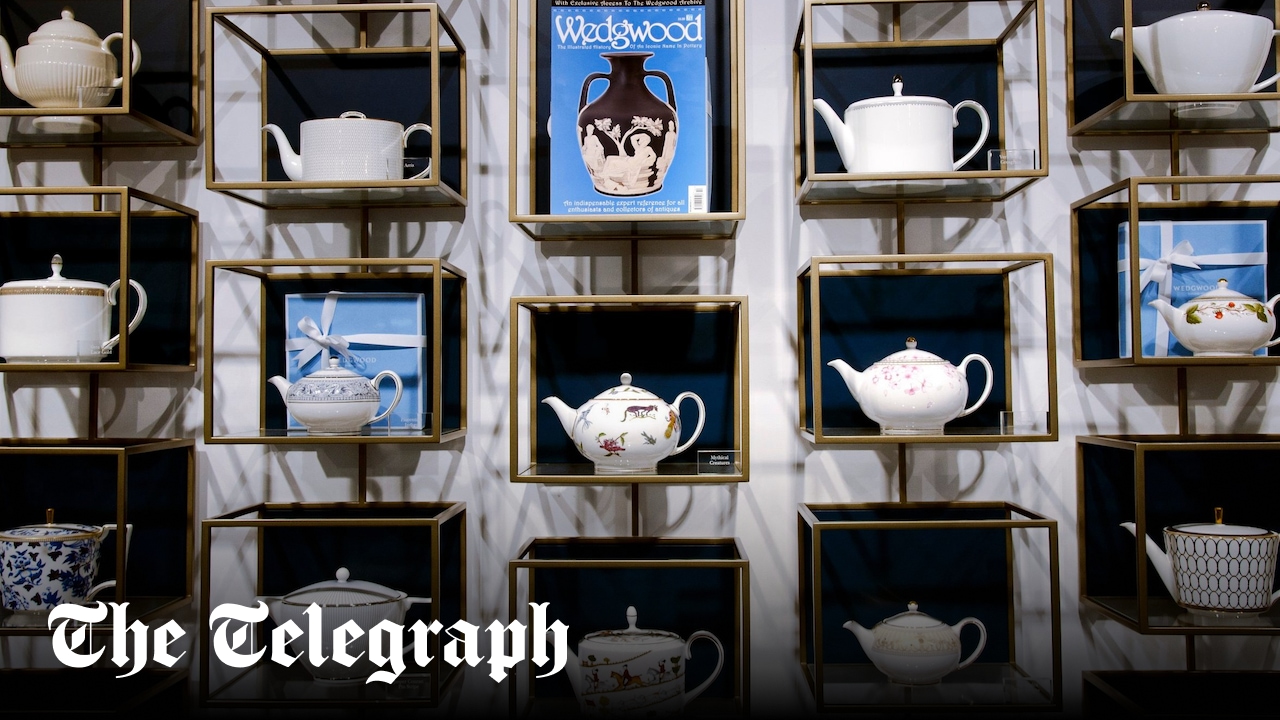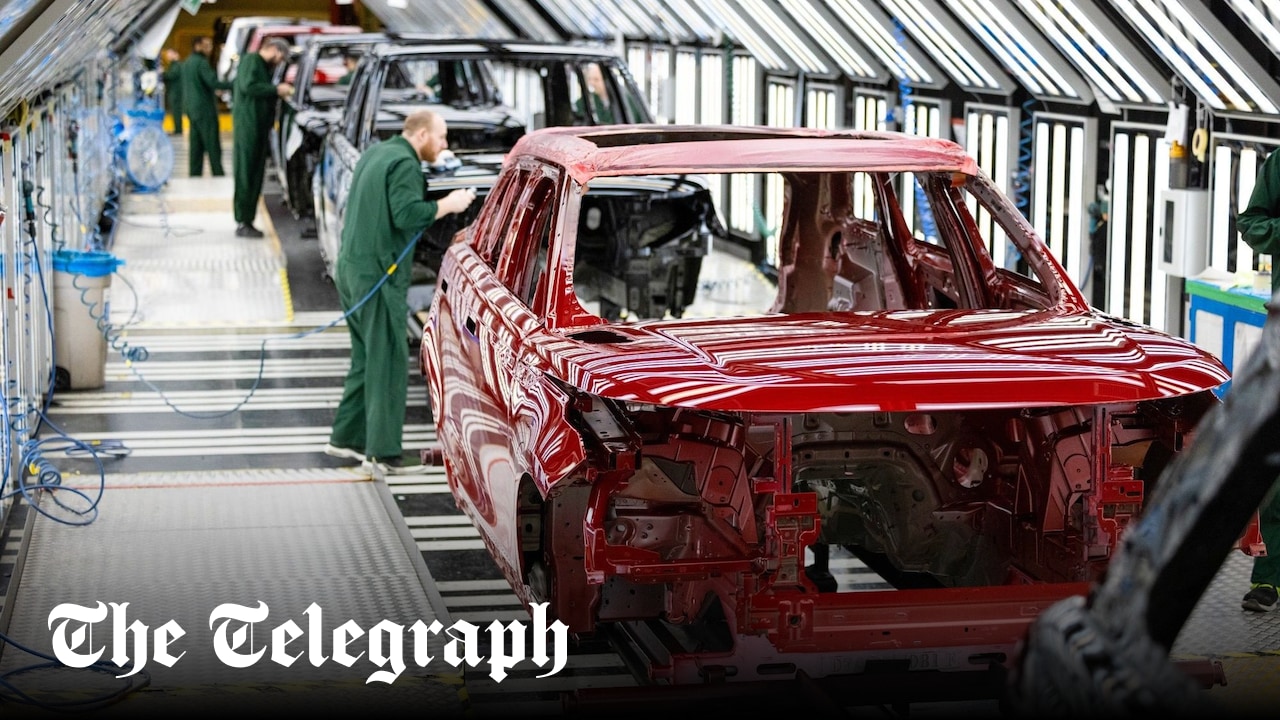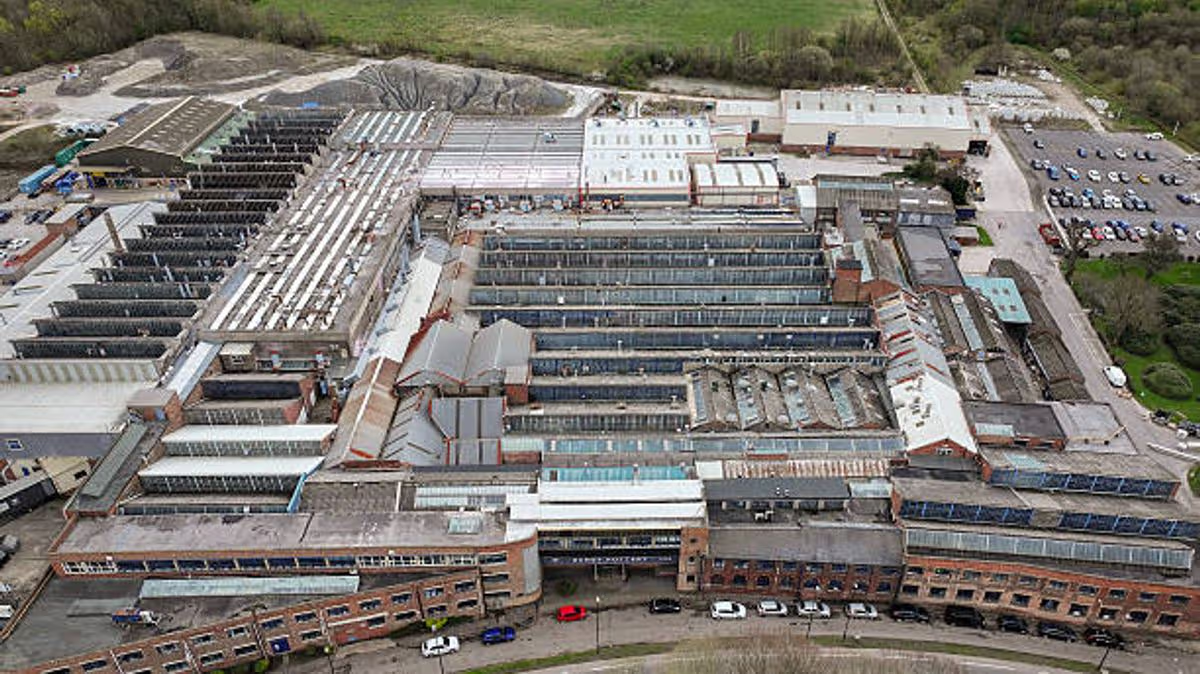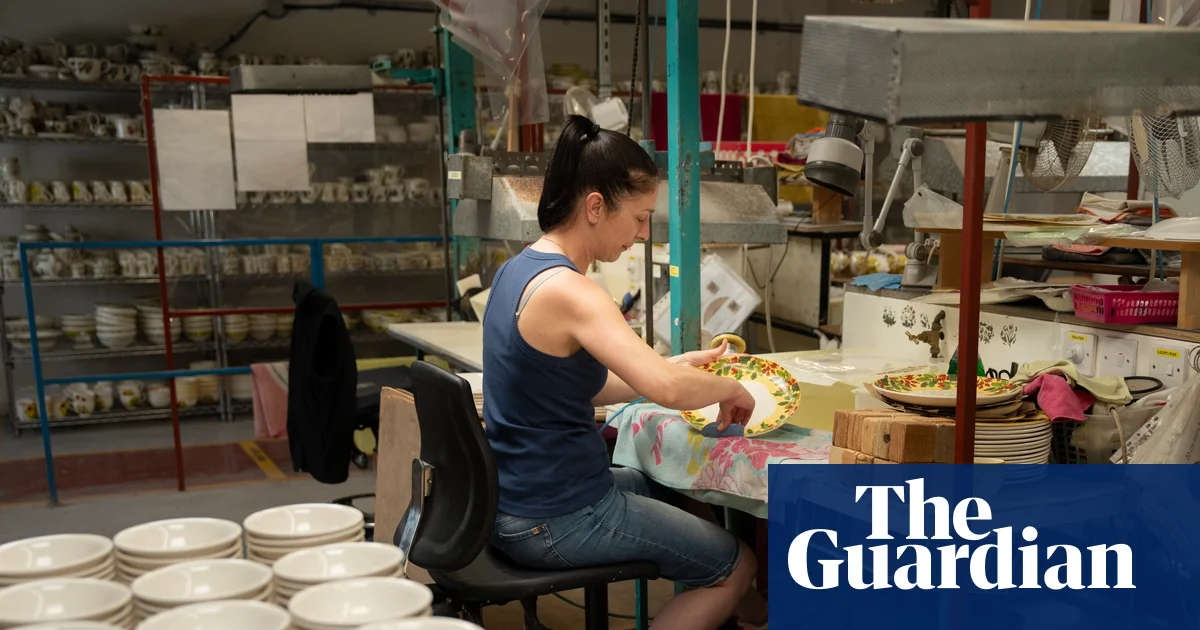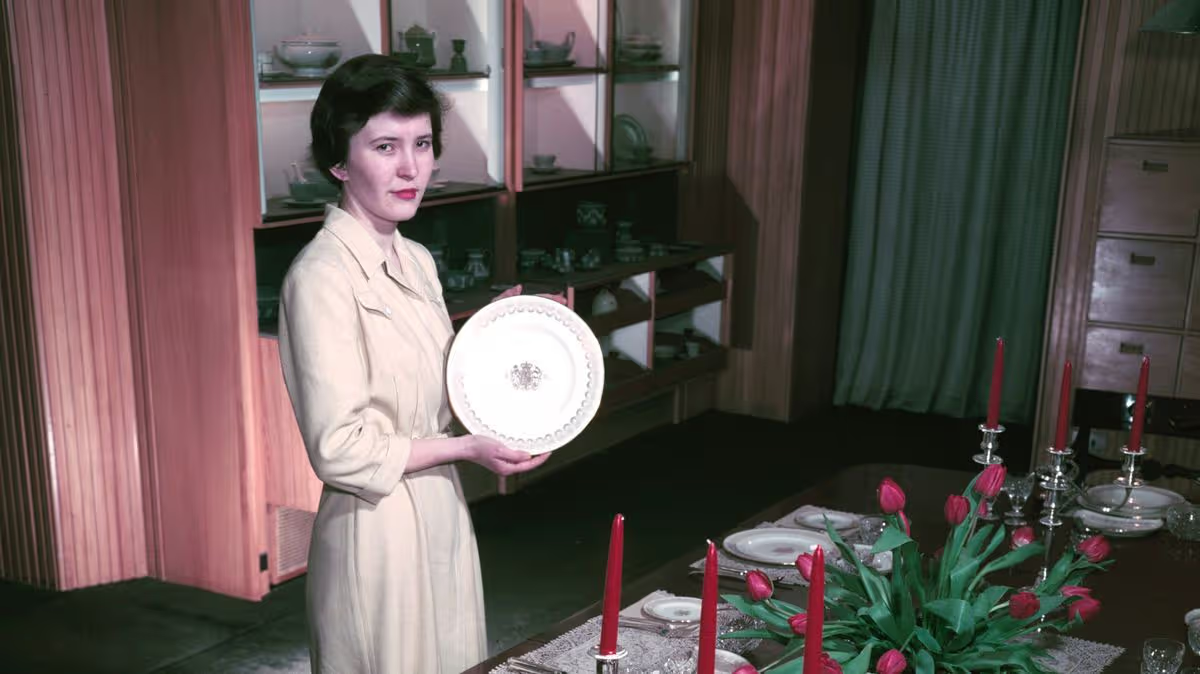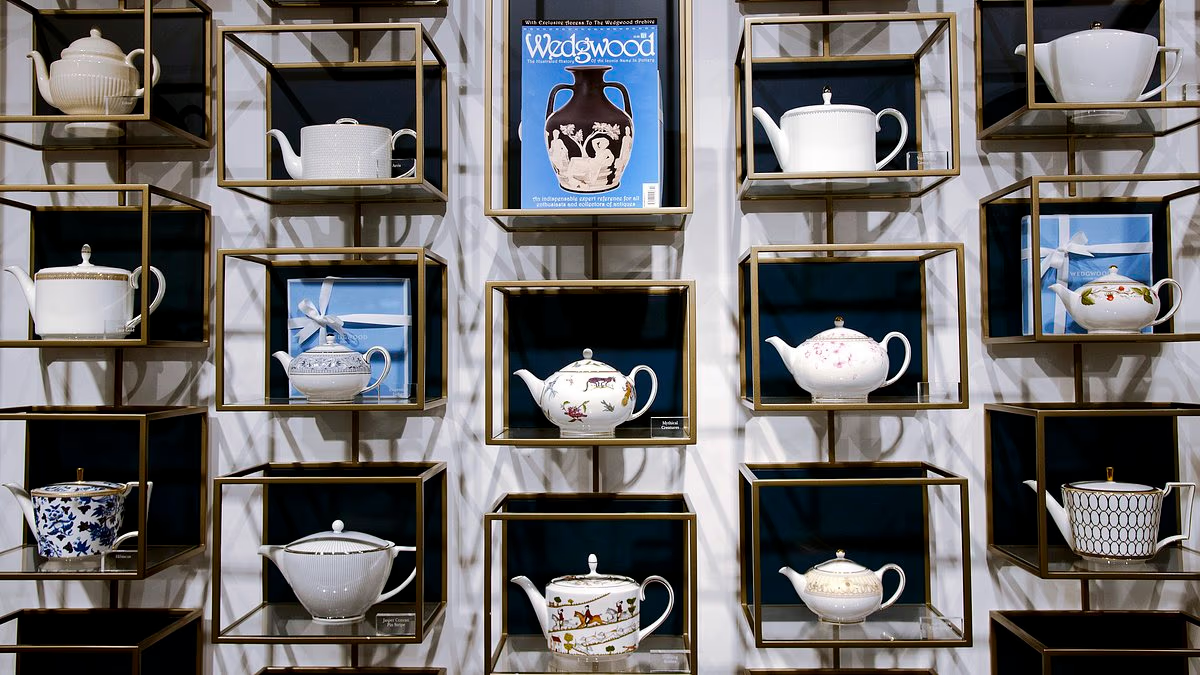
The Royal Family's fine china supplier will pause production at one of its factories after a slump in demand.Ceramics firm Wedgwood is set to halt operations at its factory in Barlaston, Staffordshire, for up to 90 days from the end of the month in a move that will see 70 workers put on temporary leave.Fiskars Group, who own the company, said the pause would start on September 29 as a 'short-term measure' in response to lower demand in some of its 'key markets'.It will also suspend factory tours offered as part of the World Of Wedgwood tourist destination, with plans to restart these in early January 2026.The factory has been producing high-end and bespoke products, including handcrafted pieces in fine bone china and its signature Jasperware, since it was opened in 1940.Wedgwood itself was founded centuries earlier by English pottery designer and manufacturer Josiah Wedgwood in 1759.Since then its handcrafted tableware pieces and figurines have been used by British monarchs and other heads of state across the world, gracing the tables of the Vatican, the Kremlin and the White House.In 1995, Wedgwood was granted a Royal Warrant from Queen Elizabeth II, having regularly supplied the Royal Household with its fine china over several years. The Royal Family's fine china supplier will pause production at one of its factories after a slump in demand. Pictured: A selection of Marie Antoinette style crockery from Wedgwood Ceramics firm Wedgwood is set to halt production at its factory (pictured) in Barlaston, Staffordshire, for up to 90 daysA spokesperson for Fiskars Group said: 'This short-term measure is being taken to address elevated inventory levels caused by lower consumer demand in some of our key markets.'They added: 'Barlaston and its community are of key importance to Fiskars Group and Wedgwood.'The firm said its skilled artisans still use techniques pioneered by Wedgwood, who was born in Burslem, Staffordshire, in 1730.It remained in the Wedgwood family until the middle of the last century, when Josiah Wedgwood V, great-great-great grandson of the founder, floated it on the stock market.In 1986, the company was bought by Waterford Crystal to form Waterford Wedgwood. In a doomed bid to maximise profits and reduce costs, Waterford Wedgwood went mass market, cutting back on the quality and range of pottery patterns that had been the company's watchword. The workforce was slashed and manufacture outsourced to cheap foreign factories.Profits collapsed and, in 2009, Waterford Wedgwood went into administration. The remnants of the business were taken over by a private equity firm, KPS Capital, and became WWRD Holdings, short for Waterford Wedgwood Royal Doulton. In May 2015, WWRD was acquired by Finnish homeware company Fiskars, who agreed to purchase 100% of its holdings. Slave medallions, 1787: In the 1780s, Josiah Wedgwood, an anti-slavery activist, produced medallions advocating its abolition, made and distributed at his own expense The Apotheosis of Homer Vase, 1786: (left) Depicts the Greek poet being summoned to heaven — an ‘apotheosis’ — because of his brilliance, as he strums his lyreThe pottery and ceramics sector has been hit hard by rising costs and energy bills in recent years, with a number of firms recently collapsing, including nearly-200 year old company Royal Stafford in February.Fiskars Group Senior Vice President Sjoerd Leeflang said that markets in China, Japan and the US has fallen drastically in recent years. Mr Leeflang said: 'There is a global instability in terms of what the demand is for our products made in England versus what we have already in the inventory.'If we were to continue production we would be producing too much stock for the various markets where we sell.'Our employees are extremely important - we will take care of them, we will pay their full salary for the rest of the period and we will welcome them back at the beginning of January.'You don't know what is happening in the world economy, I can't say for sure the economy will change, but Wedgwood has a commitment to be made in England.'We look after our colleagues in the factory so we really keep our craft alive because that is important for the future of this brand.'Trust Wedgwood, trust the owner of Wedgwood, Fiskars Group, we are here for the long term, we do this to look after a healthy future for the Wedgwood brand.' Who was Josiah Wedgwood? To say Josiah Wedgwood was a perfectionist is an understatement. Known as a potter and social reformer, he was an idealist, albeit a rather severe one. He did not stand for a moment's slacking from his workforce.He would take a group of men whom he considered, 'dilatory drunken, idle and worthless' and transform them through his strict regime into careful, obedient and hard-working machines whose dedication helped make the company such a success.Today there is hardly a household in Britain that does not have, or has not at some point had, a piece of Wedgwood - whether one of their white on pale blue Greek-style vases, a simple white china cup and saucer or just an eggcup.Perhaps drive, flair and graft ran in the family genes.Josiah was the grandfather of the naturalist Charles Darwin, and the extended family tree takes in several artists and poets, the composer Ralph Vaughan-Williams and also the politician Tony Wedgwood Benn.He started early - born in 1730 into a family of potters amid the clay landscape of Staffordshire, he was nine when his father died and he was put to work in his older brother Thomas's business learning 'the Art, Mistery, Occupation or Imployment of Throwing and Handleing'.His early career as a 'thrower' ran into difficulty when he was 12 and succumbed to a small pox epidemic which left him with a disfigured right leg.In his mid-thirties, the damaged leg had to be amputated - a bloody business to which Wedgwood submitted with his customary stoicism without the benefit of anaesthetic, and which caused colleagues to refer to him as 'Owd Woodenleg.'He struggled on, leaving the family business in his early twenties to work at two other firms where he learned the art of factory management.In 1758, he became a master potter and a year later he set up in business on his own.Wedgwood capitalised on snobbery, quickly realising that what appealed to the upper classes was quality and exclusivity, and what appealed to everyone else was to have whatever the aristocrats were eating and drinking out of, but pay cut price for it.So he gave everyone what they wanted, one range for the well-off and a mass-produced version for everyone else.In the 1760s, he was smart enough to make a cream-glazed tea service for Queen Charlotte and then extract her permission to name a range - 'Queen's Ware' - after her.Marriage to his rich cousin Sally enabled him to expand the business. They had seven children, the eldest of whom, Susannah, married the son of her father's good friend Erasmus Darwin and became the mother of Charles Darwin.Wedgwood was a liberal and had a reformer's zeal. He wanted to obliterate wastefulness, idleness, drunkenness and dirt.One of his great concerns was slavery: working alongside WilliamWilberforce, he was a key mover in the Society for the Abolition of the Slave Trade.
Royal Family's fine china supplier halts production amid demand slump
Ceramics firm Wedgwood is set to halt operations at its factory in Barlaston, Staffordshire, for up to 90 days from the end of the month in a move that will see 70 workers put on temporary leave.
1,193 words~5 min read