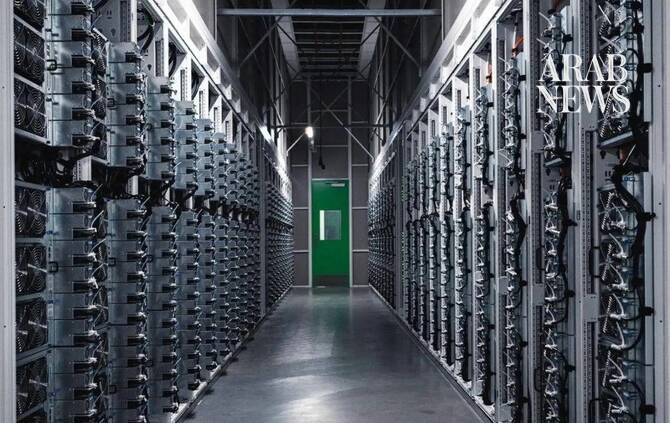
RIYADH: Saudi Arabia’s deserts are fast becoming the new frontier for hyperscale data centers, offering vast land, natural resilience, and strategic positioning that traditional global tech hubs struggle to match.
The Kingdom’s geologically stable terrain faces little risk from earthquakes or flooding, making it an ideal base for mission-critical digital infrastructure. Market revenue is projected to reach $2.07 billion in 2025 and expand to $2.83 billion by 2030, growing annually at 6.45 percent, according to Statista.
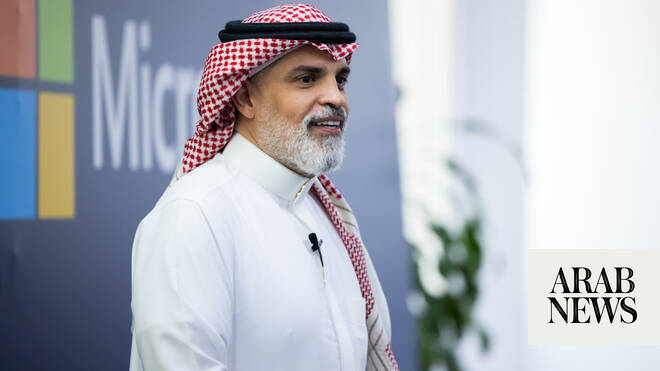
Turki Badhris, president of Microsoft Arabia, said the desert landscape provides a rare opportunity to build at scale without the limitations of legacy infrastructure.
“Unlike traditional global tech hubs, the Kingdom’s open terrain allows for purpose-built facilities with fully independent power, cooling, and networking systems. This kind of scale and flexibility is challenging to achieve in crowded global tech hubs,” Badhris said.
Fady Chalhoub, partner at PwC Middle East, noted that hubs such as Singapore and Zurich face constraints from land scarcity, high real estate costs, and strict regulations. By contrast, Saudi Arabia combines affordable land with state-backed investment in subsea and terrestrial fiber routes linking Europe, Asia, and Africa.