CNBC’s Investing in Space newsletter offers a view into the business of space exploration and privatization, delivered straight to your inbox. Sign up to receive future editions.
Last month, the number of Amazon’s internet-beaming Kuiper satellites in orbit barely hit three digits. By last week, the world’s U.S. largest retailer was snatching its first contract to supply in-flight WiFi to an airline — many of which have already contracted to employ the rival services of SpaceX’s Starlink mega-constellation.
There was always bound to be a first airline to make the jump to Amazon’s low Earth orbit satellite network and test out Project Kuiper’s pledge of fast, reliable connectivity. And JetBlue’s decision to tap the services on select aircraft starting in 2027 and improve on its Fly-fi in-flight WiFi perks still leaves Amazon with a wide gap to bridge in the catch-up with Starlink, whose airline customers include the likes of Virgin Atlantic, United Airlines and Air France.
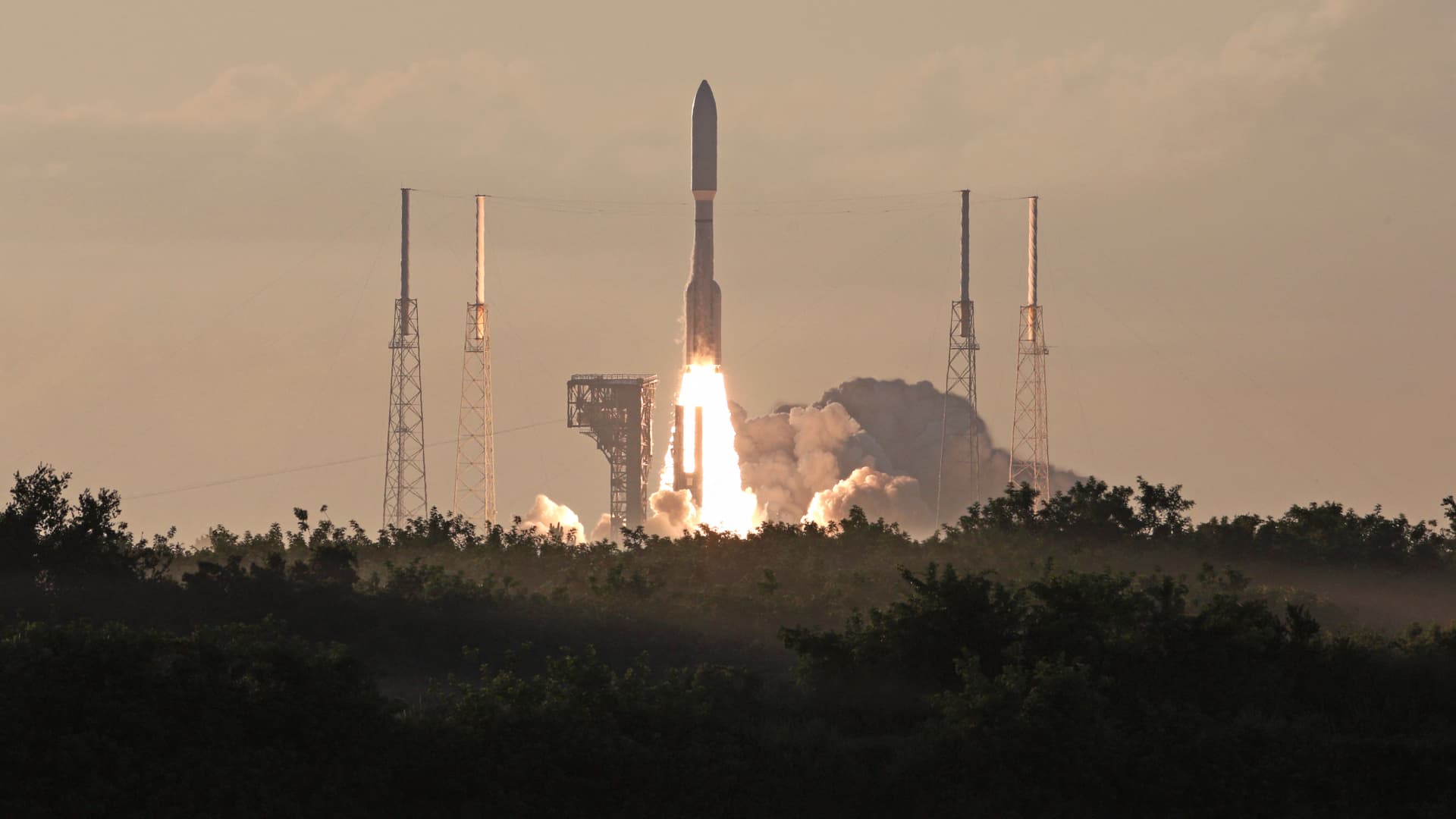
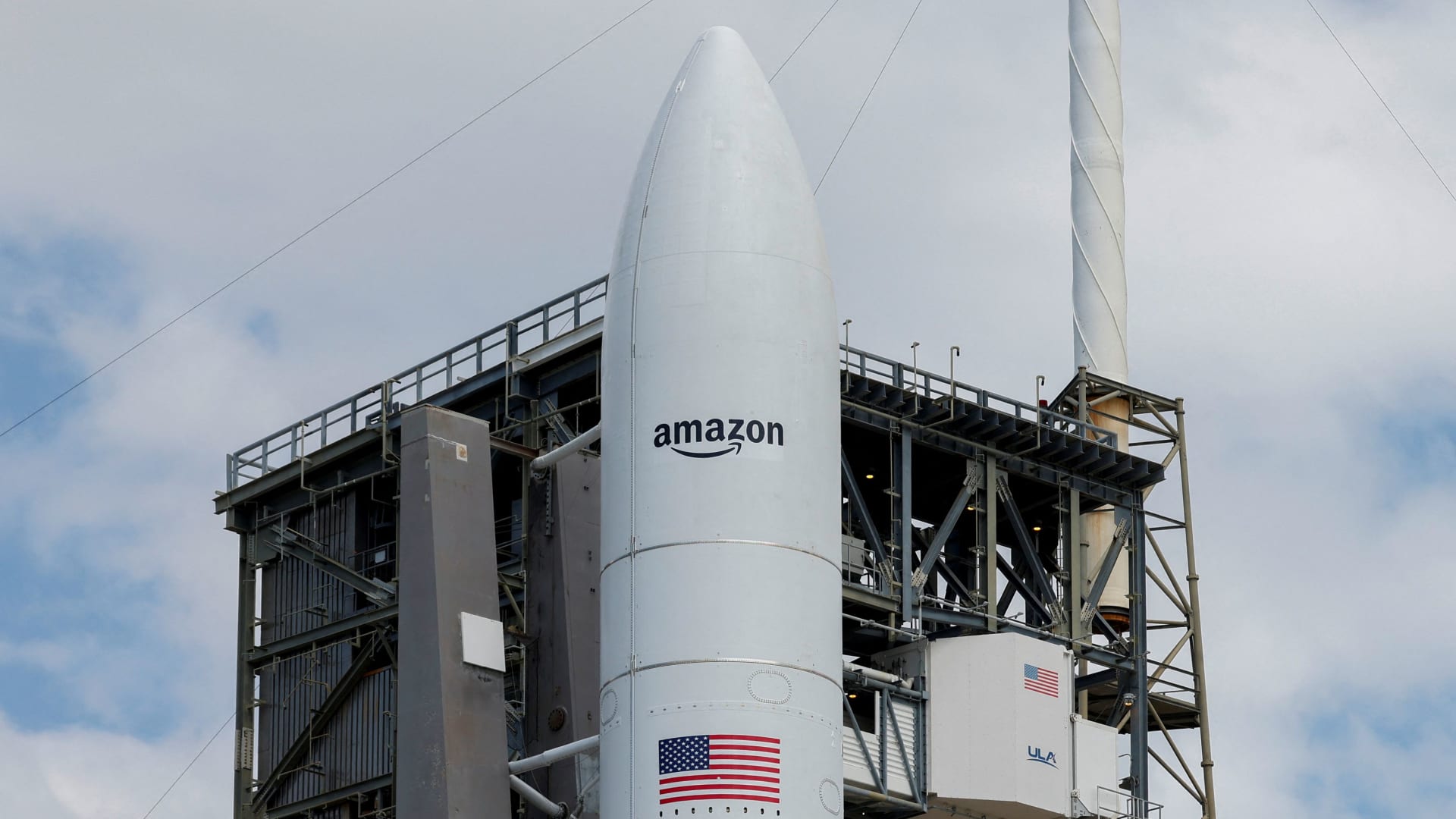
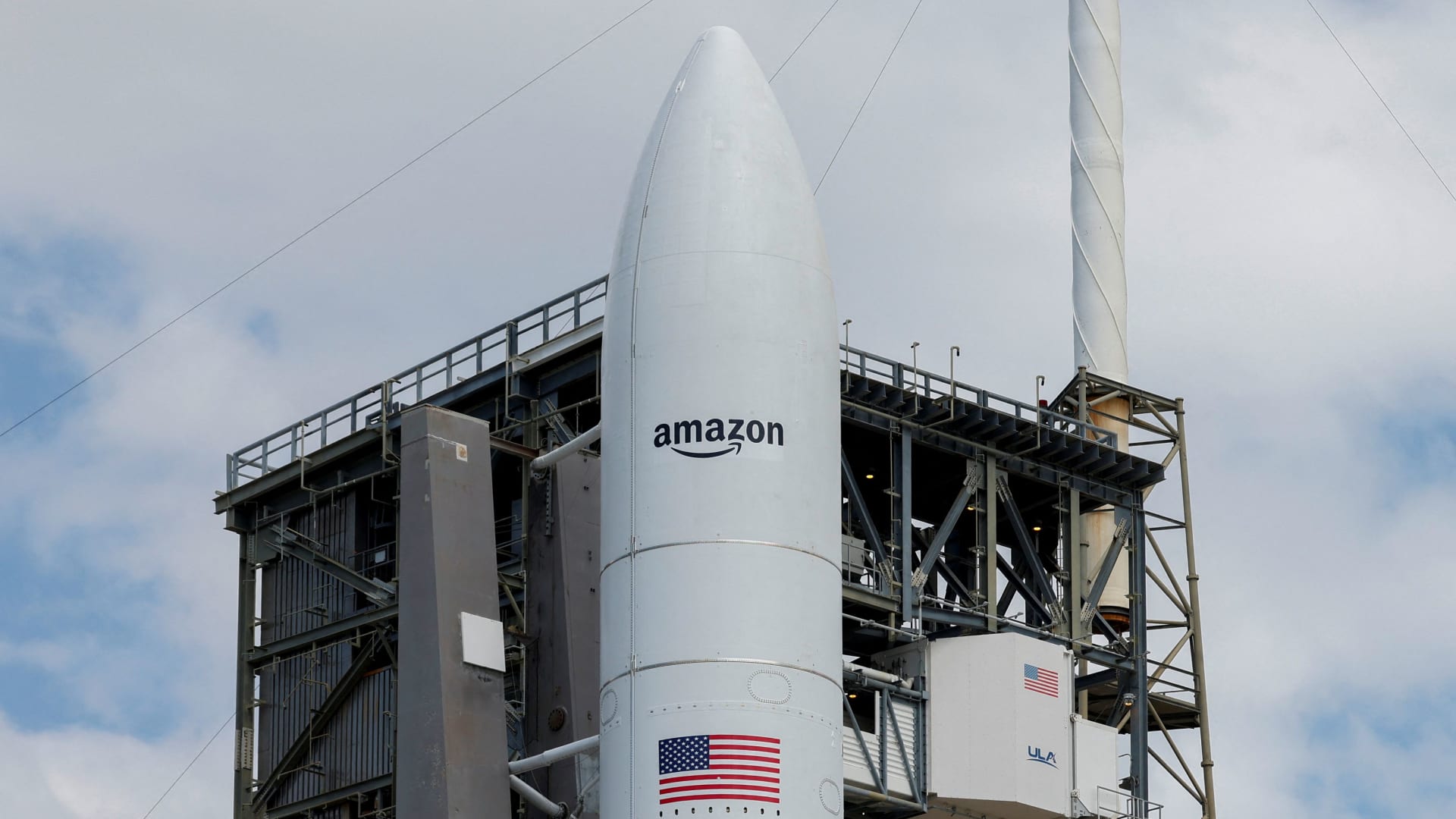
But Amazon’s fledgling triumph injects a fresh challenge in the satellite-powered internet market where SpaceX’s Starlink had increasingly emerged as a dominant player, despite some competition from Eutelsat’s OneWeb, China’s SpaceSat and Viasat. To be sure, Amazon’s Project Kuiper constellation is still in its early days, with a mere 102 satellites in orbit — a drop in the sea compared with the 1,600 units the Federal Communications Commission requires to be deployed by July 2026 and the 3,236 that Jeff Bezos’ company targets by July 2029. Kuiper’s numbers of active satellites dim even further, compared with the 8,393 satellites that Starlink had in orbit as of Sept. 8, out of 12,000 spacecraft the company has been permitted to launch by the FCC under an initial approval.