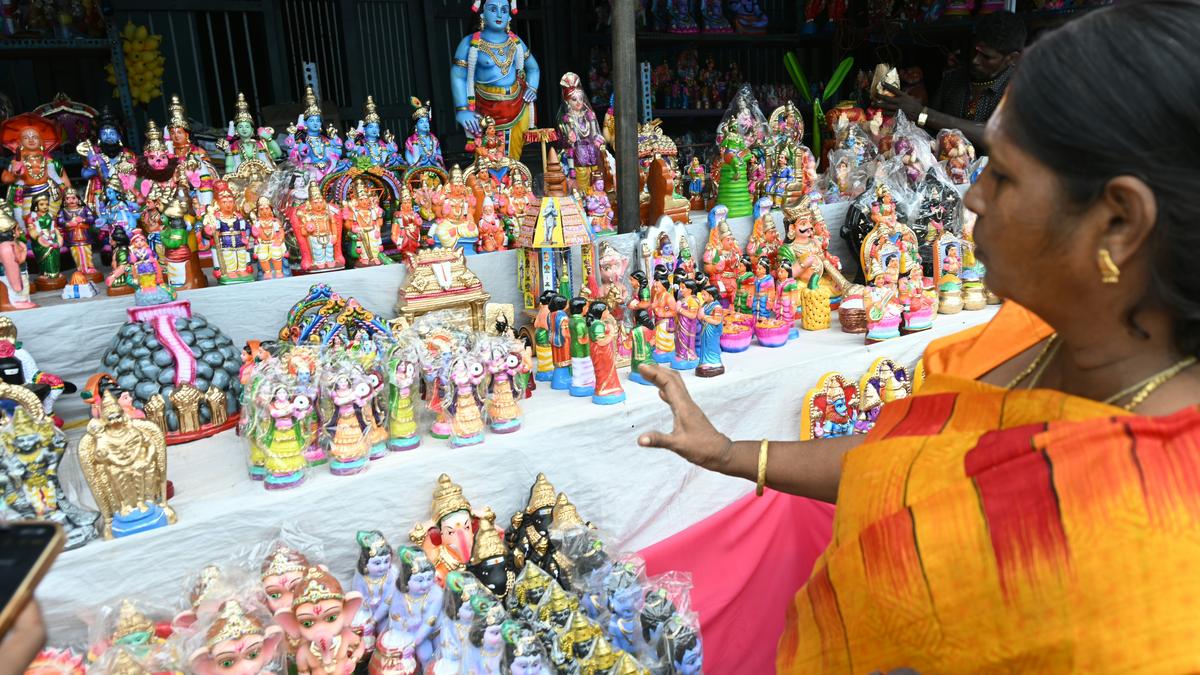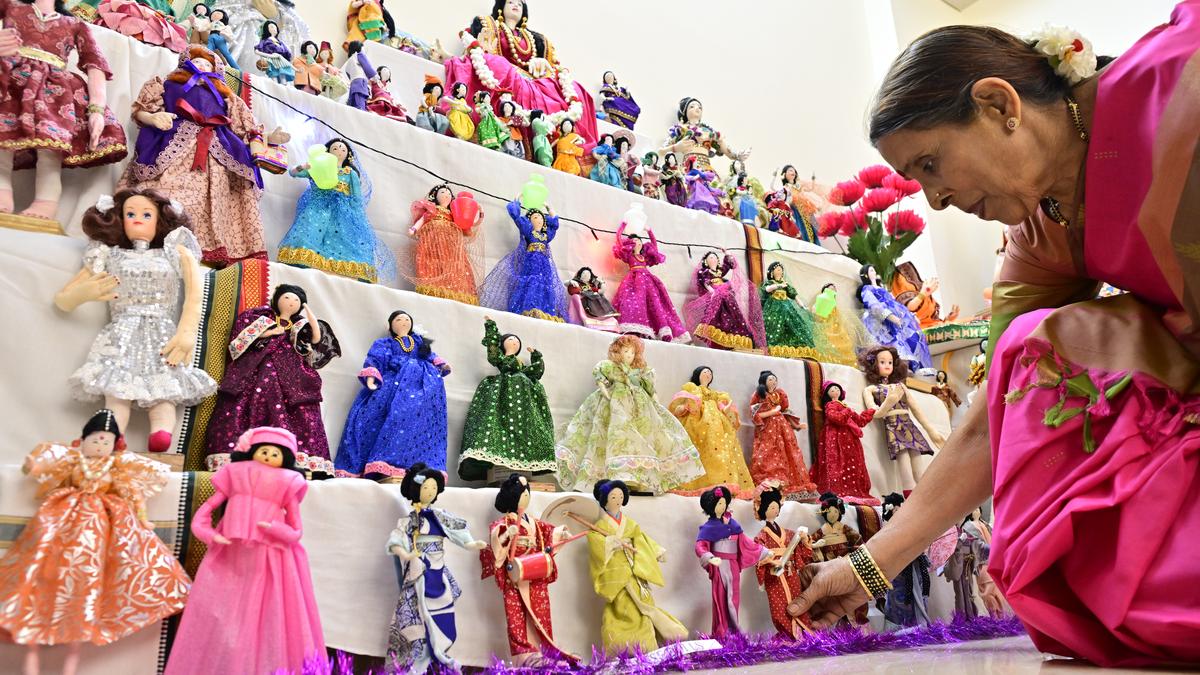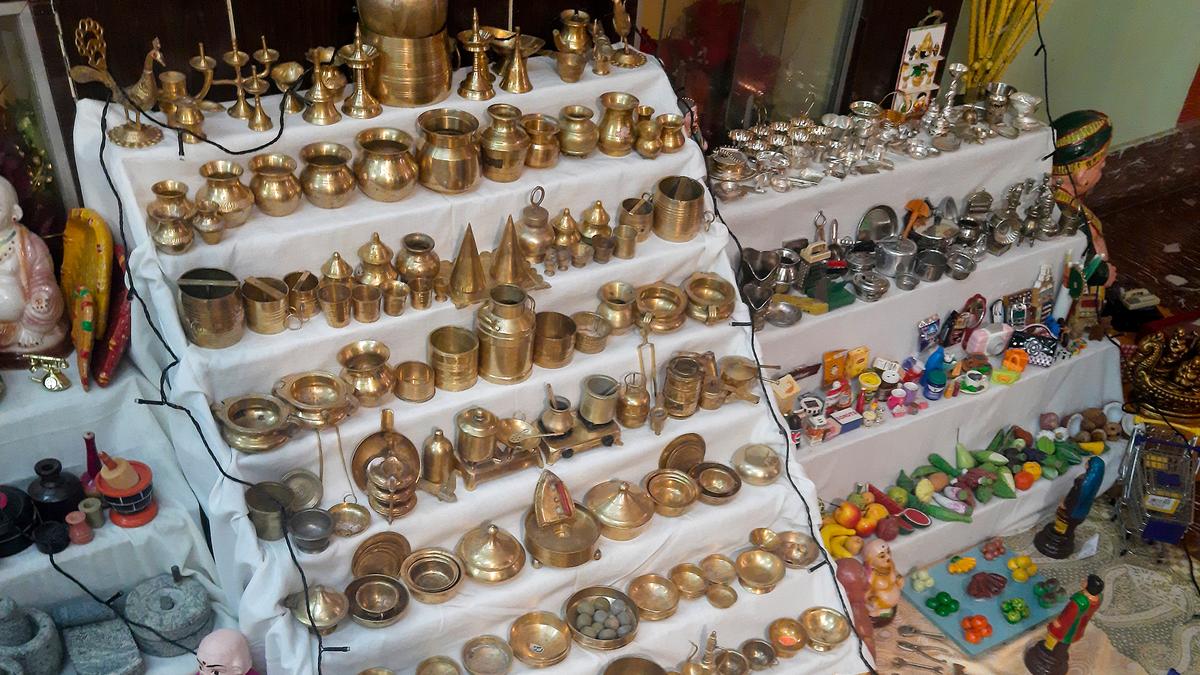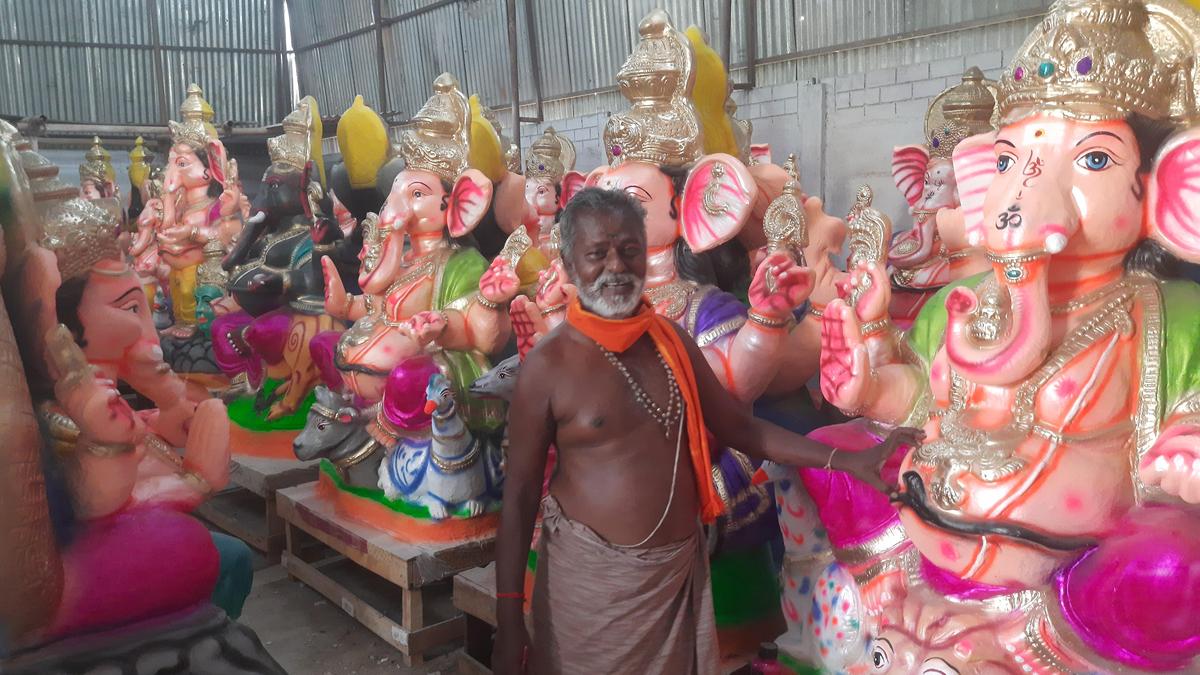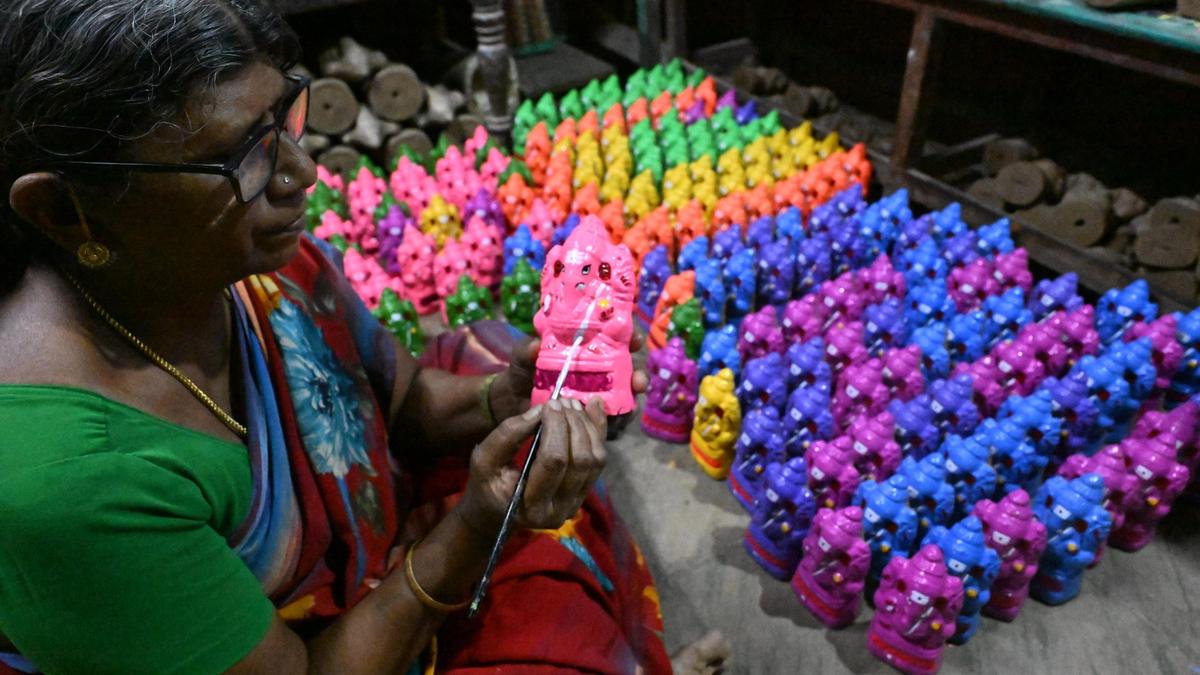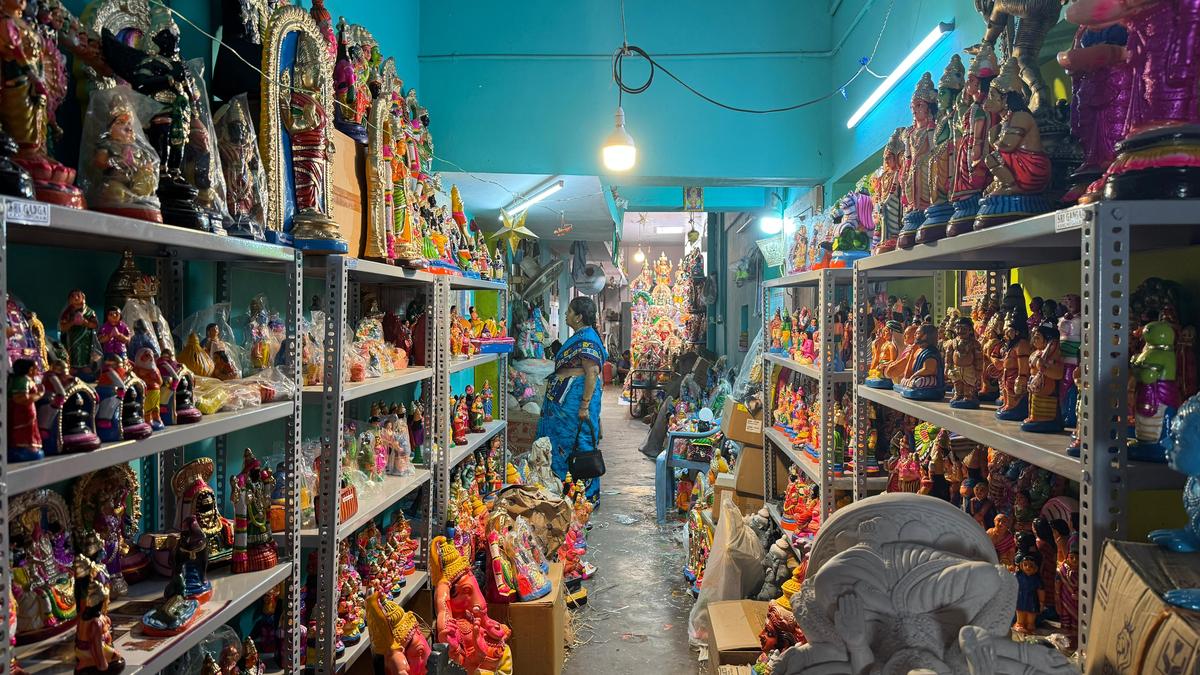
In the festive season of Navaratri, temple streets in Chennai, especially Mylapore, come alive with rows of street shops displaying colourful golu dolls. These dolls depict gods, goddesses, and mythological characters, each crafted with care. But where do these vibrant dolls come from? The answer lies just one district away, in Kancheepuram.
Behind the Varadaraja Perumal temple in Kancheepuram sits a quiet lane officially called Asthagiri Street. For nearly 70 years, it has been popularly known as Bommiakara Theru, or Doll Makers’ Street.
Families here have been shaping figures for generations, once using clay but now increasingly turning to paper mache or Plaster of Paris. This shift has come as customers, especially Indians settled in the United States, demand lighter dolls that can be shipped easily. But paper mache requires far more investment than clay, and for many artisans, the costs are crushing.
Unfinished dolls kept out for drying after the initial coating of paint. | Photo Credit: Special Arrangement
Among those keeping the craft alive is 26-year-old Aravind Suresh, the fifth generation of Meenakshi Golu. He not only makes dolls but also markets them through social media, reaching customers across India and abroad. “I grew up watching my father make these dolls,” he said. “Earlier, there were many families here, but now only a few are left. I use online platforms to expand our work and find new buyers.” He explained that most of his customers are now based abroad, while sales within India have dropped. “People in the U.S. order more than Indians. They organise golu competitions and always ask what is new each year.”