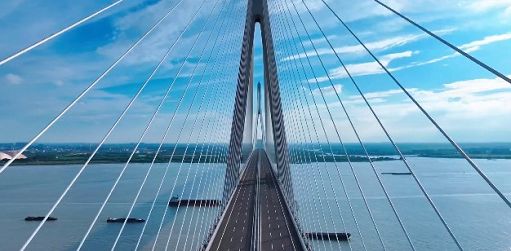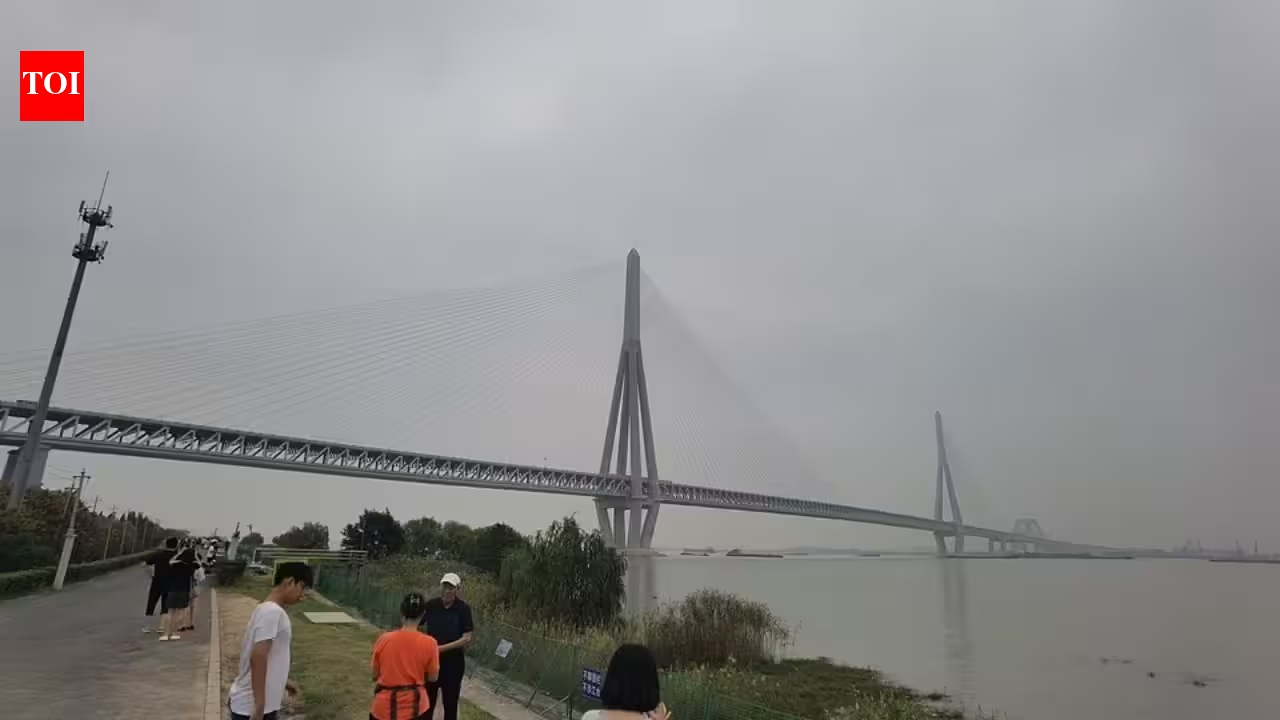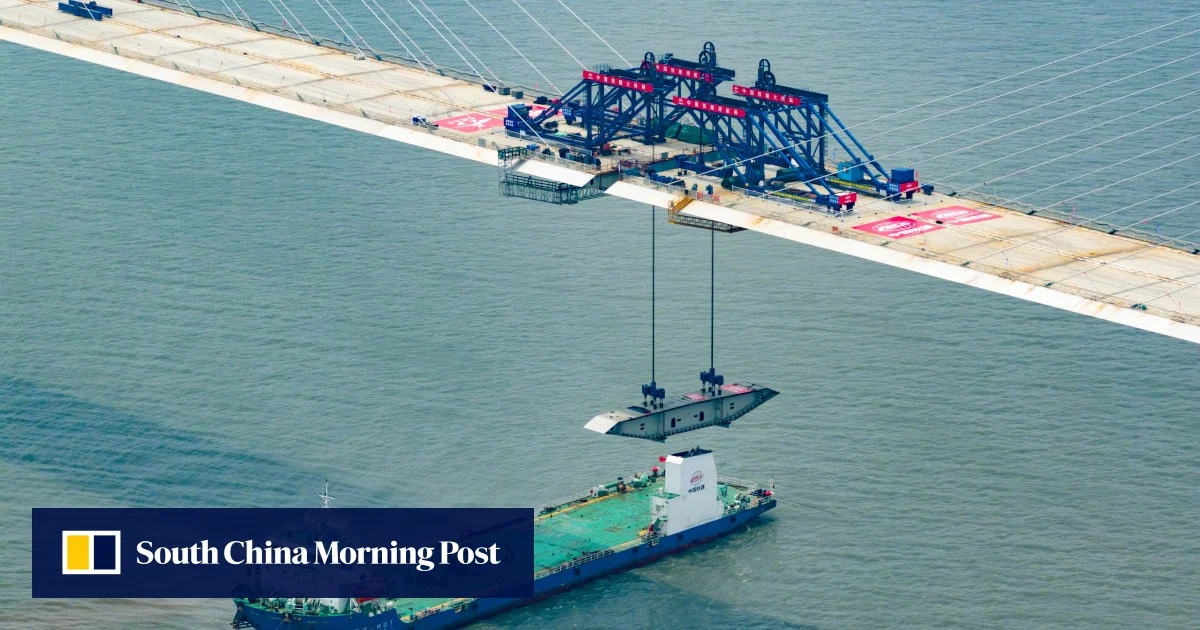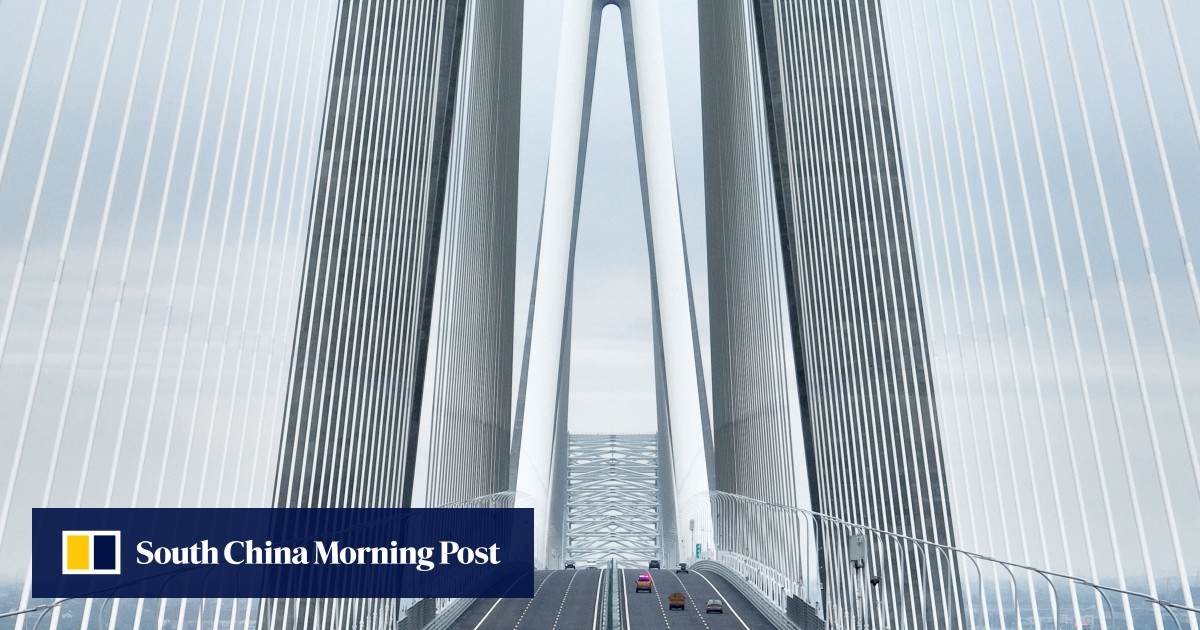
The world’s longest cable-stayed bridge opened to traffic in Jiangsu province, eastern China on Tuesday, connecting the cities of Changzhou and Taizhou and slashing the travel time from over an hour to just 20 minutes.The Changtai Yangtze River Bridge stretches 10.3km (6.4 miles) with a main span of 1,208 metres (3,960 feet). It is the river’s first crossing to carry an expressway, regular road and intercity railway, all on the same structure.Officials said the bridge – which took six years to complete and was built using a number of world-first techniques – would boost regional growth and tighten links across the Yangtze River Delta.01:14China launches world’s longest cable-stayed mega bridge over Yangtze RiverOne of the structure’s most distinctive features is its asymmetrical lower deck, with a 200km/h (124mph) railway on one side and a regular road on the other – the first time a side-by-side traffic layout has been used in a large-span bridge.China Railway Group chief scientist Qin Shunquan, the bridge’s lead designer, explained the engineering challenge in March, when he appeared on a youth-focused talk show on state broadcaster CCTV.Because rail systems typically weigh about three times as much as roads, most bridge designs maintain balance by placing the railway in the centre with the roadways split on either side and traffic moving in opposite directions.“But that set-up creates major inconveniences,” Qin said. To rejoin the city road network, lanes must loop around, dipping under the railway and merging again, wasting large areas of valuable urban land. And if lanes are split, emergency vehicles cannot simply cross over if they need to reach an accident.To keep their asymmetrical design balanced, Qin and his team adjusted the cable tensions on the bridge’s railway side in an effort to hold the deck level. But that fix shifted the structure towards the lighter side, misaligning the centreline.
China builds record-smashing mega bridge with technology never seen before
Structure boasts a number of world firsts, from its striking asymmetric design to the precision tools developed to build it.
306 words~1 min read