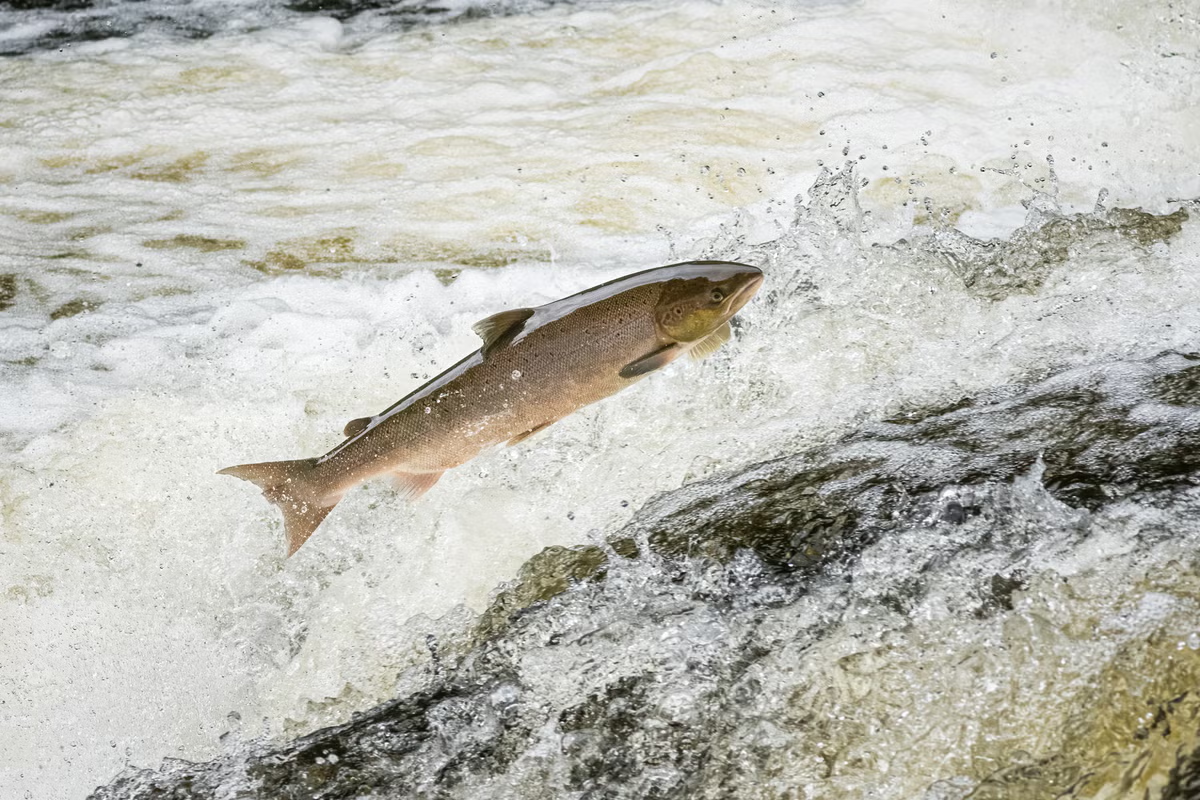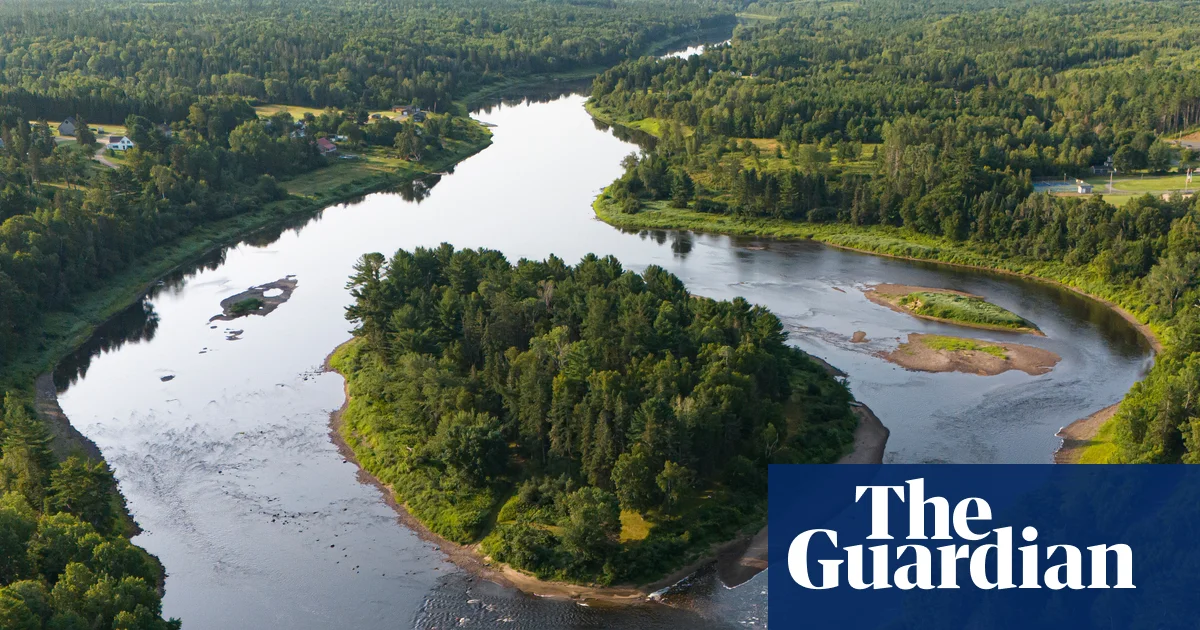
Since the 19th century, Atlantic salmon in the Miramichi have lured politicians, celebrities and wealthy anglers from across North America and Europe to fishing camps along the river’s banks, its undammed branches once producing more of the fish than almost any other river on the continent. In 2010, the fishery was valued at C$16m (£8.6m) and provided hundreds of jobs.Rip Cunningham has been travelling from the US state of Massachusetts to the Canadian province of New Brunswick to fish since the 1970s. When he first started, he would sit on the deck at the Black Brook Salmon Club, on one of the Miramachi’s tributaries, watching the water boil with the leaps and rolls of salmon.“It was an amazing experience, just because you saw the amount of life that there was in the river,” he says.
Rip Cunningham has witnessed the decline of salmon numbers in the Miramichi River since the 1970s
Sitting on that same deck 55 years later, Cunningham reflects on how much things have changed. Miramichi salmon have declined by as much as 86% since 2012 and with those declines the lodge’s bookings are down by half.For some, that decline can be traced to one culprit: striped bass. As Miramichi salmon have declined, numbers of striped bass have been on an inverse trajectory. Researchers estimate there may now be half a million striped bass – predators that gobble young salmon as they migrate from their birthplace in the Miramichi to the Atlantic Ocean. As a result, anglers and conservation groups say, the only hope for salmon is to kill hundreds of thousands of bass.Yet there is a wrinkle in that proposal. Striped bass is also native to the Miramichi, having coexisted with salmon for millennia. Thirty years ago, commercial fishing nearly drove striped bass to extinction; in the 1990s, they numbered less than 5,000. Since then, the closure of fisheries has helped bass make a spectacular recovery.That recovery is now pitting two fish – and their supporters – against one another, in an ecosystem under increasing pressure from climate change.On the side of the salmon are groups that say that 500,000 bass spawning in the Miramichi’s estuary is making it all but impossible for young salmon to make it out of the river alive. “It’s an all you can eat buffet,” says Cunningham.Save Miramichi Salmon, a conservation group to which Cunningham belongs, wants the number of striped bass reduced to 100,000 reproductive-age fish, which would require removing hundreds of thousands of bass from the river.