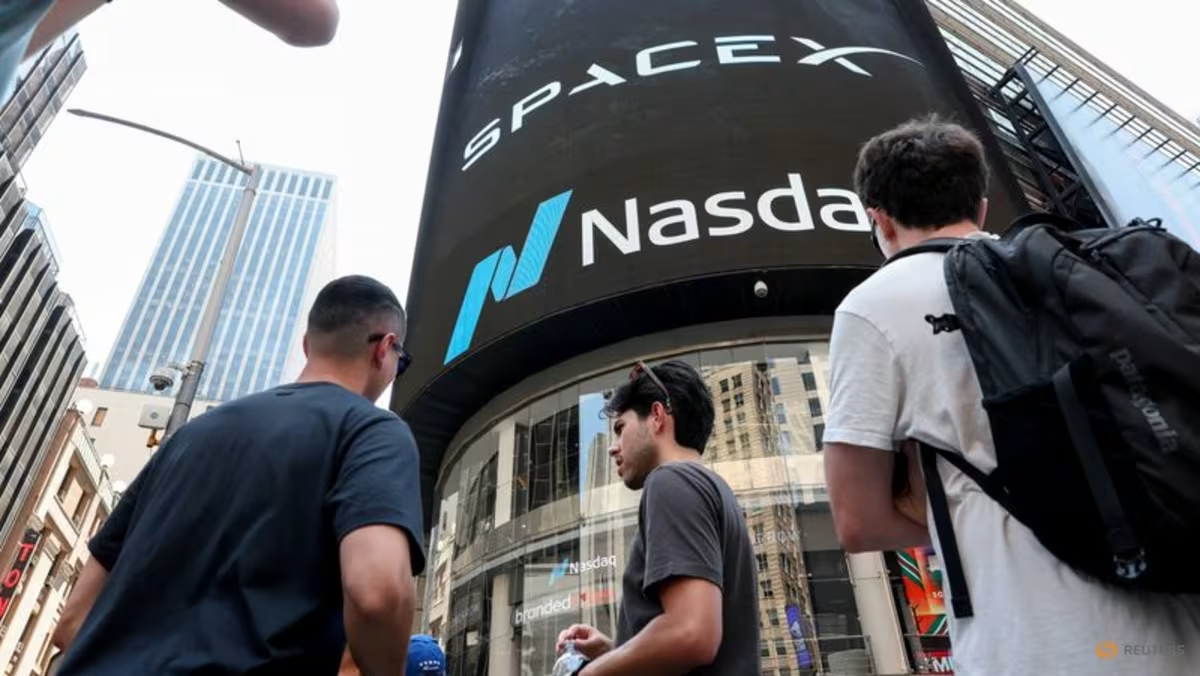
SpaceX just fired off one of the biggest shots yet in the spectrum wars, agreeing to pay $17 billion to take over a massive chunk of wireless airwaves from EchoStar for Starlink’s direct-to-cell services.
The deal is the most aggressive signal yet that SpaceX wants to rule the satellite-to-phone market.
The significance of the sale, which sees SpaceX paying a mix of $8.5 billion in cash and $8.5 billion in SpaceX stock, centers around a finite resource: spectrum. Spectrum refers to the range of radio frequencies that carry wireless signals for everything from phone calls to texts to GPS and satellite communications.
The U.S. government, via the Federal Communications Commission, divides spectrum into “bands.” There are only so many usable frequencies, and users must coordinate to avoid interference. To raise the stakes even higher, only certain ranges work well for phones and satellites, which shrinks the pool of usable bands even further and creates a fierce competition for access.
The FCC auctions long-term licenses at high prices to private firms. The prime cellular bands were predominately amassed by national wireless carriers, like AT&T and Verizon, while incumbent satellite operators like Iridium and Globalstar held separate bands.