https://arab.news/cvr25
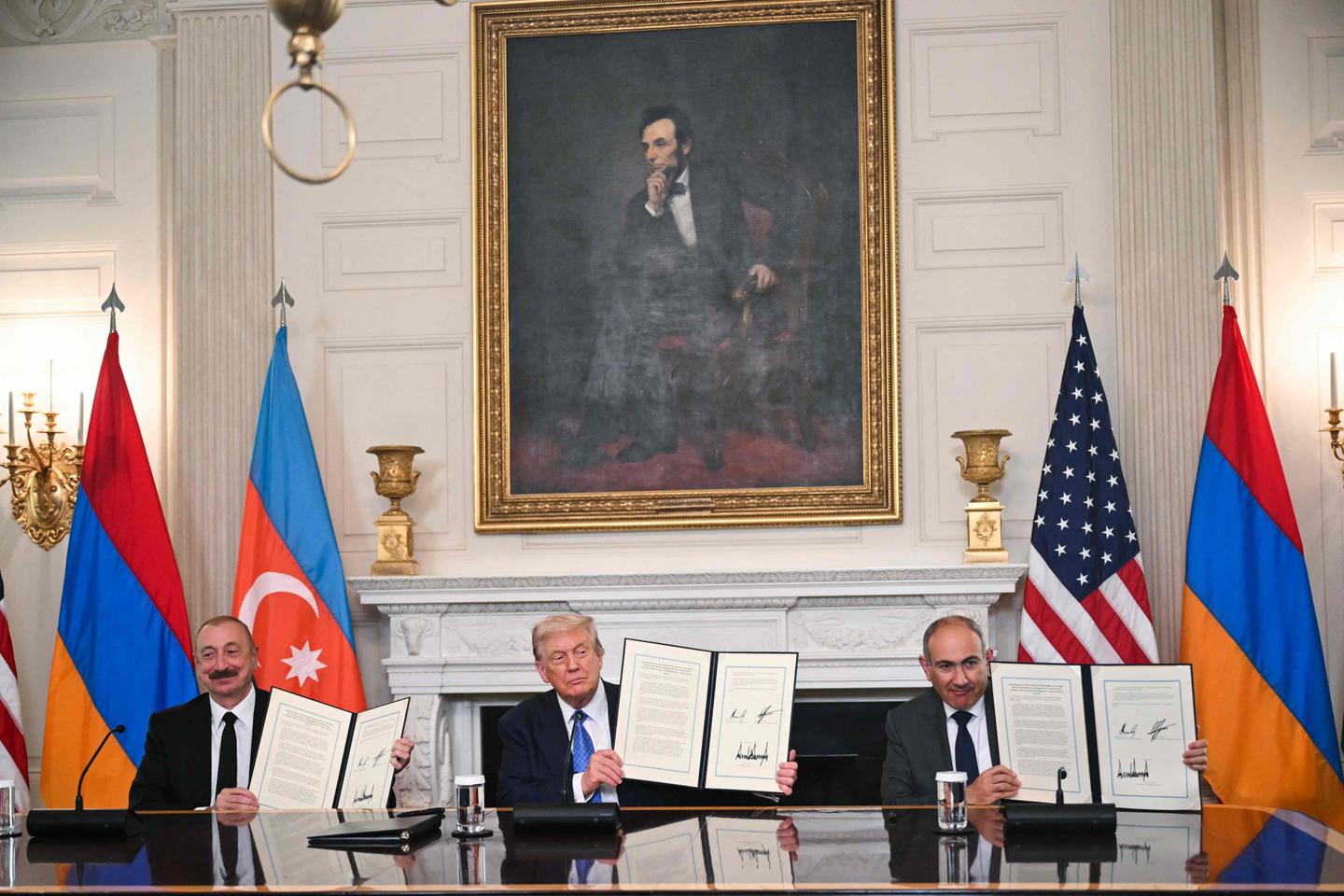
Last month, following a successful visit to Washington, where he signed a historic peace agreement with Armenia, Azerbaijani President Ilham Aliyev traveled to Turkmenbashi, Turkmenistan, for meetings with Gurbanguly Berdimuhamedov, the chairman of the People’s Council of Turkmenistan.
The choice of Turkmenbashi as the venue holds a lot of symbolism. While only a short hop across the Caspian from Baku, the city symbolizes Turkmenistan’s potential westward orientation rather than its current geopolitical reality. As the country’s main Caspian port and gateway to the West, Turkmenbashi serves as a crossroads for goods moving east and west, and is the likely launch point for a future trans-Caspian extension. Its location at the western edge of Turkmenistan makes it a natural outlet for the country’s energy resources, if and when Ashgabat chooses to look beyond its current dependency on eastern markets.
Although it was not declared publicly, there is little doubt that discussions in Turkmenbashi touched on transit and energy cooperation, and likely included mention of the long-discussed possibility of a trans-Caspian pipeline for the transport of natural gas.
Since the 1990s, policymakers have floated the idea of a trans-Caspian natural gas pipeline linking Turkmenistan and Central Asia to Azerbaijan, the South Caucasus, and ultimately Europe. To date, the project has remained an aspiration. The engineering of such a pipeline presents few obstacles, but the geopolitical challenges are substantial. Unlike oil, which can be easily transported by tanker, natural gas requires costly liquefaction for shipping. With only about 280 km separating Turkmenistan from Azerbaijan across the Caspian, a pipeline is the only cost-effective option.