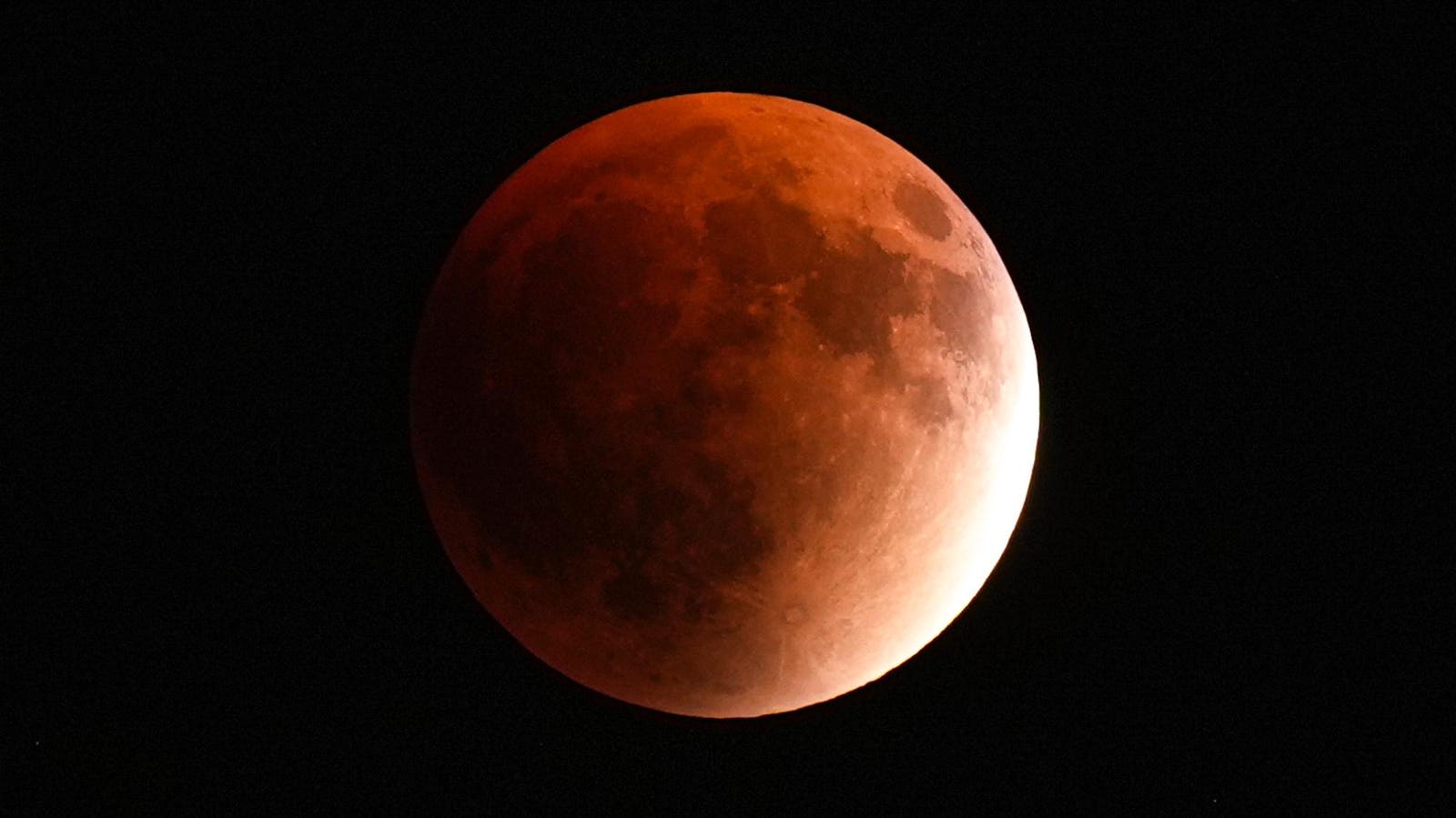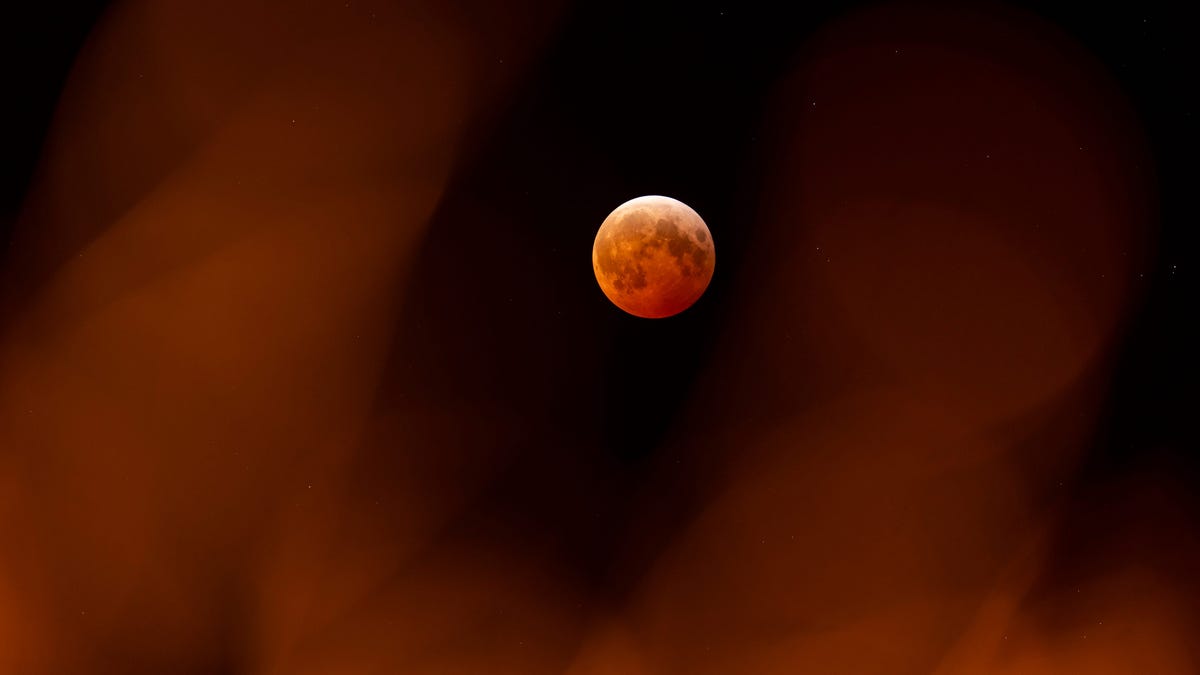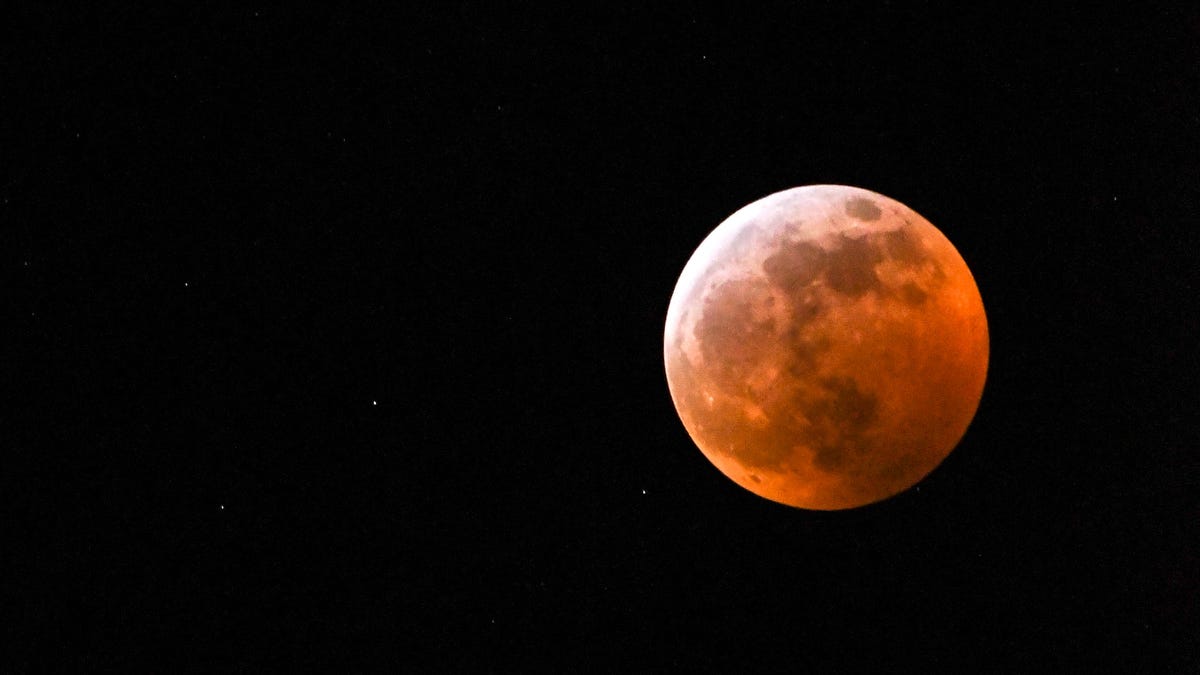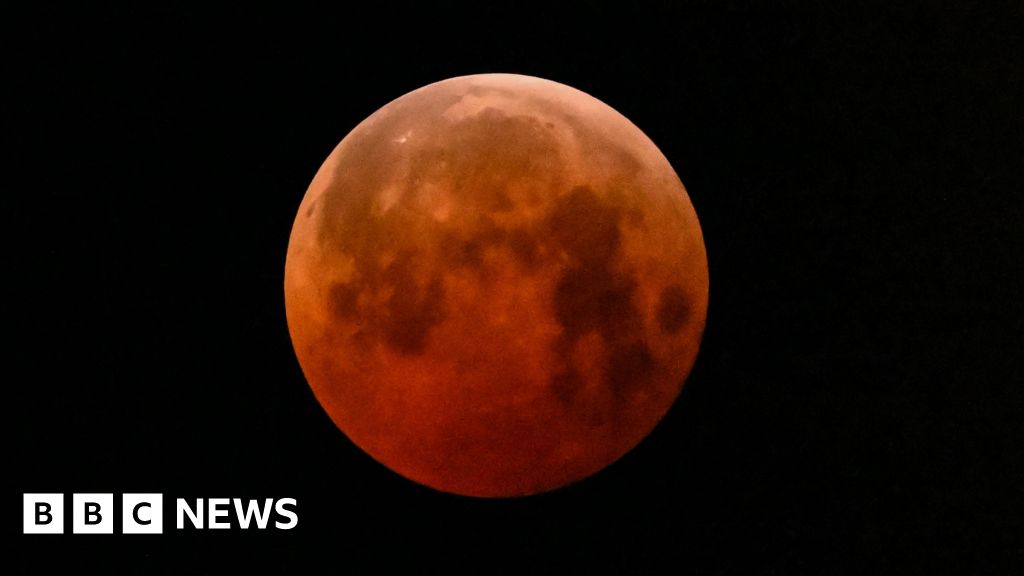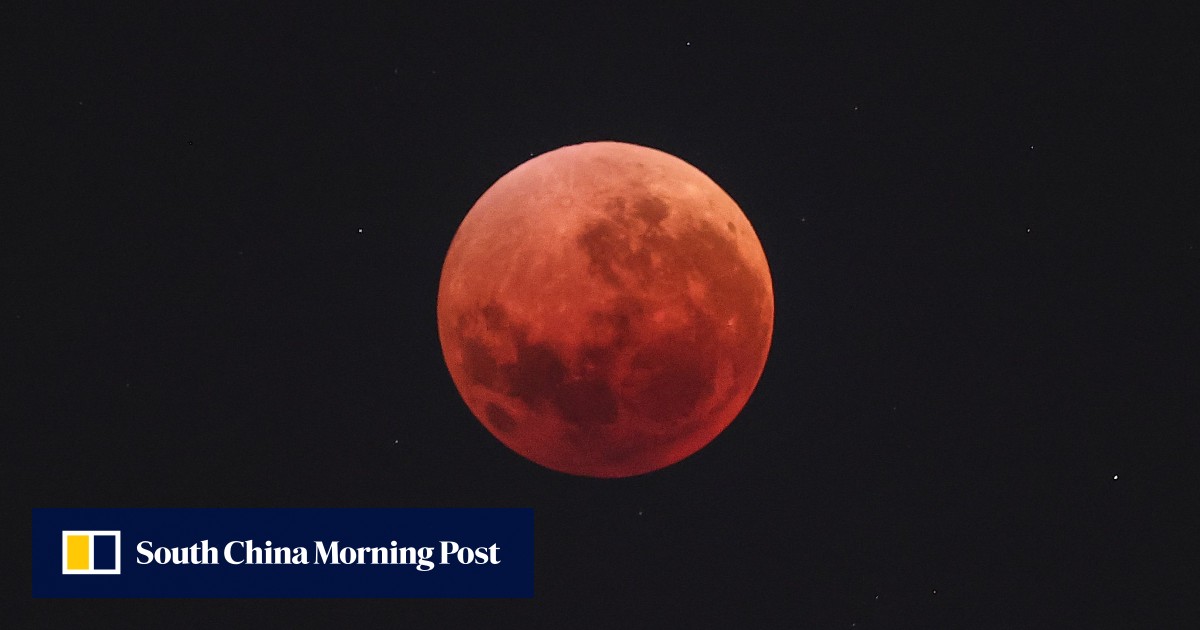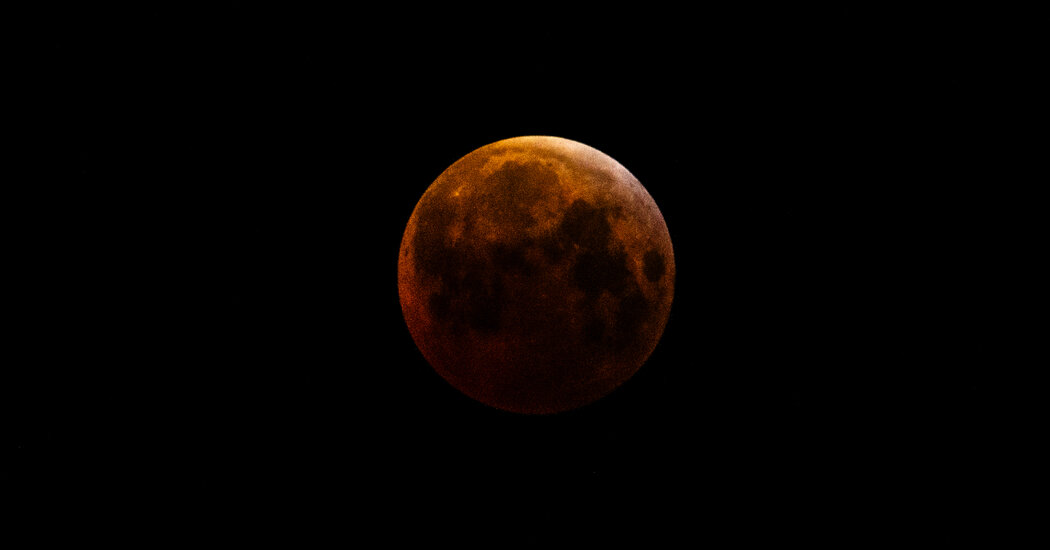
Many sky-gazers around the world will get the chance to see a dazzling celestial display this weekend — a total lunar eclipse that could cause the moon to take on a deep reddish hue.
The lunar eclipse will be visible Sunday for those in Europe, Africa, Asia and Australia, according to NASA. As the sun, moon and Earth line up in their orbits, the moon will be cast into a crescent-shaped shadow before being fully blocked from the sun by Earth. At that point, some light from the sun will make it around the edges of Earth. Blue light will be scattered by air molecules while the remaining wavelengths will reflect off the moon making it appear to glow red — what is known as a blood moon.
The event will start at 11:28 a.m. ET and end at 4:55 p.m. ET (though the eclipse will not be visible to those in the Eastern time zone). Totality — when the moon is completely covered by Earth’s shadow — will start at 1:30 p.m. ET and last for about an hour and 23 minutes, according to EarthSky.
How to see the moon turn red during March’s total lunar eclipse
“The beauty of a lunar eclipse is that it’s gradual. For folks that have seen solar eclipses, they happen fairly rapidly. The lunar eclipse is a far more relaxed environment,” said Noah Petro, chief of NASA’s Planetary Geology, Geophysics and Geochemistry Lab at Goddard Space Flight Center in Greenbelt, Maryland. “You don’t have to be in a specific spot (to see it), but you have to be in the right hemisphere.”