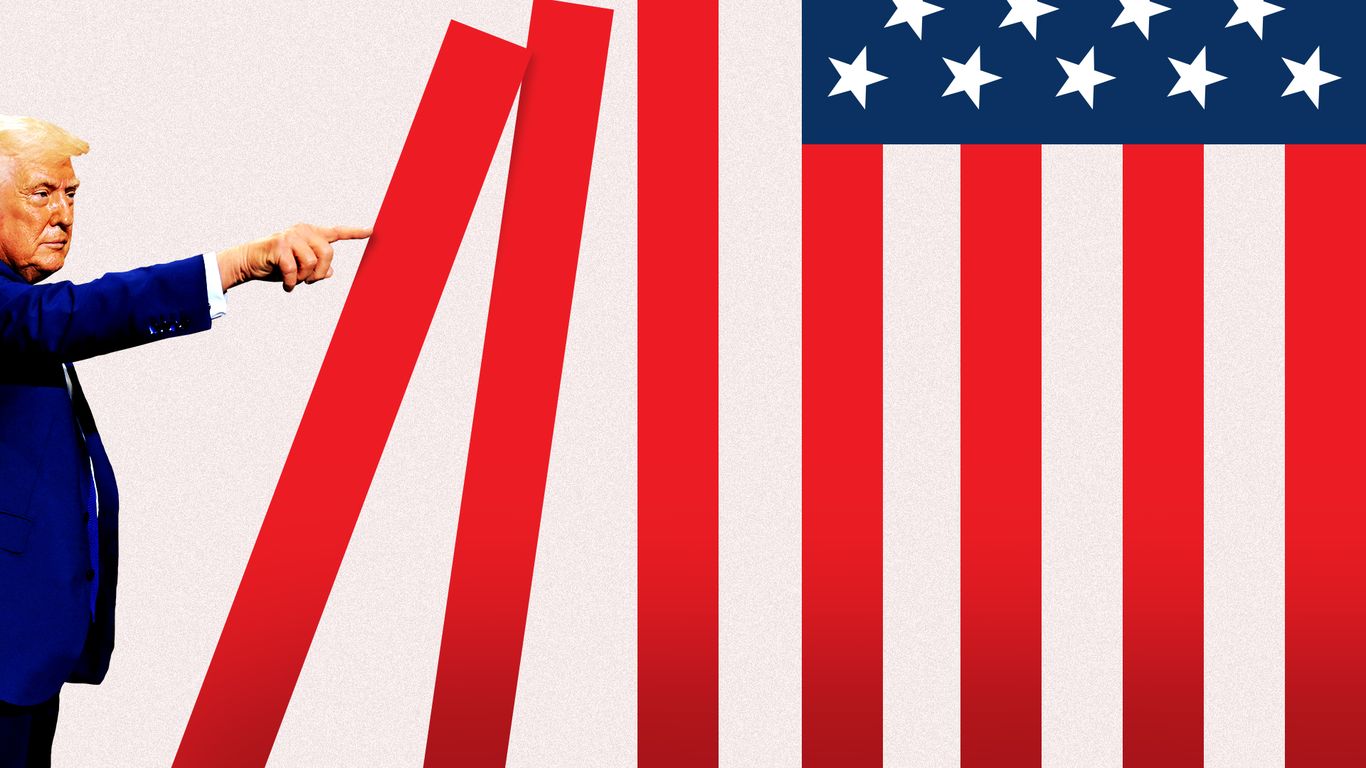
President Donald Trump’s second term in office has marked a significant authoritarian turn in the operation of the executive branch. As power centralizes in the White House, edicts flow to control and transform the federal bureaucracy and institutions across society, from the press to universities to scientific research to the states and cities run by Democrats.
This is a marked departure from how American government has operated in the past: While presidential power has increased steadily over time, Congress and the courts have traditionally played a role in shaping that development. But Trump’s authoritarian creep is collapsing the standard separation of powers between the three branches of government, and the federal government and the states, in a way that empowers the executive branch at the others’ expense.
Congress under Republican control has become a slavish body with no separate institutional identity from Trump and his Republican Party. The Supreme Court has taken Trump’s side in pursuit of a long-held project to create a unitary executive. States run by Democrats, whom Trump’s adviser Stephen Miller has called part of a “domestic extremist organization,” are threatened with domestic military deployments and cuts to congressionally authorized funds if they deviate from presidential decrees. Trump seeks to set state-level election laws without any constitutional authority to do so. Elements of independence have completely fallen away within the executive branch as Trump now directs the Department of Justice and other regulators to investigate and indict his political enemies, while agencies have been told not to enforce certain laws.