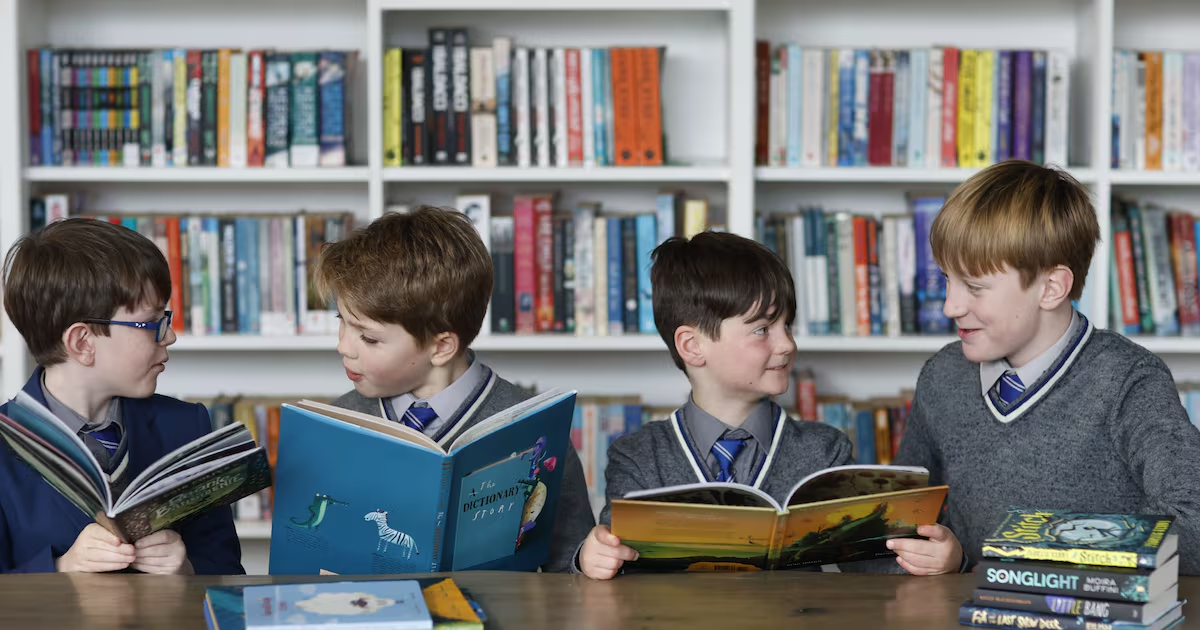
Ned Cabot, a business lecturer at George Mason University in Virginia, has set an objective for his students: “They should at least make an effort to create a habit of consuming quality news.”
Like many of his peers around the world, Cabot faces a growing challenge in getting young people to read, interpret and analyse information — whether for leisure, classroom learning or general knowledge. That raises concerns about how best to prepare the next generation of managers and citizens alike.
“In some cases, they know very little and possess very few facts,” says Cabot, who teaches at the university’s Costello College of Business. “In other cases, they possess some facts but don’t know how they know them or where they got the information. The result is that it’s very difficult to evaluate and put them into context.”
From the advent of radio and television to the launch of electronic books, there have been long-standing concerns about threats to reading. But smartphones, social media and artificial intelligence have added fresh urgency and scale to the pressures on the current generation of students — and those who will influence future generations.
Lauren McClanahan, who teaches trainee secondary schoolteachers at Western Washington University, recalls: “Last term a student approached me and said ‘I don’t read’. Almost all my students have little tolerance for reading more long-form text. They have reduced attention spans. As teacher educators, we feel in constant competition with all these outside forces.”