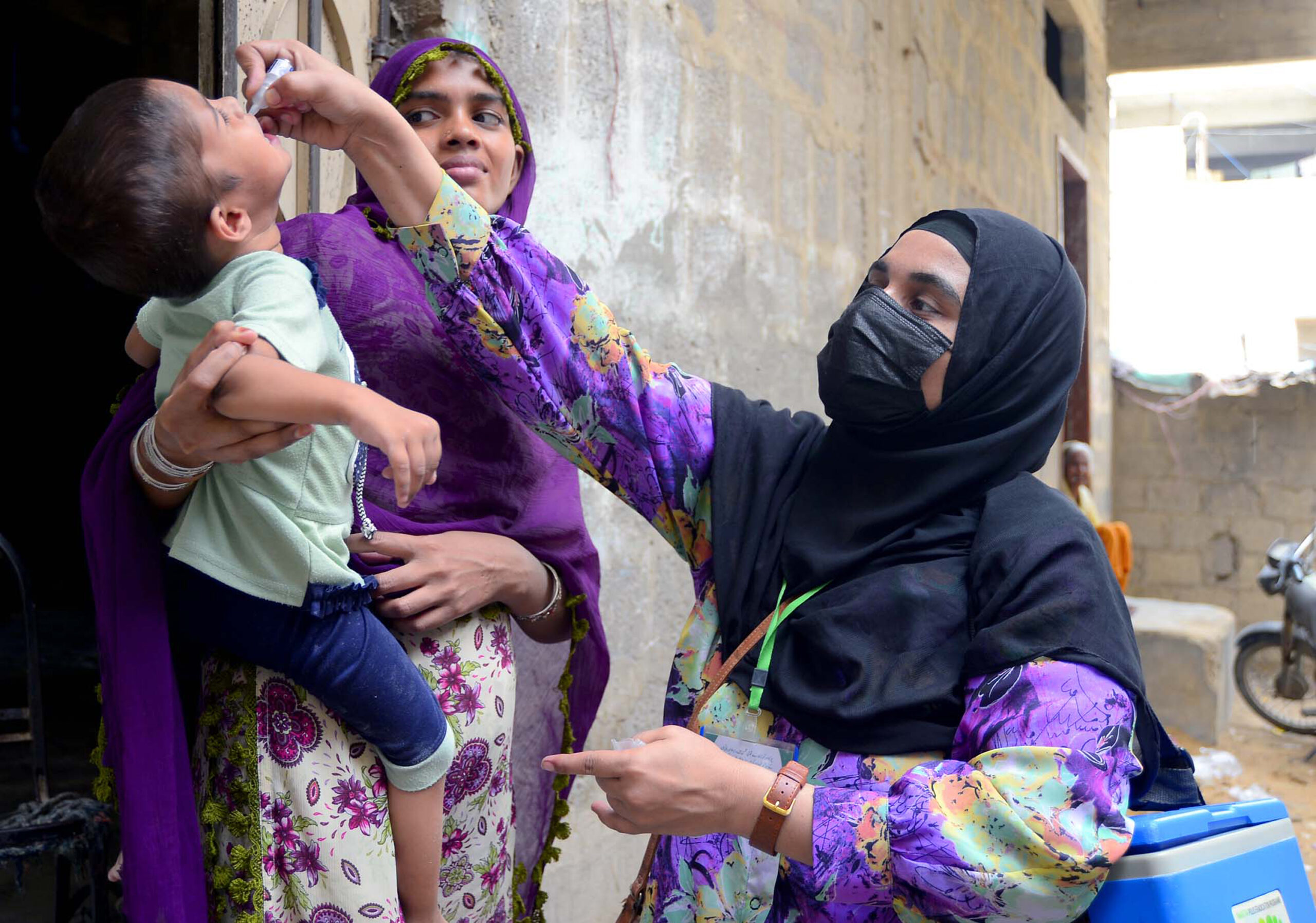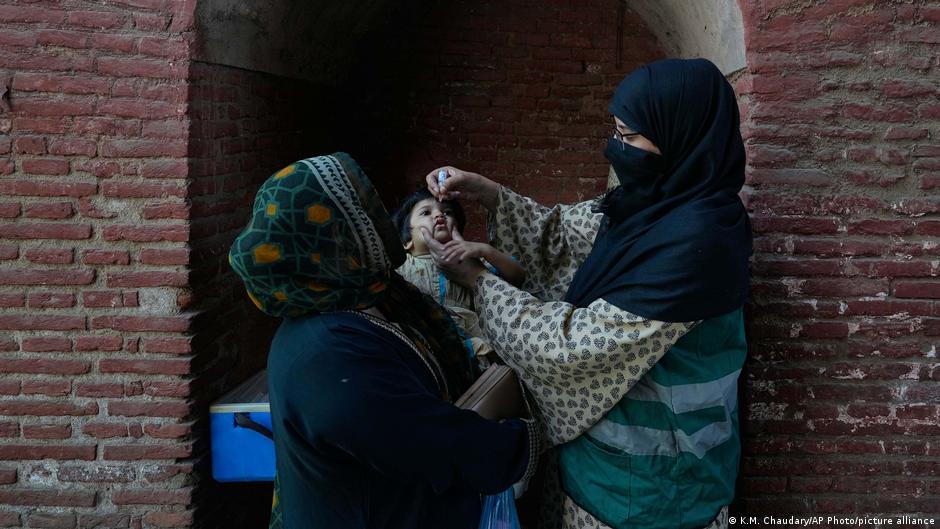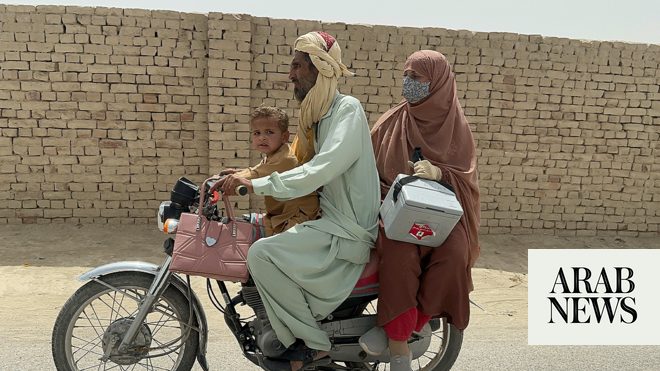
KILLA ABDULLAH, Pakistan: On a sweltering August morning earlier this month, 30-year-old Bibi Hajjira pulled a scarf tightly around her head, slipped on gloves, and covered her face with an embroidered mask before setting out from her small village in Pakistan’s southwestern Balochistan province.
Perched on the back of a motorbike driven by her husband, their two-year-old son wedged between them, she began the 40-kilometer ride across rocky tracks and water-cut ditches toward the District Emergency Operations Center in Killa Abdullah, one of Pakistan’s most high-risk polio districts, with chronic vaccine refusals, logistical challenges, and proximity to cross-border virus transmission from Afghanistan.
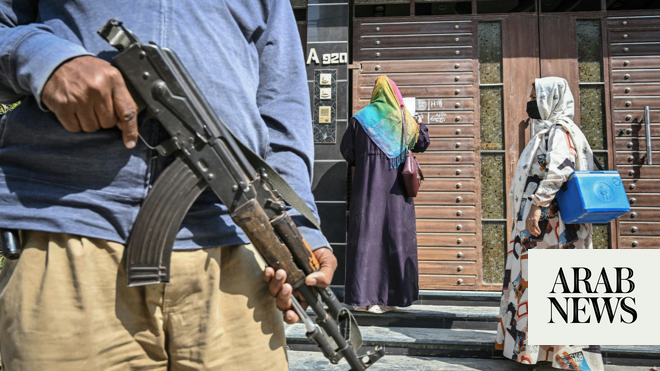
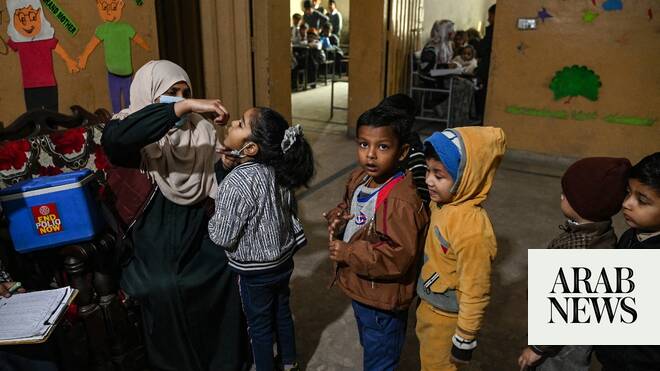
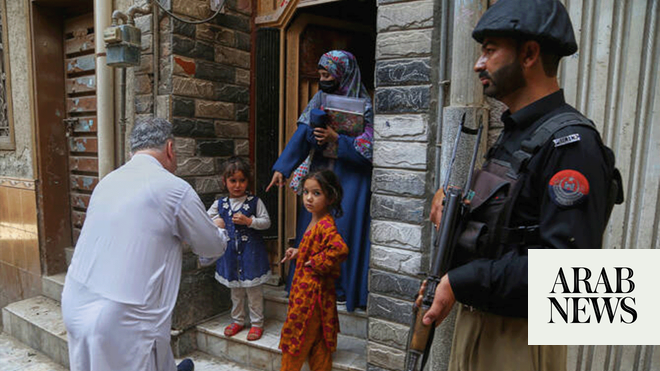
Hajjira has her job cut out for her: to convince reluctant mothers to let their children swallow two drops of the oral polio vaccine — a mission that makes her both a lifeline for the community and vulnerable to resistance, and sometimes even attacks, in one of Pakistan’s most polio-affected districts.”
“This work is very challenging because we have to move from village to village and house to house despite extreme heat and sunlight,” Hajjira told Arab News.
“It is a challenging task to convince the resisting families of polio drops, like trying to convert a non-Muslim to Islam.”