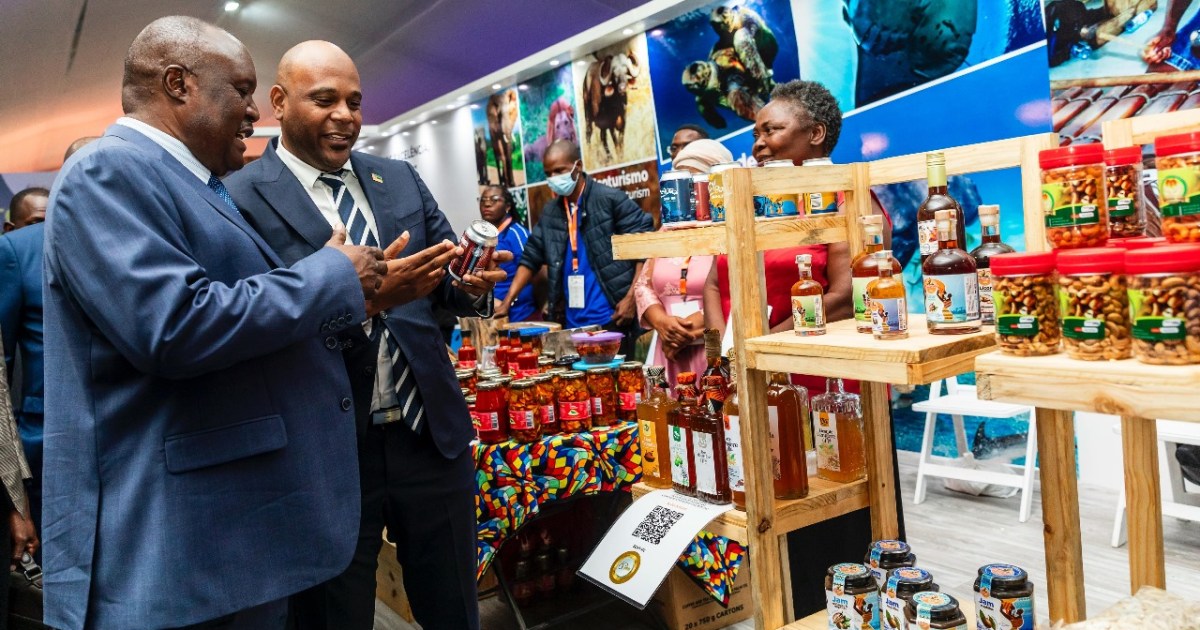
Path to development requires inclusion of Mozambican communities, says Antonio Grispos, secretary of state for commerce.
By Sumayya Ismail
Maputo, Mozambique – On a sweltering Saturday afternoon in Maputo, people line up at refreshment stands dotted around a conference venue hosting Mozambique’s biggest annual trade fair. But zipping between them in jeans and a black T-shirt – a tray of drinks in hand – one young woman is trying a different tack.
“Ludmila Malambe, tasty and nutritious,” announces the branding on her shirt, written in Portuguese below an illustration of a cup of baobab fruit juice. The picture mirrors the plastic cups on her tray – all filled to the brim and for sale for 100 meticals ($1.50) a pop as she makes her way through crowded pavilions in search of thirsty customers.
A few rotations later, her tray is cleared. She makes her way out – through the outdoor arena at the centre of the venue, beyond espresso kiosks and stalls selling soft drinks and juices, and out past the main security check where she flashes her entrance wristband before exiting the gate. She pauses on the neatly paved sidewalk for a rush of cars and motorbikes to pass before crossing to the other side.