Emotional toll of constant negative news and unlimited access to ‘doomscrolling’ has led to record-high news avoidance
News has never been more accessible – but for some, that’s exactly the problem. Flooded with information and relentless updates, more and more people around the world are tuning out.
The reasons vary: for some it’s the sheer volume of news, for others the emotional toll of negative headlines or a distrust of the media itself. In online forums devoted to mindfulness and mental health, people discuss how to step back, from setting limits to cutting the news out entirely.
“Now that I don’t watch the news, I just don’t have that anxiety. I don’t have dread,” said Mardette Burr, an Arizona retiree who says she stopped watching the news about eight years ago. “There were times that I’d be up at two or three o’clock in the morning upset about something that was going on in the world that I just didn’t have a lot of control over.”
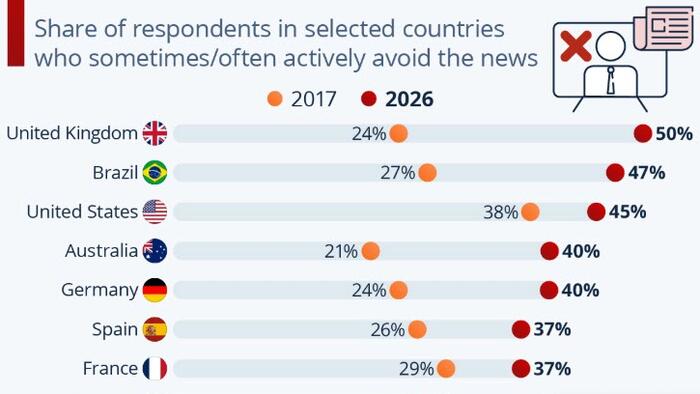
She’s not alone. Globally, news avoidance is at a record high, according to an annual survey by the Reuters Institute for the Study of Journalism published in June. This year, 40% of respondents, surveyed across nearly 50 countries, said they sometimes or often avoid the news, up from 29% in 2017 and the joint highest figure recorded.