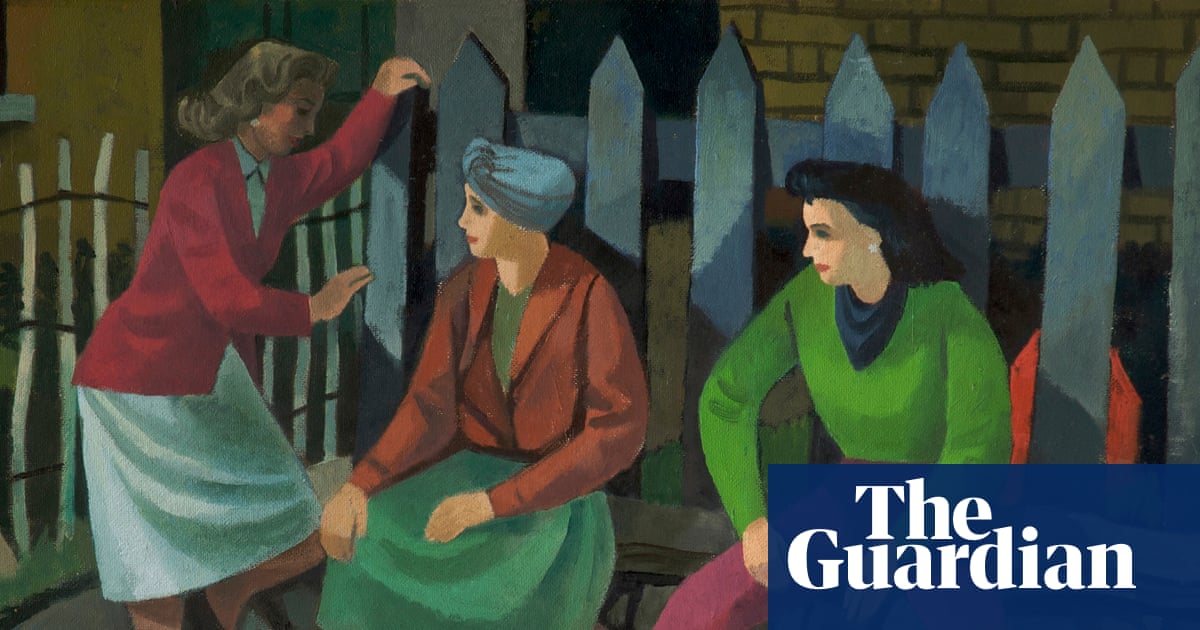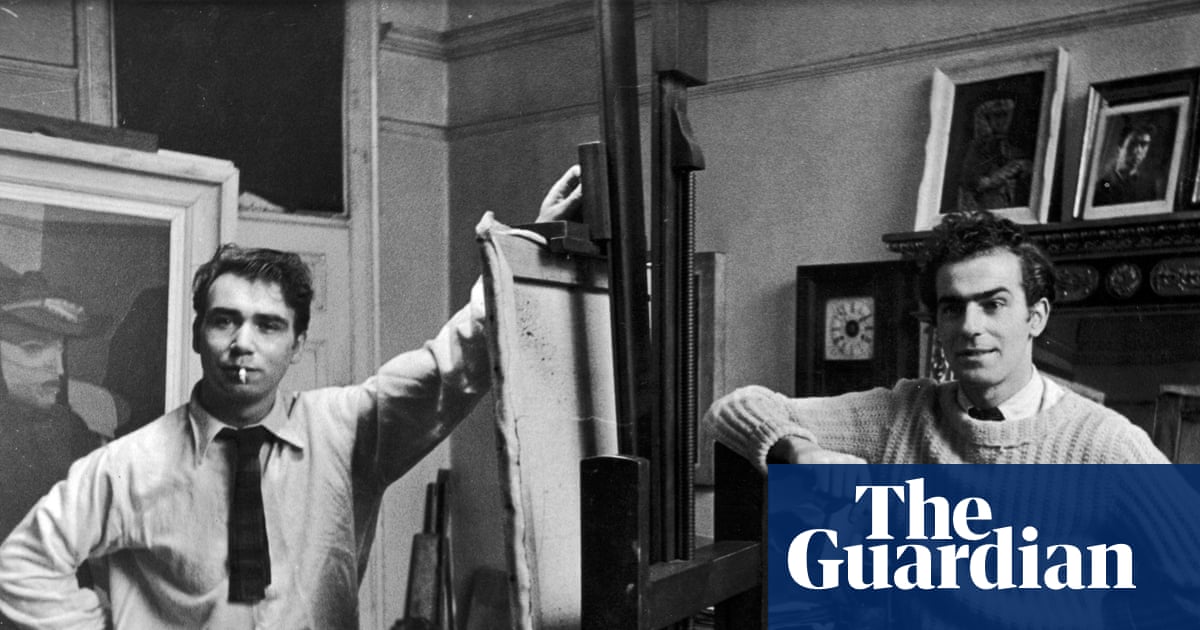
Robert Colquhoun and Bobby MacBryde were once the golden boys of London’s art scene – photographed in Vogue, filmed by Ken Russell and lauded by Francis Bacon. So why did they vanish into obscurity?
T
he world is burning. Fascism is rising. Countries are falling. And we’re on the brink of incredible technological change, which will either be the end of everything or a new beginning. So, who needs artists?
An August night in 1944. Robert Colquhoun’s hand shakes as he lights a candle in the blacked-out Notting Hill studio shared with his lover, fellow artist, Robert “Bobby” MacBryde. They are known – from Soho alleys to Bond Street galleries – as the Two Roberts: inseparable, incandescent, often in trouble. Where is Bobby tonight? The Colony Room Club, probably. Safe, Robert hopes. Though never from himself. Bombers prowl the skies above. Who will survive the night? “Fuck it,” Robert mutters, fag dancing on his lip. And he picks up his brush.
The Two Roberts were real, though in my new novel I’ve reimagined them as literary characters – putting flesh on biographical bones. Two young Scotsmen on the make, with boot-black hair, talent matched only by ambition, generosity surpassed only by thirst. Robert Colquhoun and Bobby MacBryde were born in Ayrshire just before the first world war, meeting at Glasgow School of Art (GSA) in 1933 then becoming stars as the bombs fell. They were the original “Golden Boys of Bond Street”: nicknamed MacBraque and McPicasso, which they pretended not to love. Photographed in Vogue and filmed by Ken Russell, they were twin suns. Everybody else was in their orbit, if they were lucky.