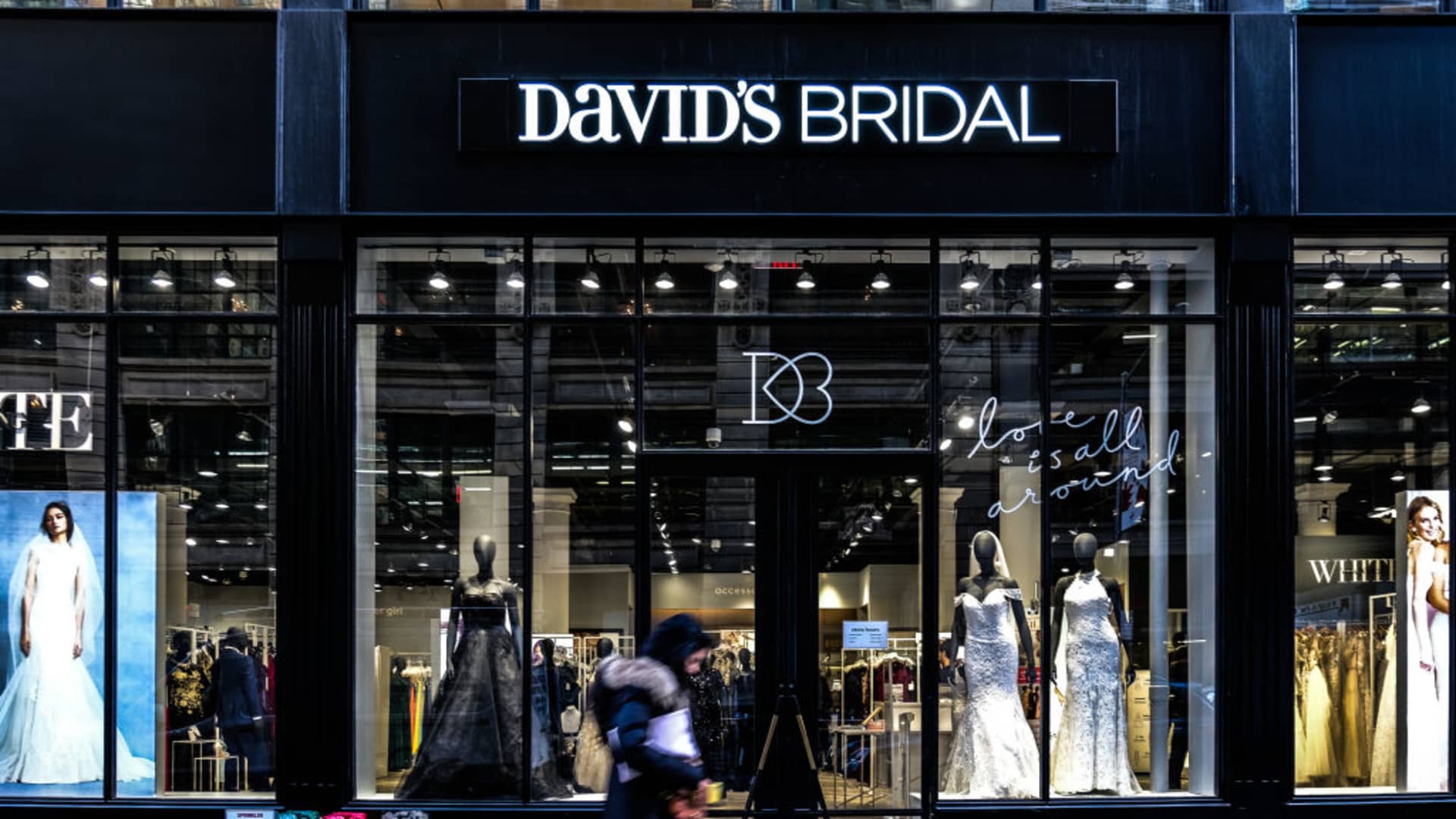
While many businesses grapple with slimmer margins and declining revenue as they face higher tariff costs to import goods into the U.S., wedding dress retailer David’s Bridal says it’s profiting from the policy shift.
“I’m going to be the only person that’s going to answer it this way: Tariffs helped us,” David’s CEO Kelly Cook tells CNBC Make It.
Because David’s owns nearly 40 manufacturers around the world, the company has been able to turn its supply chain into an additional revenue stream, Cook says. Since President Donald Trump announced higher tariffs on April 2, Cook tells CNBC Make It the company has signed nearly a dozen deals with other businesses looking to produce their goods in David’s factories located in countries with lower tariff duties.
“There are people that are winning,” says Brian Pacula, a partner in supply chain practice at business and technology consulting firm West Monroe. Just over one-third of U.S. companies say they are experiencing positive effects from tariffs, according to a survey released by the firm in June.
It’s hard to pinpoint exactly which types of businesses are benefiting from tariffs, but Pacula says companies that primarily manufacture in the U.S. or have sources of supply outside of countries that have higher tariff levies are better situated to weather the tariff storm.