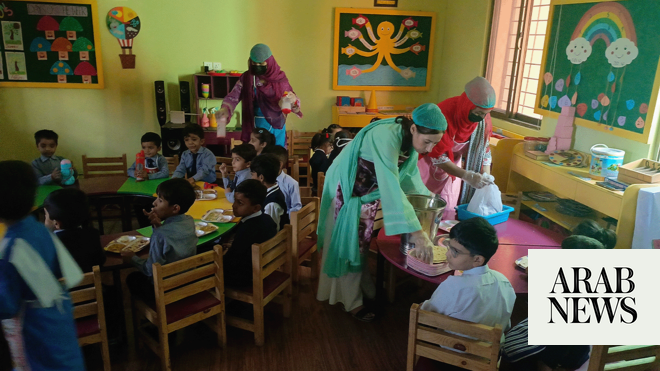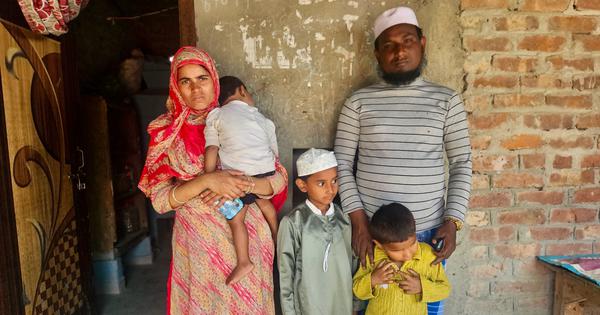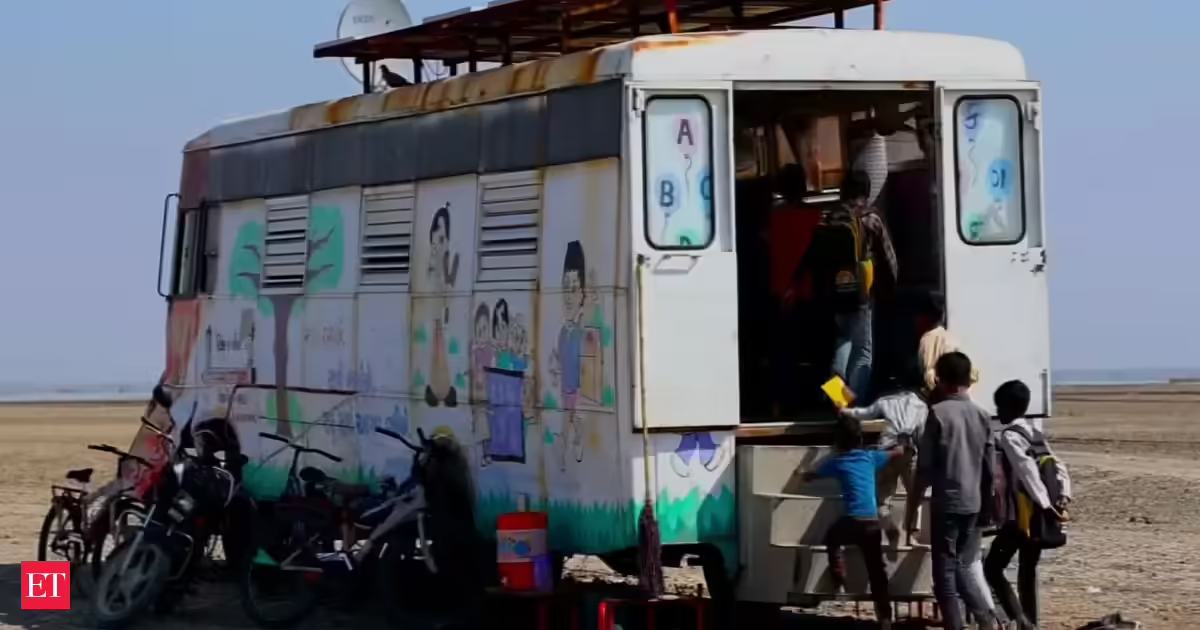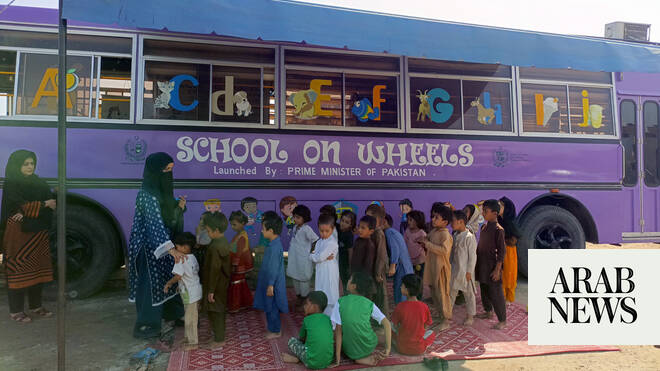
ISLAMABAD: The eyes of Mukhtiyar Ahmed shine bright as soon as he sees a colorful bus pulling over near his village, Thalla Saiyidan, on the outskirts of the Pakistani capital of Islamabad. The 62-year-old walks his grandson, Muhammad Hamza, to the vehicle where he attends a two-hour Montessori class along with other out-of-school children in their locality.
The bus, adorned with smart screens, chairs, desks, whiteboards and air conditioners, offers a ray of hope to Ahmed. For Hamza and other children, it provides a rich, interactive learning experience that is both fun and foundational, bringing primary education to rural and underserved communities in Islamabad.
Pakistan has an estimated 22.8 million children aged 5-16 not attending school, representing 44 percent of the total population in this age group, according to United Nations Children’s Fund (UNICEF). In the 5-9 age group, 5 million children are not enrolled in schools and after primary-school age, the number more than doubles to 11.4 million adolescents.
To promote education in underserved communities in Islamabad, the Pakistan government launched the “School on Wheels” initiative in 2023 , which aims to offer primary-level education to children who’ve never had a chance to attend school, especially those whose parents cannot afford to send them to formal institutions.