A view of the Supreme Court of India. File
| Photo Credit: The Hindu
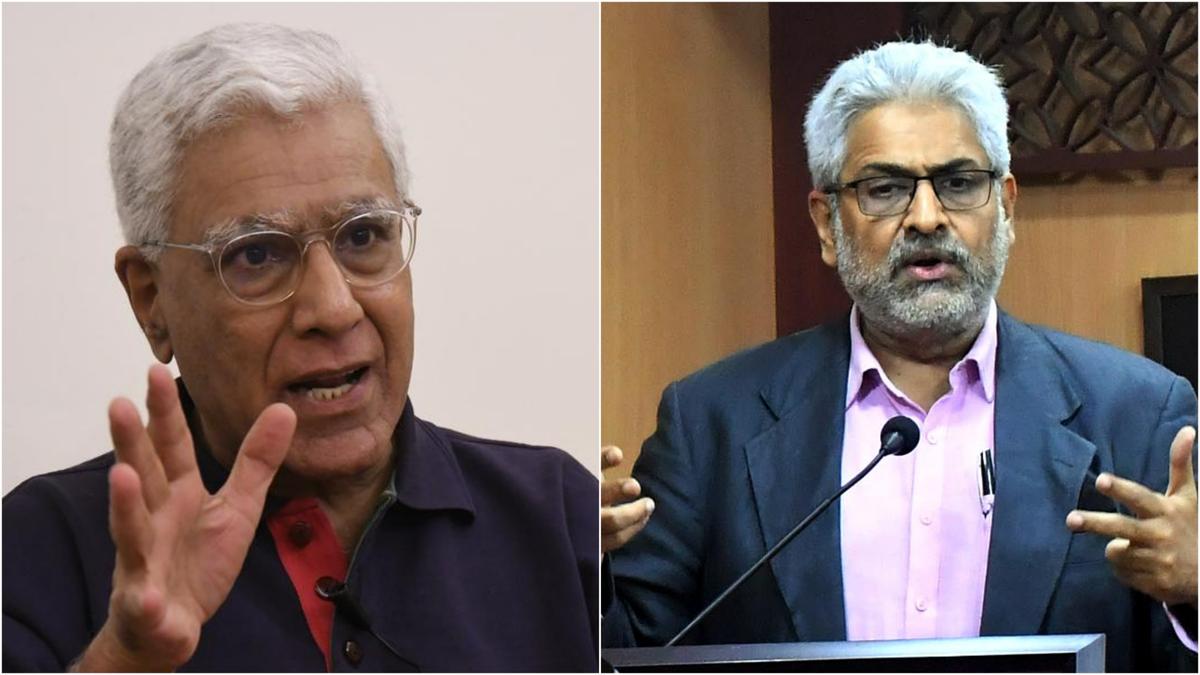
The Supreme Court on Friday (August 22, 2025) protected senior journalists Siddharth Varadarajan, Karan Thapar and members of the Foundation for Independent Journalism, which publishes The Wire online platform, from any coercive action by the Assam Police’s Crime Branch in an FIR invoking sedition charges against them.The order was passed by a Bench of Justices Surya Kant and Joymalya Bagchi.Senior advocate Nitya Ramakrishnan, appearing for the petitioners, said her clients apprehend the repeated lodging of FIRs against them.Journalists’ organisations had protested the sedition charges invoked against the senior journalists.The apex court had protected Mr. Varadarajan and members of the Foundation from “imminent arrest” on August 12 in another FIR registered under Section 152 of the Bharatiya Nyaya Sanhita (BNS), which punishes “acts endangering sovereignty, unity and integrity of India”, by the Morigaon Police Station in Assam for the publication of an article.The petitioners had argued that the BNS provision was in essence the colonial Section 124A (sedition) of the erstwhile Indian Penal Code. The operation of Section 124 A had been kept in abeyance by the apex court and referred to a Constitution Bench for judicial scrutiny and an authoritative pronouncement.“They are continuously slapping us with FIRs,” Ms. Ramakrishnan submitted.Editorial | Sedition redux: On trampling on press freedomThe senior counsel said the summons on the Crime Branch FIR, also under Section 152 of the BNS, was issued on August 12, the same day the top court protected them for arrest in the Morigaon case.Ms. Ramakrishnan said even the existence of the second FIR lodged by the Crime Branch came to be known by the petitioners by way of the summons issued after the apex court granted them protection in the Morigaon case.“We hope and expect everyone to follow the law,” Justice remarked.The petitioners have also challenged the validity of Section 152.The Court had questioned whether the “potentiality of abuse” under Section 152 of the Bharatiya Nyaya Sanhita (BNS) was a ground to declare the law itself unconstitutional.Ms. Ramakrishnan, in that earlier hearing, had submitted that Section 152 was vaguely worded. She had argued that its ambiguity cloaked an immense capacity to chill free speech, especially of journalists.Justice Bagchi had at the time agreed with Ms. Ramakrishnan that vagueness in a penal provision was a valid ground to challenge it.He had referred to how the apex court had struck down Section 66A of the Information Technology Act for its vague terminology which indirectly worked to aid authorities to use arrest as a tool to crush dissent.Justice Bagchi had said the apex court’s judgment in the Kedar Nath Singh case had clearly defined that sedition could not be invoked under Section 124A until there was clear proof that words or action incited violence. Published - August 22, 2025 12:11 pm IST