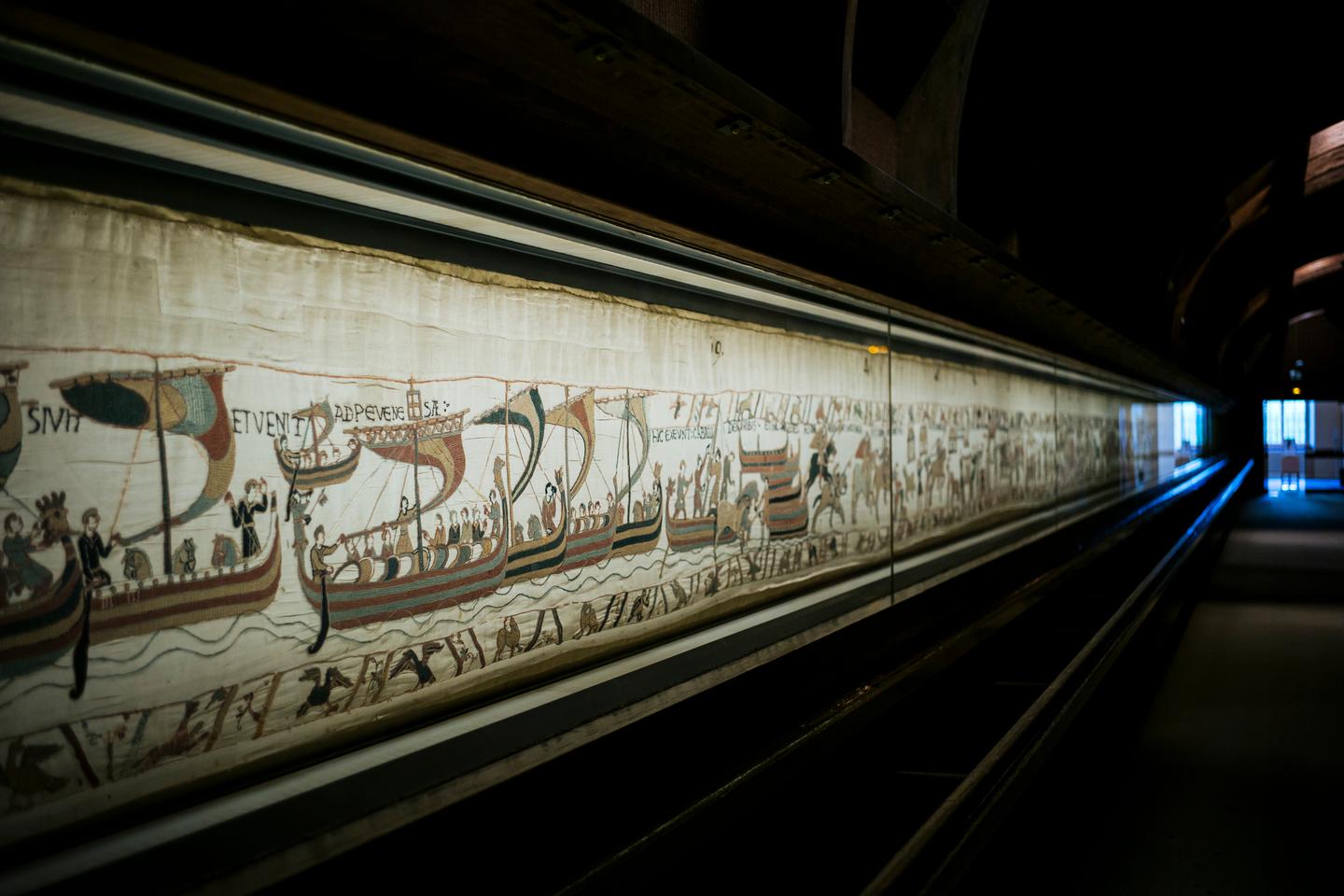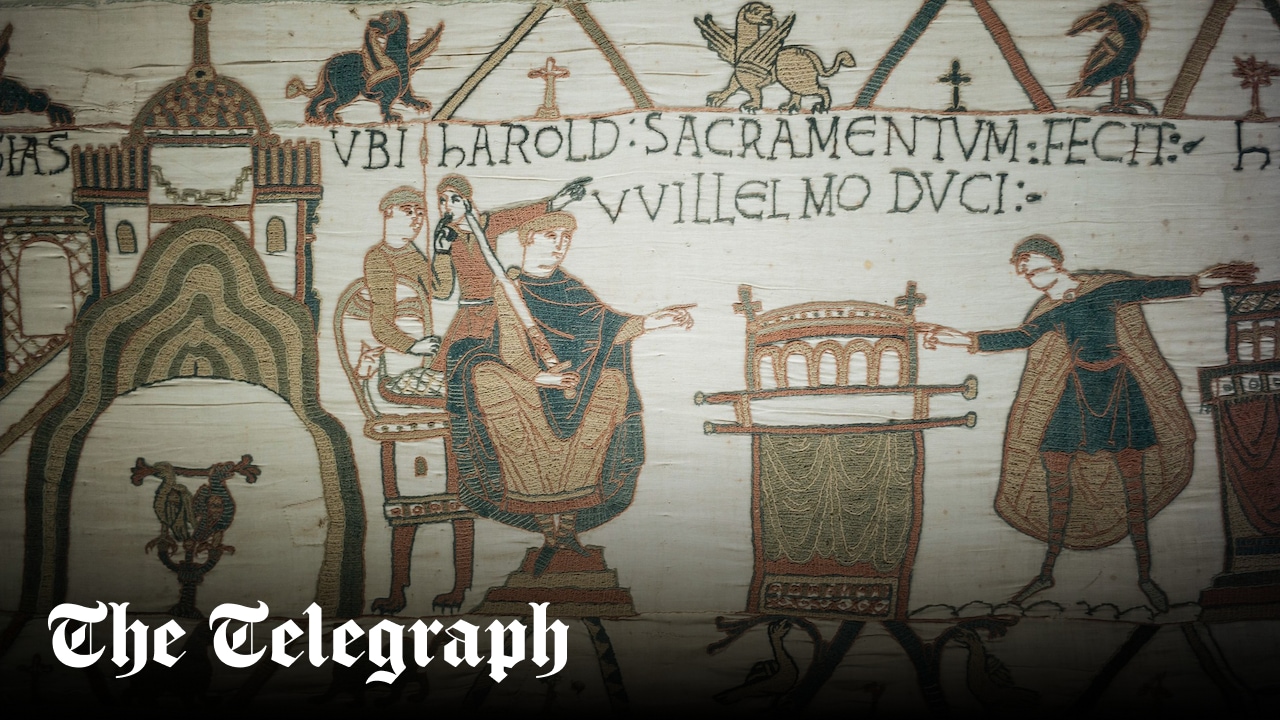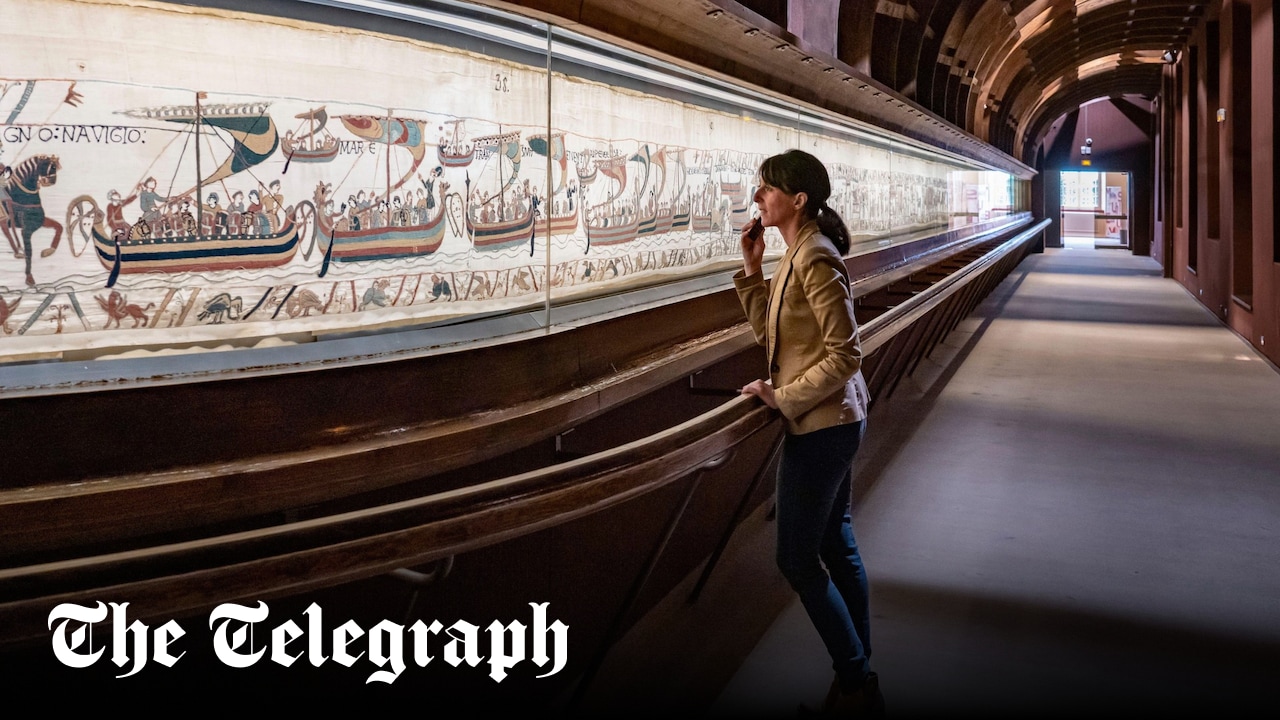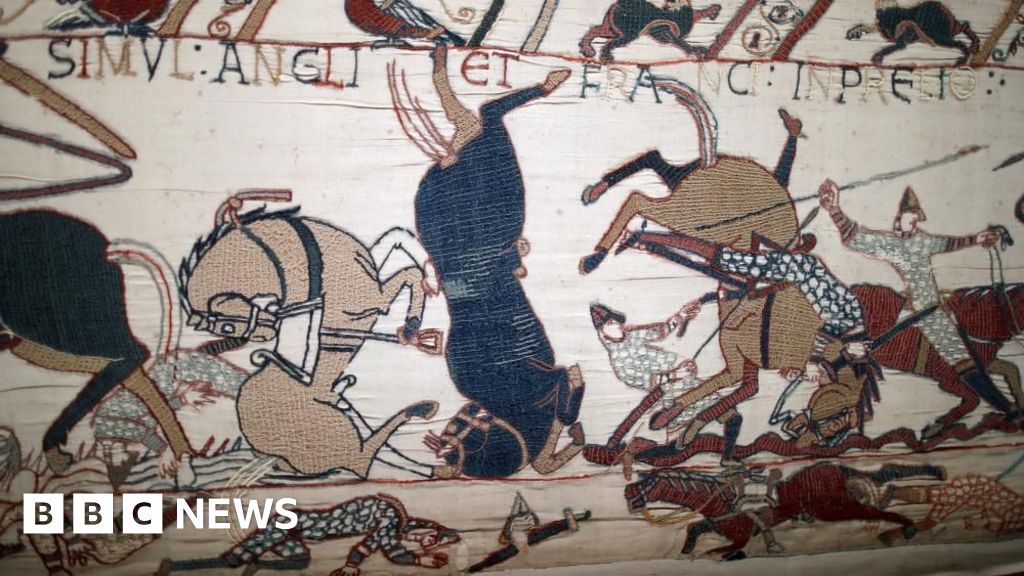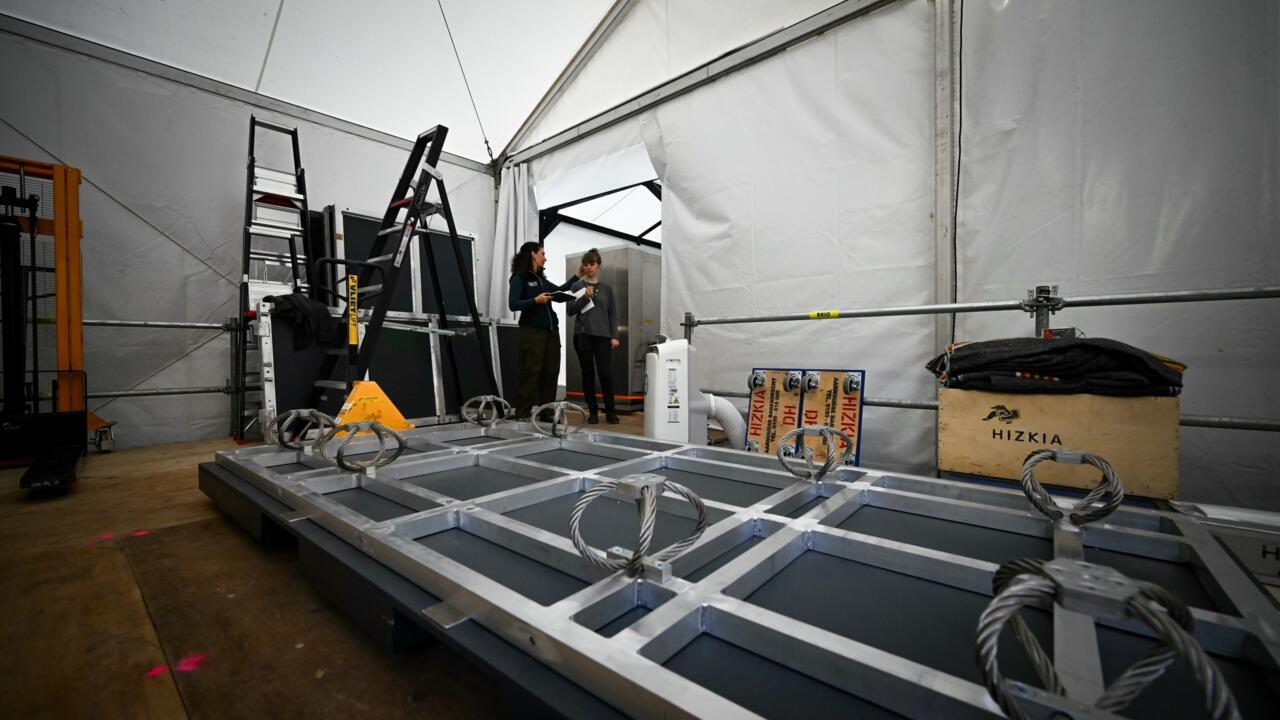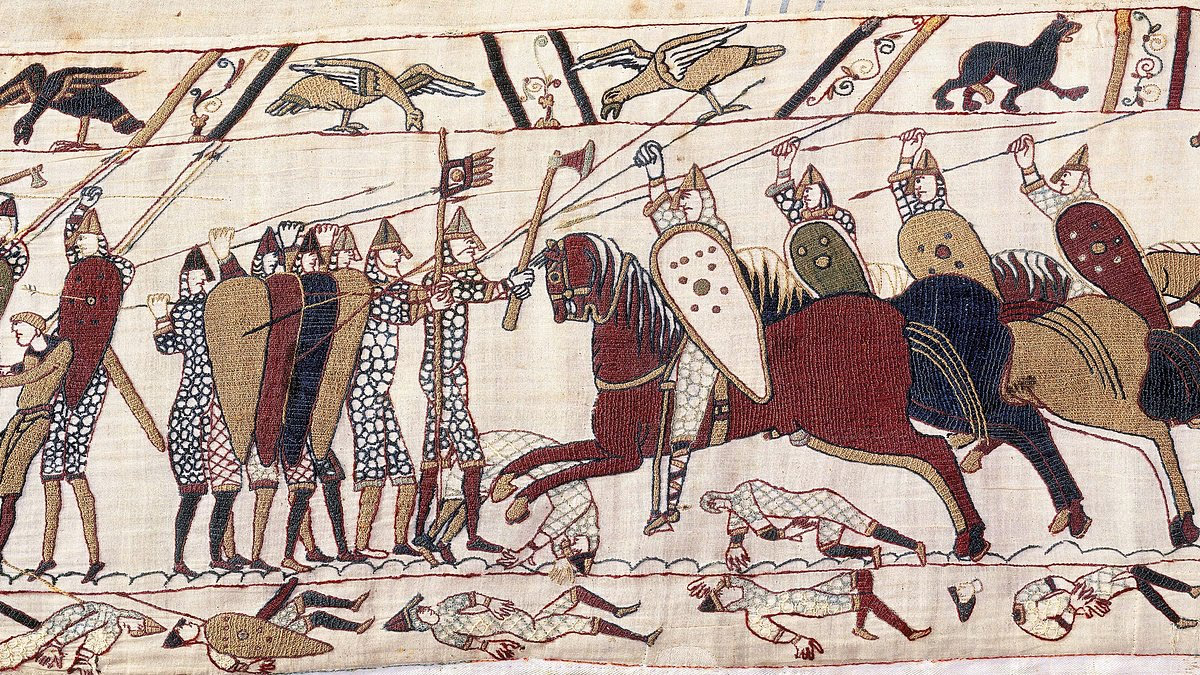
The Bayeux Tapestry cannot be moved without it tearing, a French historian opposed to its loan to the British Museum has said.Didier Rykner spoke out as a petition he started on Change.org calling for the move to be cancelled reached nearly 50,000 signatures.The 11th-century work depicting the 1066 Norman Conquest is to go on display in Britain next year.The historic loan was announced in June by French President Emmanuel Macron during his visit to Britain.But Mr Rykner told BBC Radio 4's PM programme yesterday: 'I have spoken with the specialists who have worked on the tapestry, and they all tell the same thing. It is very fragile. 'You must know, it is 70 metres long. It is very long, on a very thin canvas... and it is not possible to move it away without putting it at risk, without tearing it, without making holes.' The Bayeux Tapestry cannot be moved without it being damaged, a French historian opposed to its loan to the British Museum has said Didier Rykner spoke out as a petition he started on Change.org calling for the move to be cancelled reached nearly 50,000 signaturesThe expert insisted that if it were possible to move the treasure without it being put at risk, he would agree to the loan.In the face of some experts' fears about the move across the Channel, the British Museum has insisted that its experts are very experienced in handling fragile artefacts.But Mr Rykner, the editor of art history website La Tribune de L'art, said: 'I am very disappointed in the British Museum, because they know very well they have never moved something like this. 'It is unique. It is a work of art from the 11th century. It is impossible that they know how to do this.'The embroidery, which is currently on display in a dedicated museum in Bayeux, already has some 24,000 stains, 16,445 creases, nearly 10,000 holes and around 30 rips. Mr Rykner's petition, which is in French, reads: 'The very same people who were tasked with examining it, establishing its condition, recommending the necessary measures for its protection during the work on the future museum, and assessing the risks of a possible trip to England. The 11th-century work depicting the 1066 Norman Conquest is to go on display in Britain next year. Above: The embroidery at its permanent home, the Bayeux Tapestry Museum in France'Their diagnosis is unequivocal: any transport, however minimal, represents a danger.'A British Museum spokesperson said: 'The British Museum has a world leading conservation and collections management team who are experienced at handling and caring for this type of material, they are working closely with colleagues in France on the Tapestry's display.'The Bayeux Tapestry depicts the events leading up to the Norman Conquest of England, led by William, Duke of Normandy challenging Harold II, King of England.It is believed to have been woven in the UK.When the artefact returns to Britain, Anglo-Saxon treasures from the Sutton Hoo ship burial will go in the other direction to France for a temporary period.Mr Macron revealed during his trip to Britain last month that King Charles helped secure a deal to return the tapestry to England.He claimed France did its best not to loan the artwork but that His Majesty helped get the deal over the line.Despite its name, the treasure is in fact an embroidery rather than a tapestry.Tapestries are usually woven using a loom, while embroidery is traditionally made with a needle and thread. Timeline of the Bayeux Tapestry 1066: Between seven and twelve thousand Norman soldiers defeat an English army of a similar size at what is now Battle, East Sussex1476: The embroidered cloth depicting the battle is referred to for the first time in an inventory of Bayeux Cathedral1732-3: Antiquarian Smart Lethieullier writes the first detailed English account of the tapestry while living in Paris - but it is not published till 17671792: During the French Revolution, the precious artwork was declared public property and confiscated to be used as a covering for wagons - but it was saved by a lawyer who hid it in his home1804: In a move dripping in symbolism, Napoleon - under the impression France was about to invade and conquer Britain - had the tapestry temporarily moved to Paris for display1870: The tapestry is removed from Bayeux once again during the Franco-Prussian War - but it is moved back two years later1944: The Gestapo removed the tapestry to the Louvre in Paris - just days before the German withdrawal. A message from Heinrich Himmler - who coveted the cloth because it is a part of Germanic history - is believed to imply the Nazis planned to take it to Berlin1945: It was returned to Bayeux, where it has been ever since
Bayeux Tapestry could TEAR if is moved, French historian complains
The 11th-century work depicting the 1066 Norman Conquest is to go on display in Britain next year. But Didier Rykner insisted it cannot be moved without 'tearing it, without making holes'.
792 words~4 min read