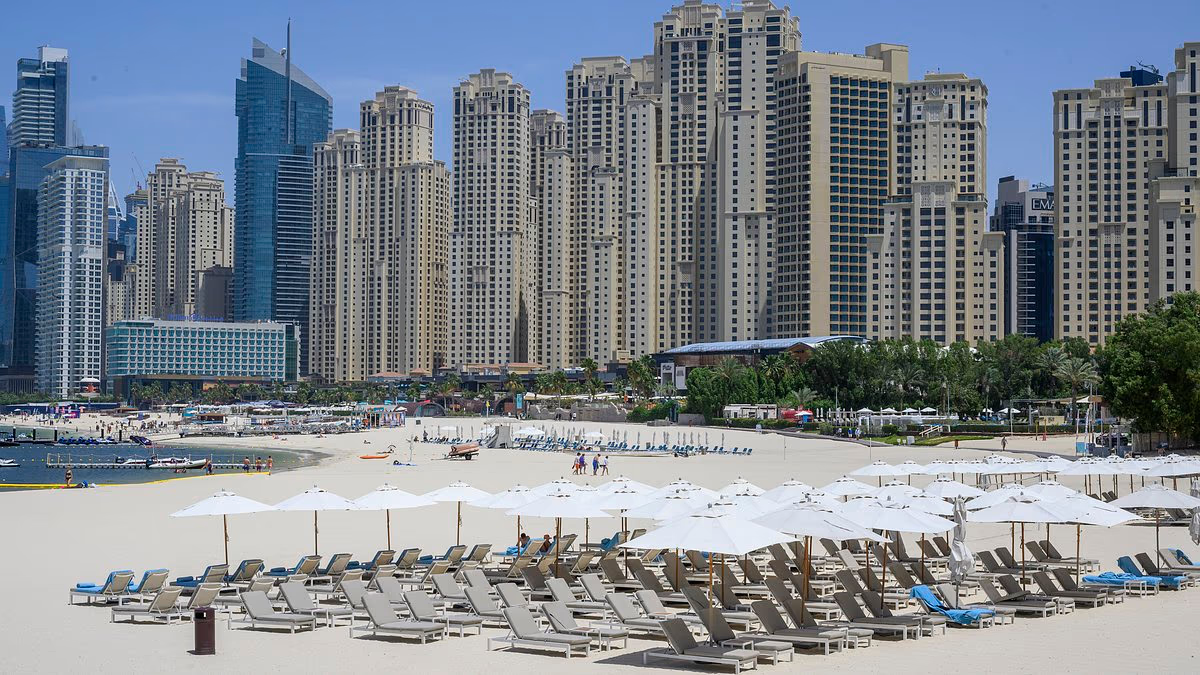
With its hot weather, vibrant nightlife, glitzy feel and famously high salaries, Dubai has been tempting British workers for years. Drawn to the picture-perfect image of fancy lunches, beach days and a better quality of life, young professionals view the move as an opportunity to escape the repetitive, daily grind of UK employment - all while raking in more money than they would at home. But recruiters have grown tired of fun-loving Brits flocking to Dubai for the lifestyle rather than viewing it as serious work, those living in the city have claimed. The issue appears to have become so severe that companies started dropping salaries offered to new recruits in 2024, fed up with poor attendance and lacklustre effort. Based on a survey of 1,000 companies in the region, 29 per cent of respondents reduced wages for new workers last year, according to Cooper Fitch's 2025 salary guide to the United Arab Emirates. Louay Al-Samarrai, who left the UK for Dubai 35 years ago and set up PR agency Active Digital Marketing Communications, said British expats have given themselves a bad reputation by being lifestyle rather than career driven. 'Because they come out for the lifestyle, the job is a secondary issue. They'll go for their bottomless brunch, and you find their attendance at work in the morning might be a bit lax,' he told The Telegraph. 'If they're working remotely, they might come online at 10.30am and say they weren't feeling well, when they actually had a hangover.' Dubai is a city in the United Arab Emirates known for its luxury properties and high-end shops Sam Rhydderch, who aspired to Dubai for all it had to offer, claimed his dreams were crushed when the £60k+ salary he had envisioned turned out be vastly different from the £35k-odd salaries he was offered during applications Meanwhile, 26-year-old Sam Rhydderch, who aspired to Dubai for all it had to offer, claimed his dreams were crushed when the £60k+ salary he had envisioned turned out be vastly different from the £35k-odd salaries he was offered during applications. 'The recruiter told me that the region is cooling, and salaries have become less competitive because of the influx of overseas people, as well as the focus from UAE-based companies to now hire locally,' he said. Dubai is currently the world's 15th most expensive city to live in, having climbed three places in Mercer's 2024 ranking. It has the highest cost of living in the Middle East, caused by the 21 per cent jump in house prices. It was exceeded by London, which increased nine places to 8th position. However, Dubai is still now more expensive than Tel Aviv, Miami, Chicago, Paris and Berlin. More than 240,000 British expats are now estimated to live in Dubai, with many attracted to the city by the 5,000 British companies operating in the UAE.Aside from higher salaries, Britons looking at Dubai are also attracted by tax-free income and high-end restaurants, properties and shops. In January this year, the Daily Mail reported on data from crowdsourced database Numbeo, which revealed an imported 330ml beer was half the price in London, at an average of £5.25 - compared to £10.93 in Dubai. Amir Khan with his wife Faryal Makhdoom and his daughters, Lamaisah, ten, Alayan, six, chose to relocate from the UK to Dubai Luxury restaurants are a major attraction in Dubai, including this one near Burj Khalifa Lake Sheffield graduate Catherine Earl, who featured in a Channel 4 series last year called 'Dubai: Buying The Dream', left a job at Boots in Nottingham for Dubai Meanwhile, a cappuccino was £3.74 in London against £4.67 in Dubai.A McDonalds meal was roughly the same, at £8 in London compared to £7.65 in Dubai. Cigarettes were 70 per cent cheaper with a 20 pack of Marlboro costing an average of £16.25 in London or £5.03 in Dubai. An average basic utility bill for electricity, heating, cooling, water and garbage for an 85 sq metre apartment in London was £236.75 or £183.23 in Dubai. But internet access was significantly more in the UAE, with a minimum 60 mbps connection with unlimited data costing £80.97 in Dubai or £31.53 in London. As for clothes shopping, a pair of Levi 501 jeans was £77 in London or £60 in Dubai, while a pair of mid-range Nike running trainers was £90 in London or £84 in Dubai.
How Dubai dream is over for 'arrogant' British workers
Drawn to the picture-perfect image of fancy lunches, beach days and a better quality of life, young professionals view the move as an opportunity to escape the repetitive, daily grind of UK employment.
731 words~3 min read