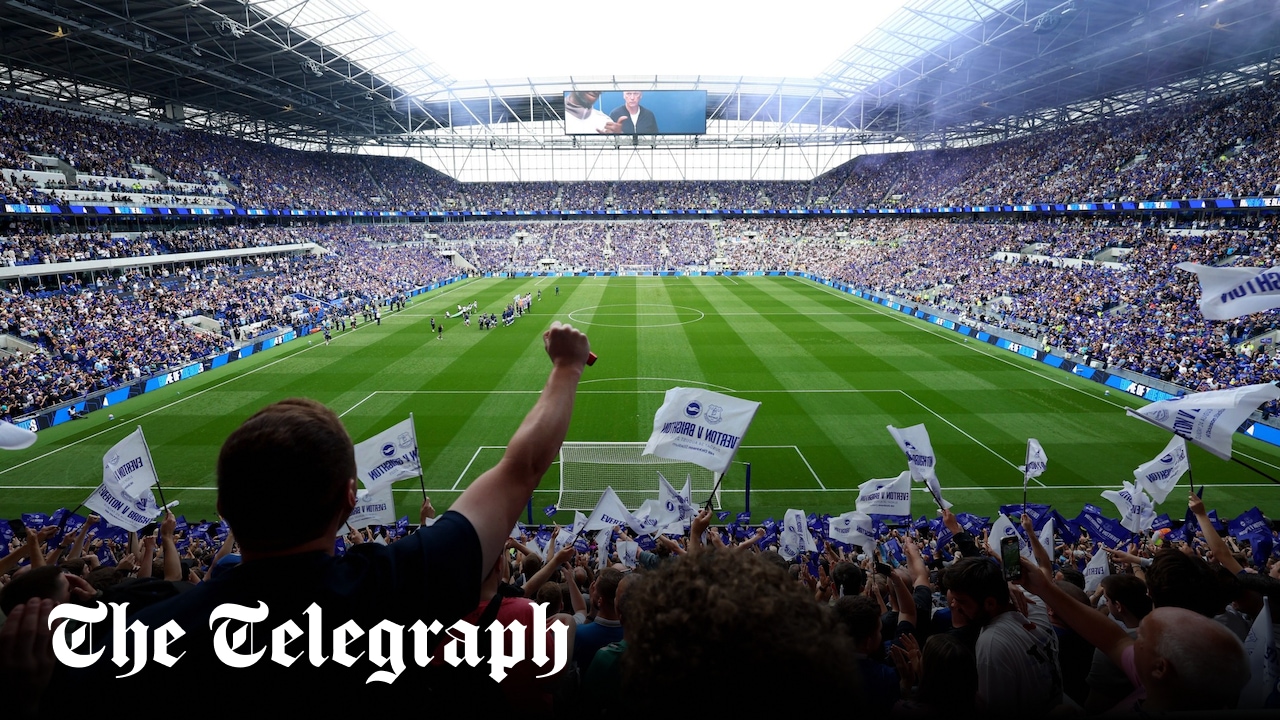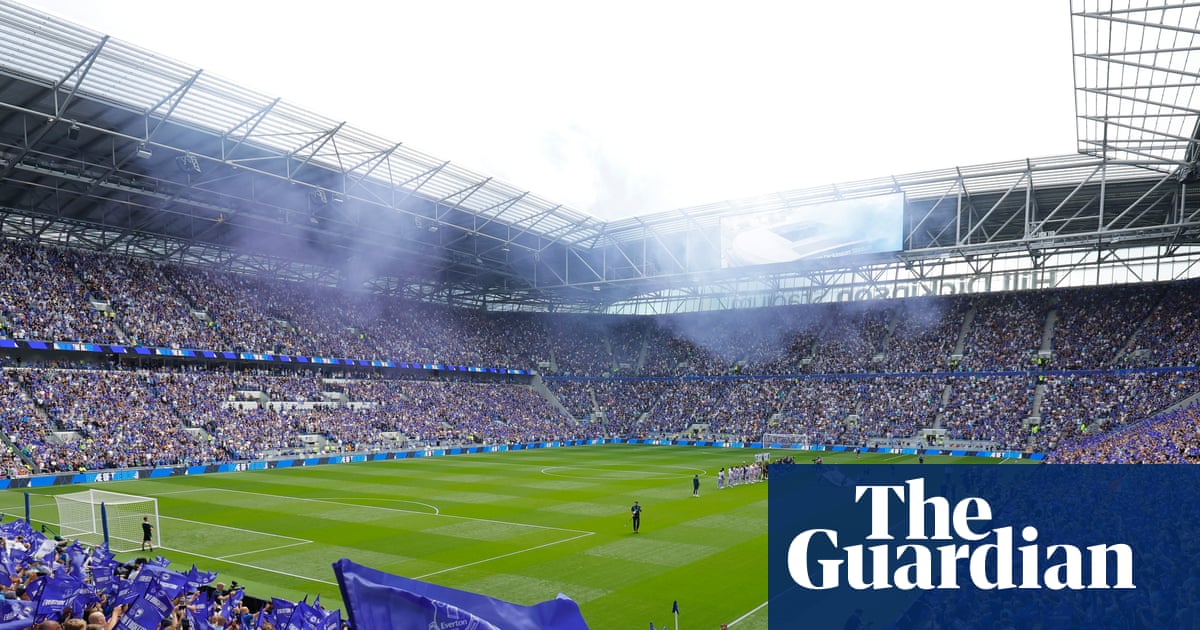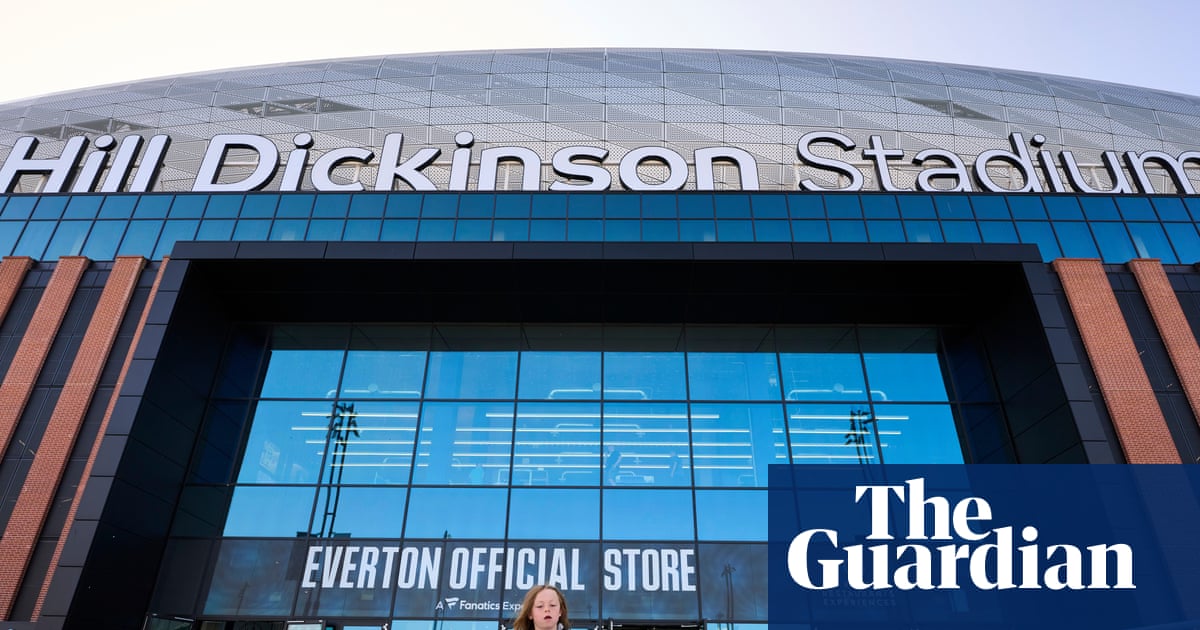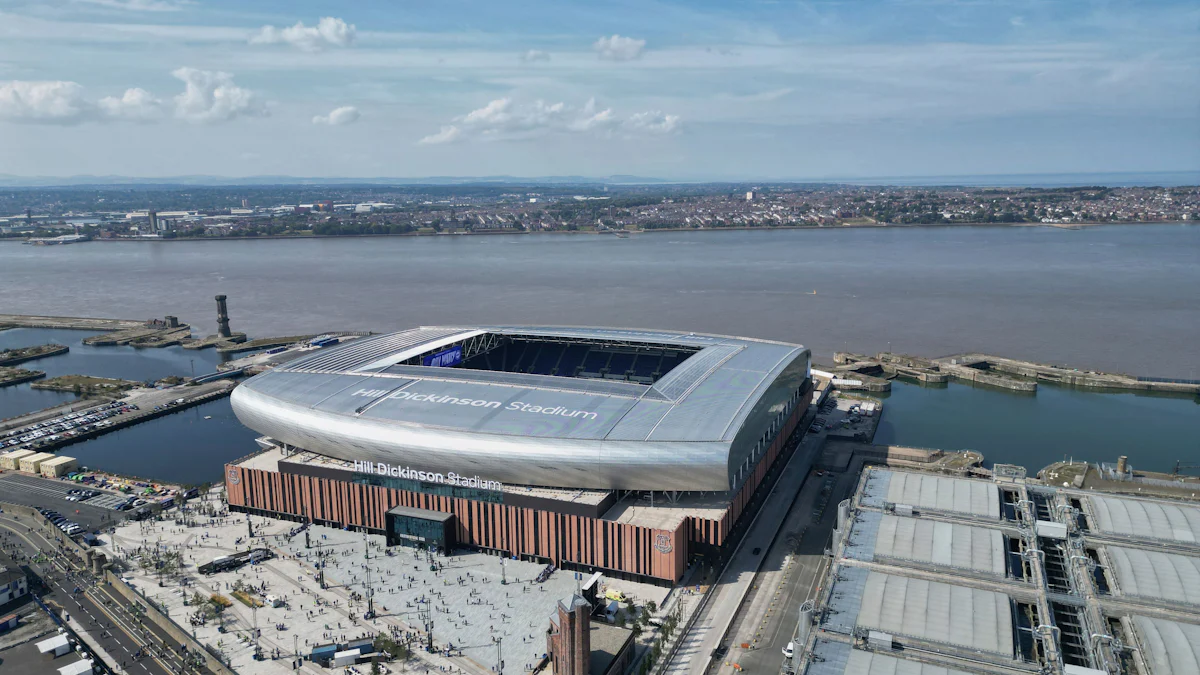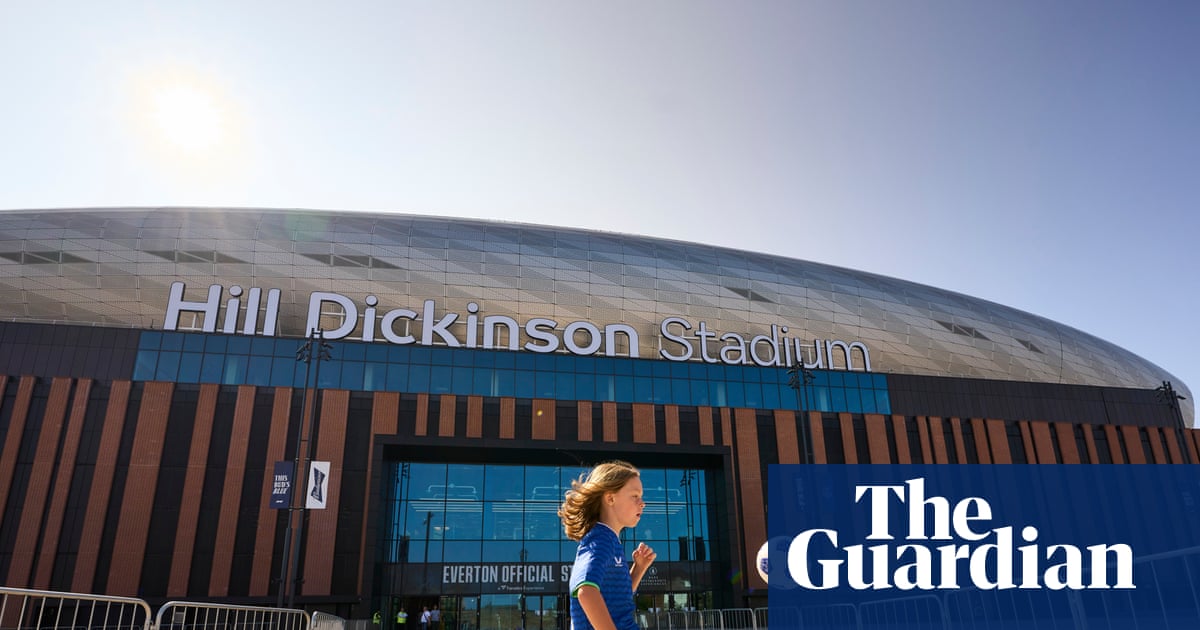
Hill Dickinson Stadium’s development has not always been smooth, and teething problems linger, but it can transform both club and community
B
uilders were working on the signage high up on Hill Dickinson Stadium on Monday while renovations were being carried out inside one of the bars opposite Everton’s magnificent new ground. It would have been a predictable scene of final preparations for the first league game at the £800m venue but for an unusual sight in this part of town: holidaymakers.
They were cruise-ship passengers to be precise, dozens of them. Instead of disembarking the Regal Princess and turning right towards the Royal Albert Dock and city centre when it docked in Liverpool, as one might expect, they had turned left and walked 20 to 25 minutes along Regent Road to visit the finest new addition to the Premier League. They would have sailed past it on entering the River Mersey too. No wonder Everton plan to sell stadium and dockland tours on board cruise-ships in the near future.
Not so long ago you would have advised tourists against walking through the industrial wasteland that was – and still is, in many sections – this part of north Liverpool. Nothing to see here apart from scrap metal merchants, disused docks and the empty shells of pubs that once thronged with business. You either drove through Regent Road or worked there. But as the builders, the bars, the new apartments, and even something as simple as new street lighting indicate, life is slowly starting to return to this area. While acknowledging the impact of The Titanic Hotel and the creatives in the Ten Streets area, Everton’s stadium is the catalyst for that change.