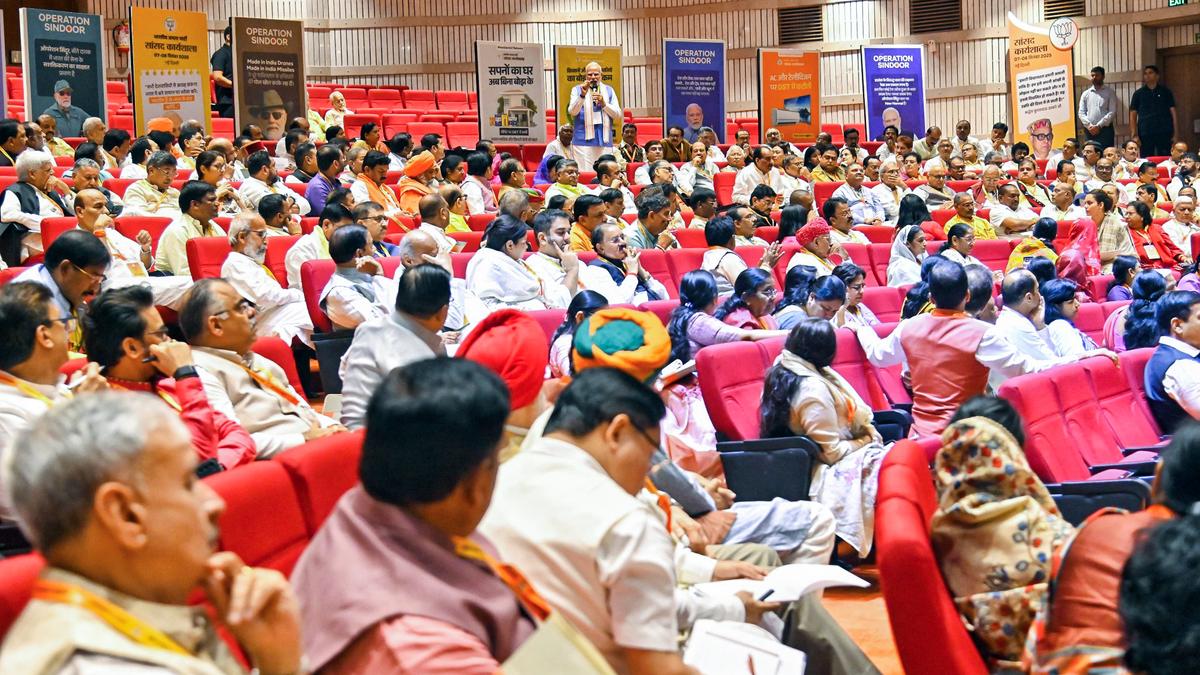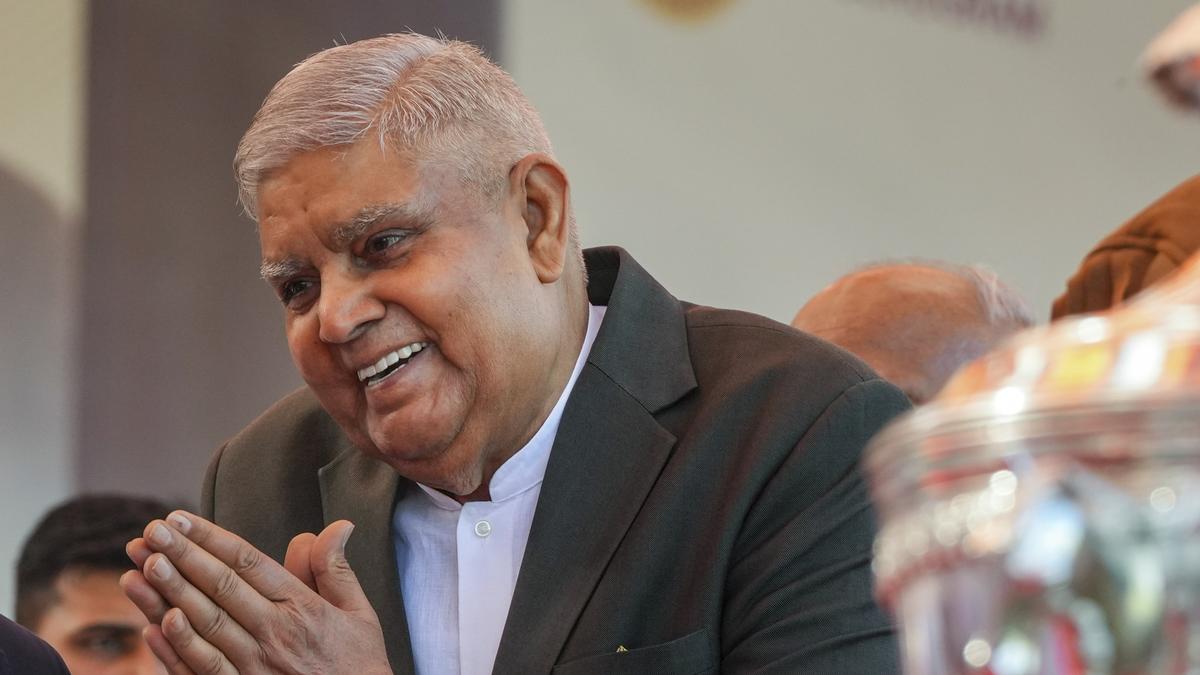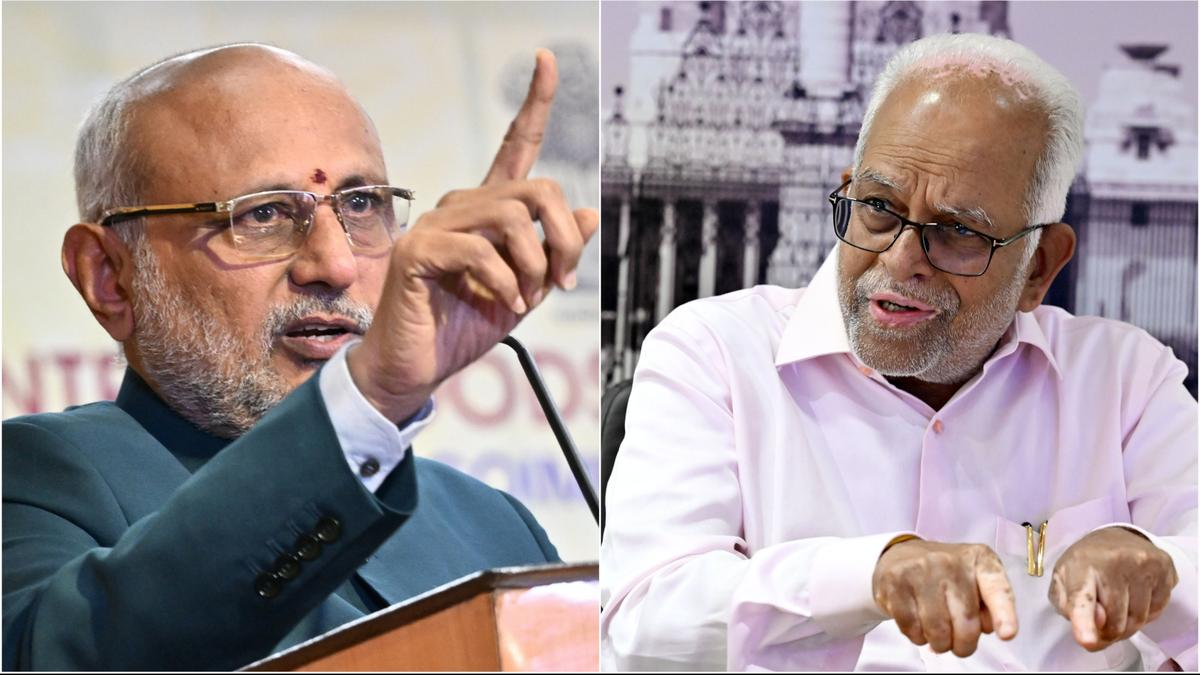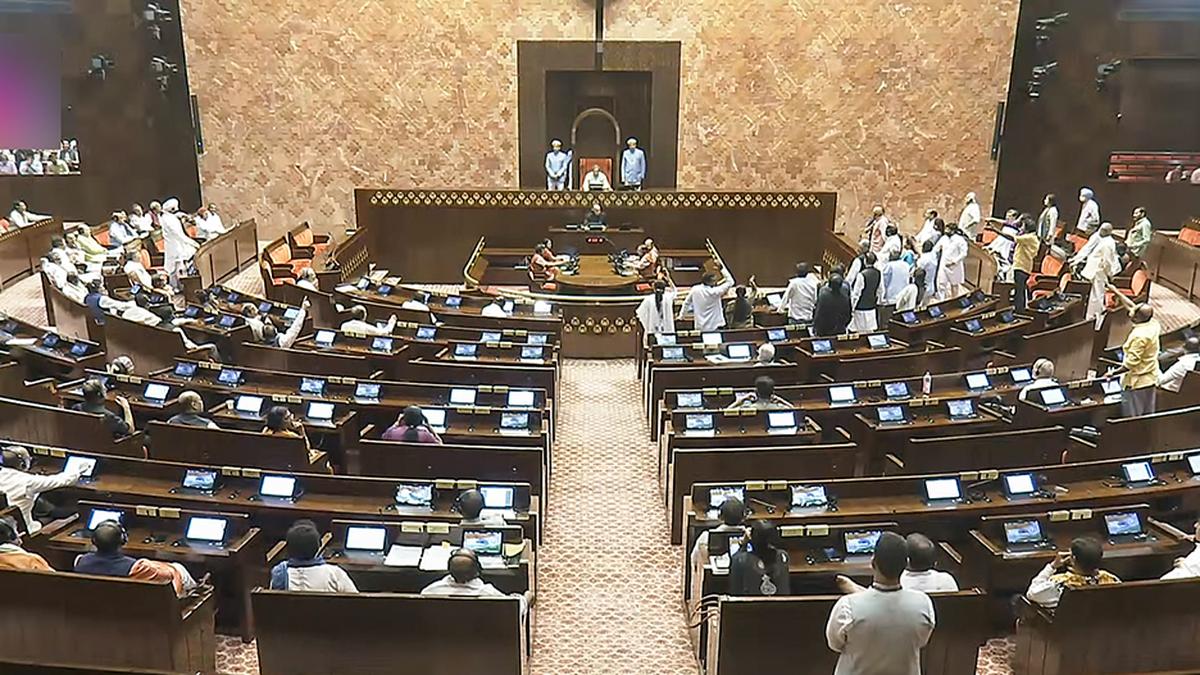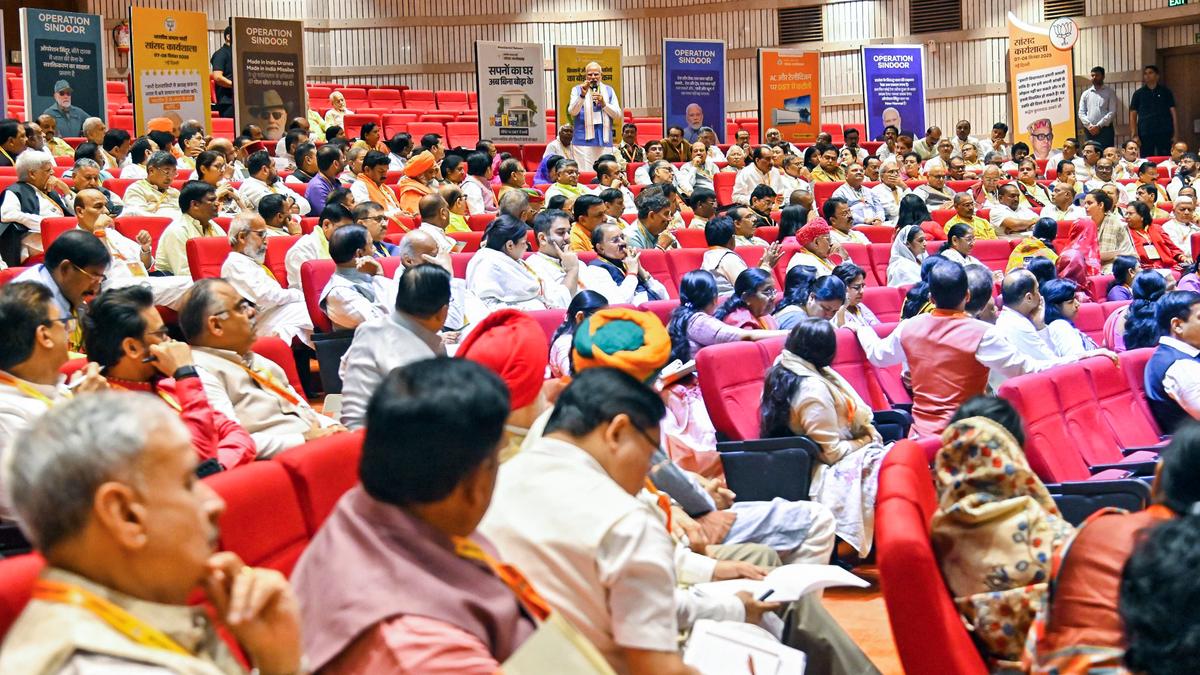
The Vice-President is elected by an electoral college that comprises members of the Lok Sabha and the Rajya Sabha, both elected and nominated. ANI
| Photo Credit: ANI
The election to the post of Vice-President of India is conducted under a constitutionally mandated process overseen by the Election Commission. Unlike the Presidential poll, it involves only Members of Parliament as electors, with each carrying a single vote. The elections this year will feature C. P. Radhakrishnan, fielded by the National Democratic Alliance (NDA), and Justice (Retd.) B. Sudershan Reddy, nominated by the Opposition INDIA bloc. The outcome will be determined by numerical strengths and voting alignments across both Houses of Parliament.Who are the electors in the Vice-Presidential election?The Vice-President is elected by an Electoral College comprising members of both Houses of Parliament, including nominated members. State legislatures play no role in this election. In 2025, the electorate consists of 782 MPs after accounting for vacancies, 543 in the Lok Sabha and 233 elected plus 12 nominated in the Rajya Sabha. Each member’s vote carries equal value.What is the process of voting and how are the votes counted?The election is conducted through the system of proportional representation using the single transferable vote, as prescribed under Article 66 of the Constitution. Members cast their votes by secret ballot, indicating preferences among the candidates in order. The election is conducted under the supervision of the Election Commission, which appoints a Returning Officer, typically a senior parliamentary official, to oversee the process.