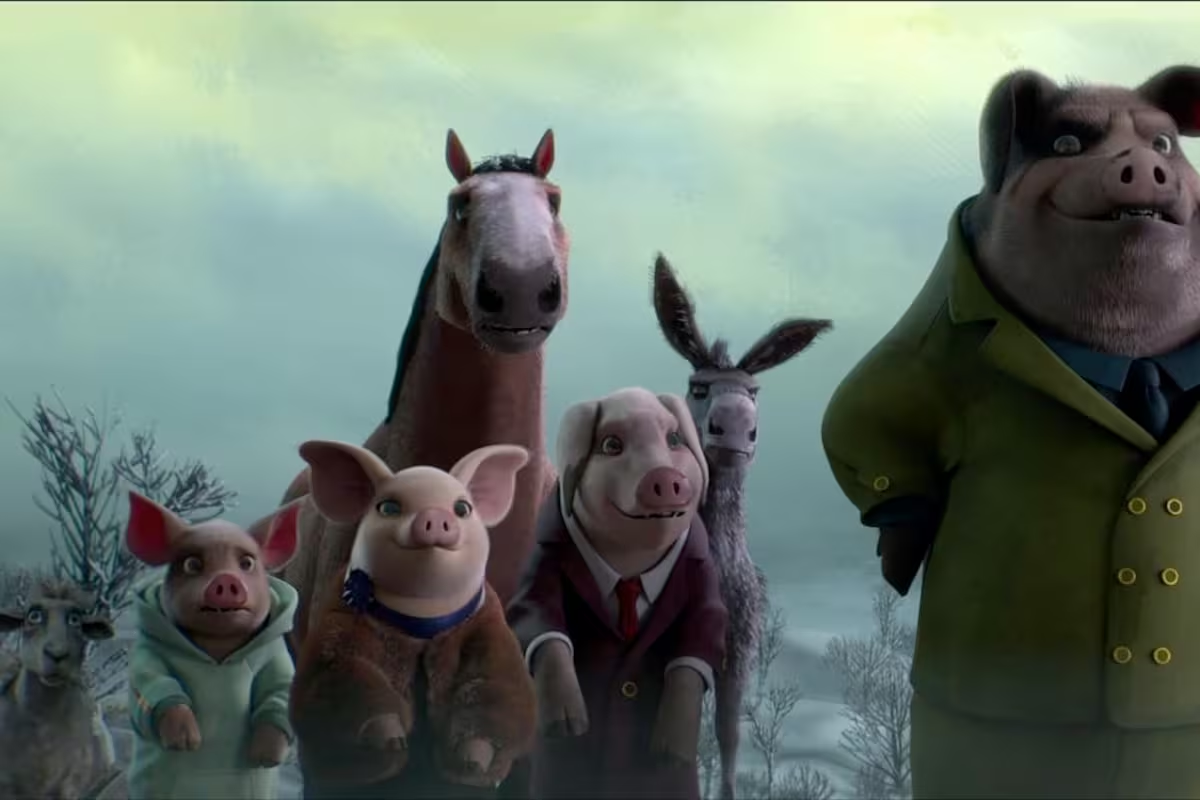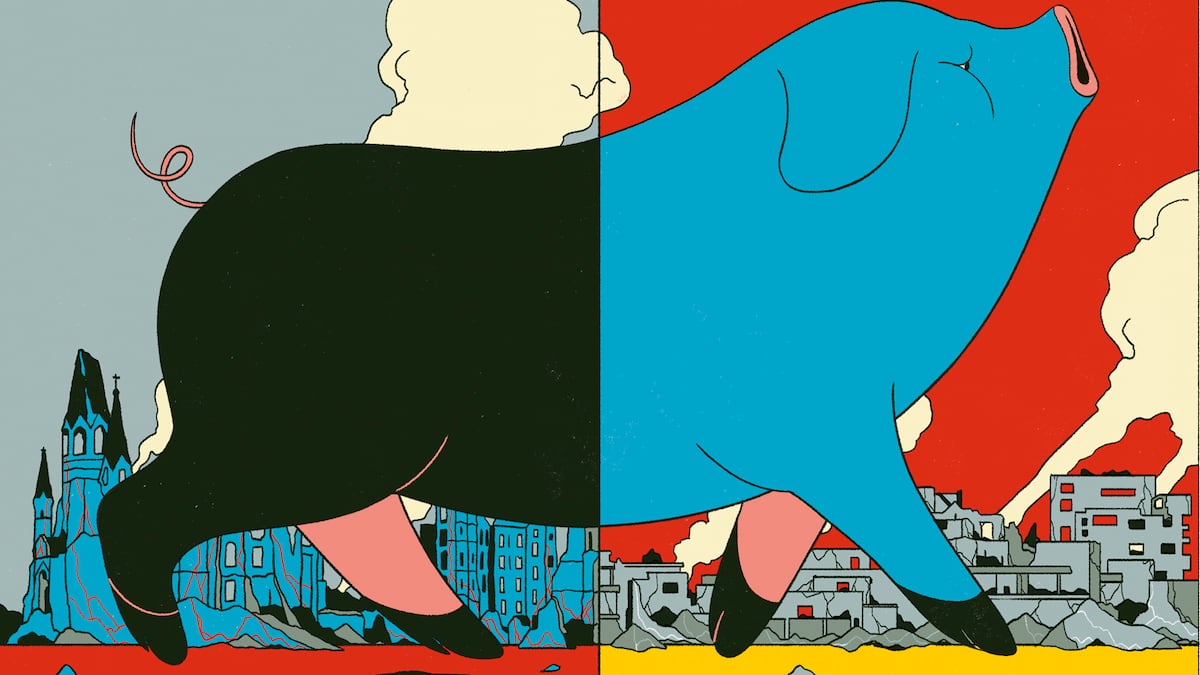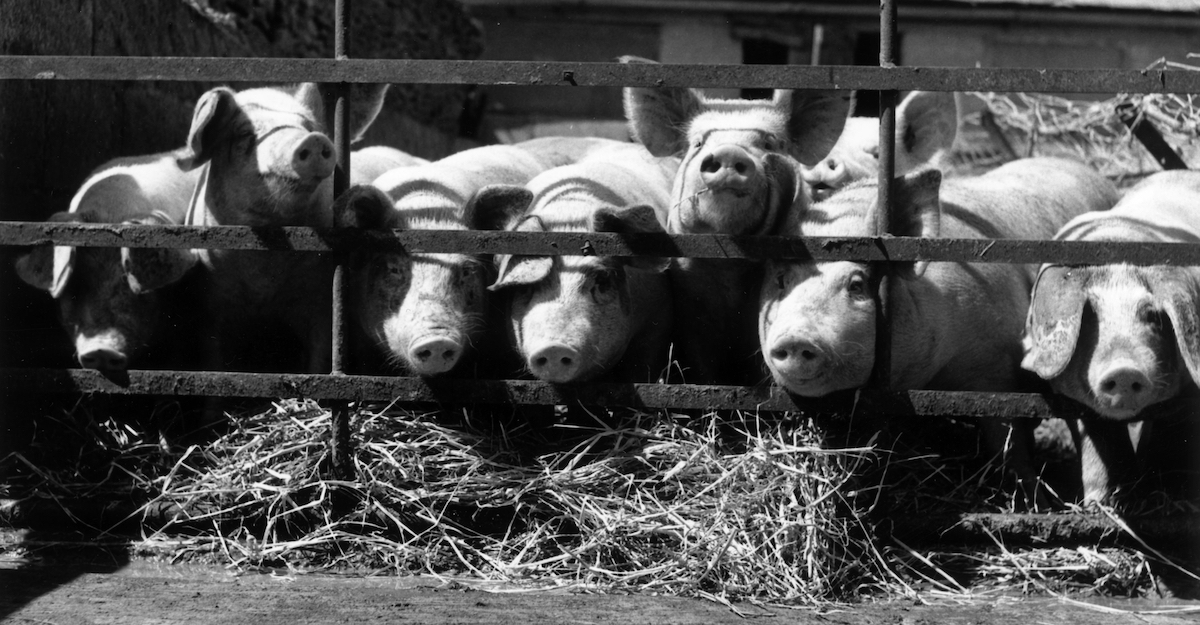
Richard Blair on the role his mother played in developing the 1945 political fable – and how it nearly didn’t get published
A
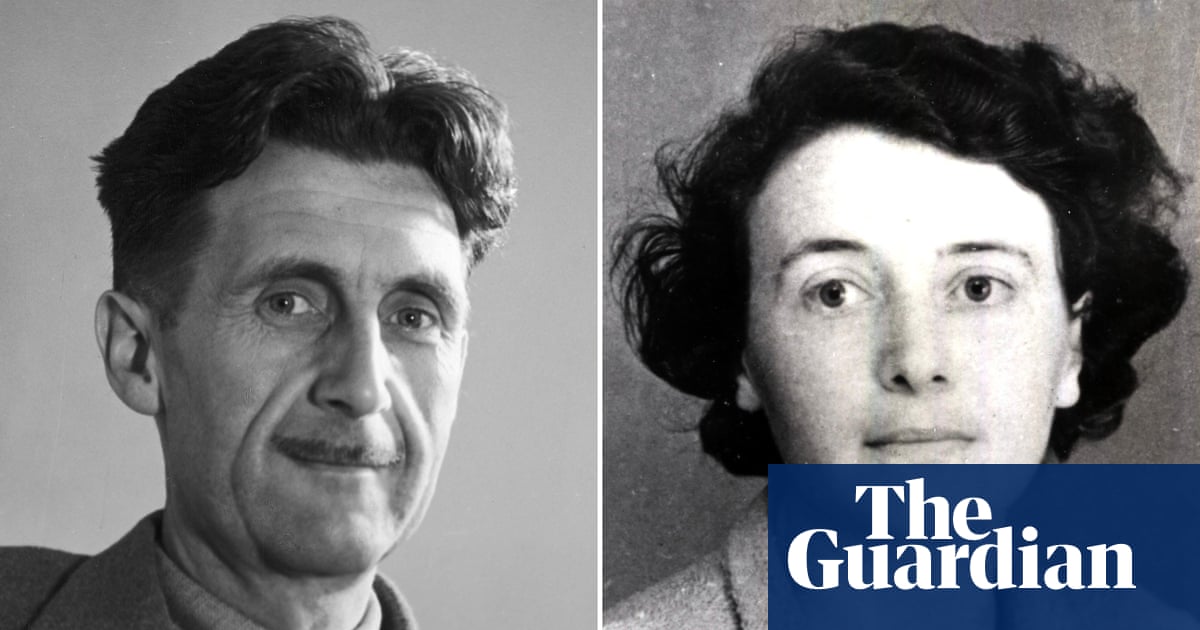
s the second world war reached its height, the winter of 1943-4 was one of the coldest of the century. My parents were living in a poorly heated flat in Kilburn, north-west London. My mother was working at the Ministry of Food. She was deeply involved in BBC Radio’s Kitchen Front which tried to help people conjure nutritious meals from their rations. My father became literary editor of Tribune magazine in November 1943. He was only required in the office three days a week, which gave him the time to write Animal Farm.
Every evening, my father would read what he’d written to my mother under heavy blankets in bed. It was the only warm place in the flat. They would discuss the developing story and where it might go next. Lettice Cooper, the novelist and my mother’s Ministry of Food colleague, remembered my mother updating them every morning with the animals’ latest adventures. That my father and mother worked together so closely is no surprise. My father respected my mother’s talents greatly and later told a friend she had helped plan Animal Farm.
Indeed, for some years, my mother had been typing and copy-editing my father’s writing and offering him detailed corrections and revisions. She was probably more deeply engaged with Animal Farm than with his previous work, perhaps even suggesting it should be a “beast fable” rather than the originally planned political polemic. The result of my parents’ teamwork, by the time Animal Farm was finished in February 1944, was one of the most beautifully written books of the century.