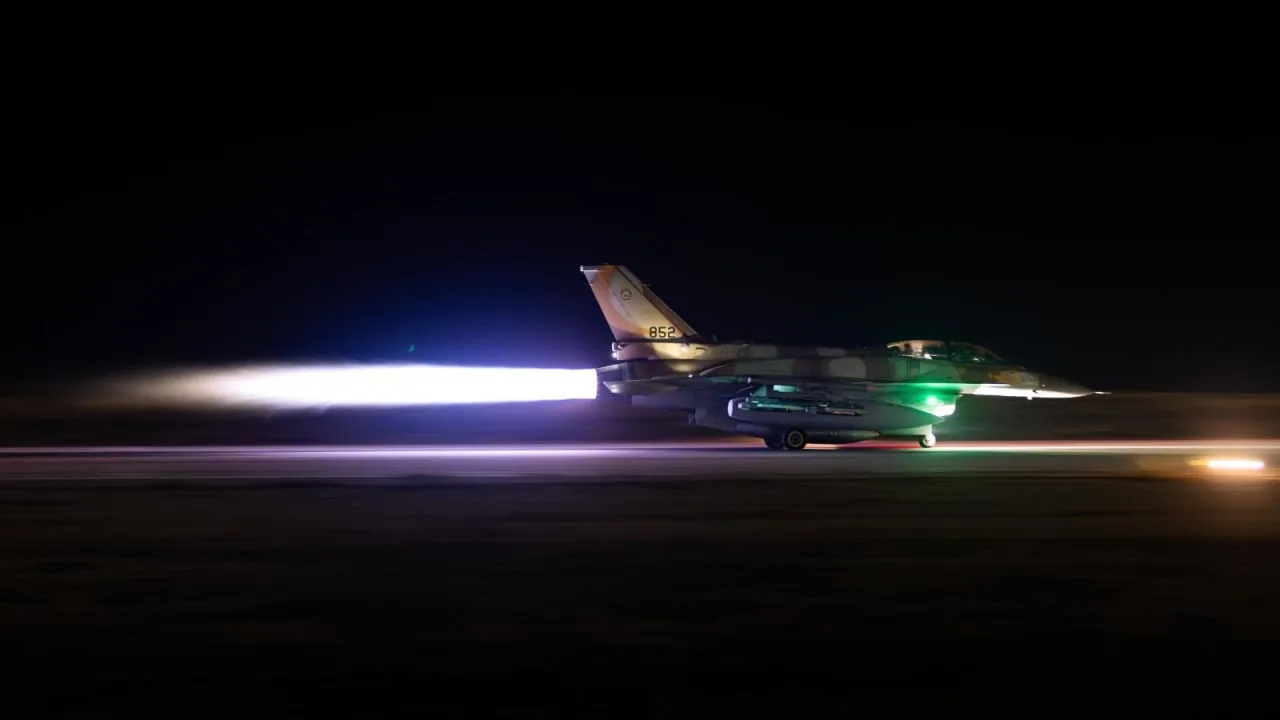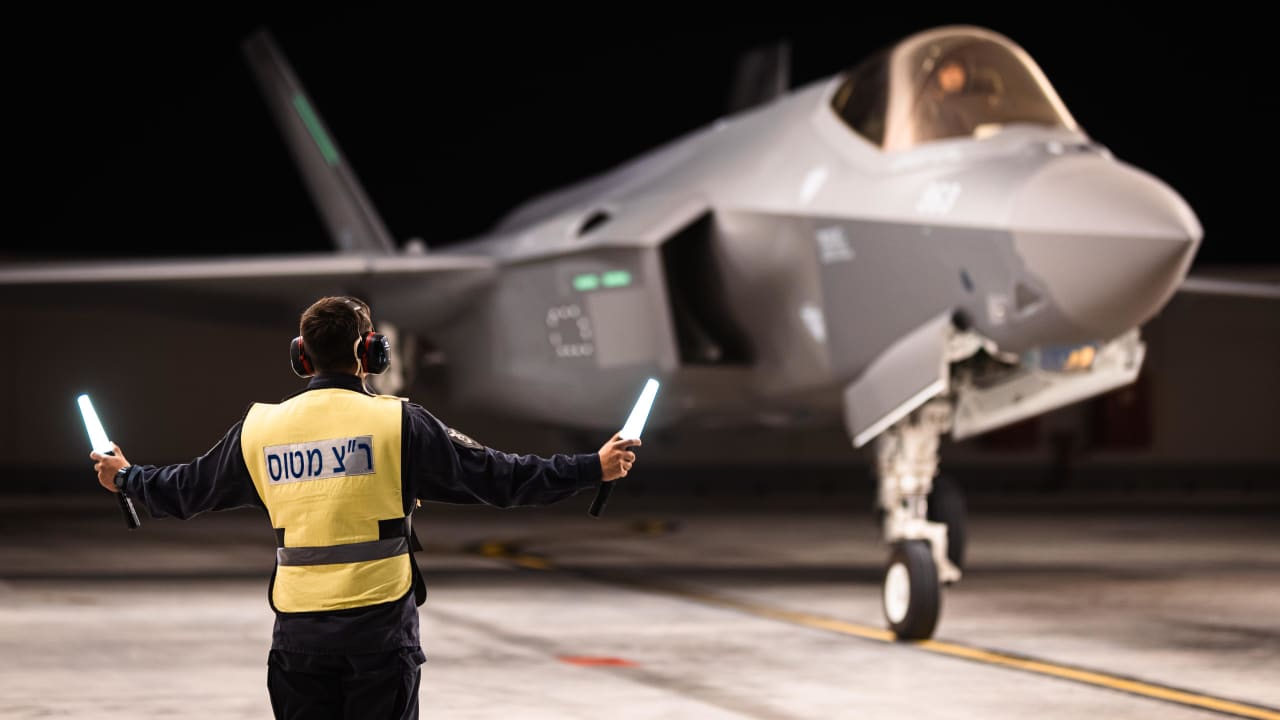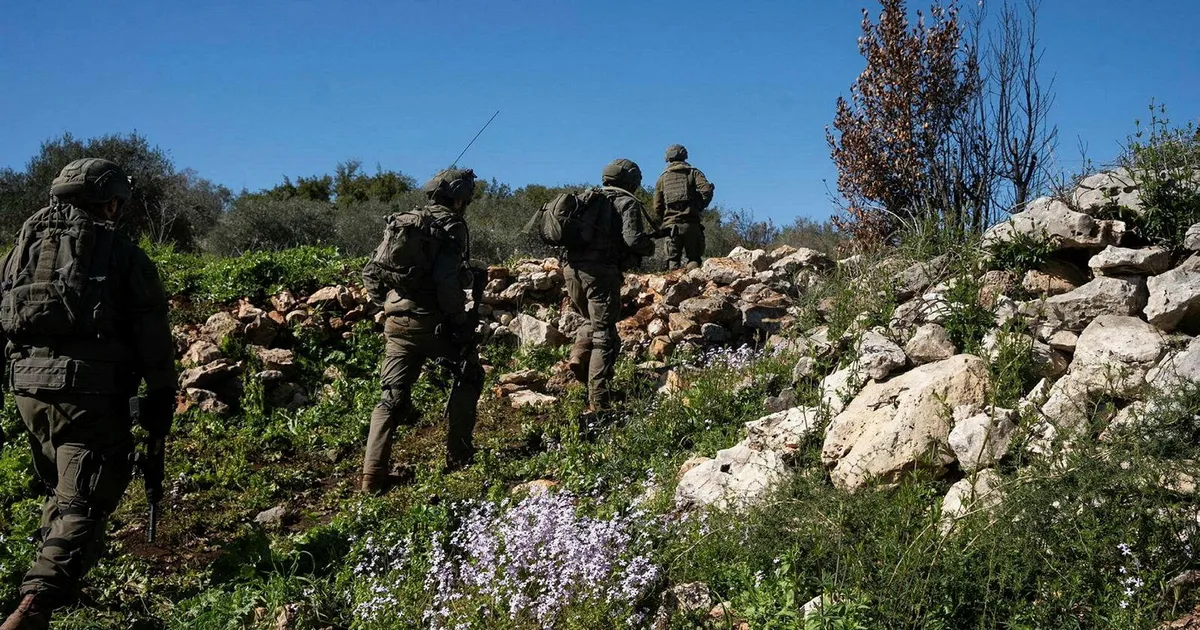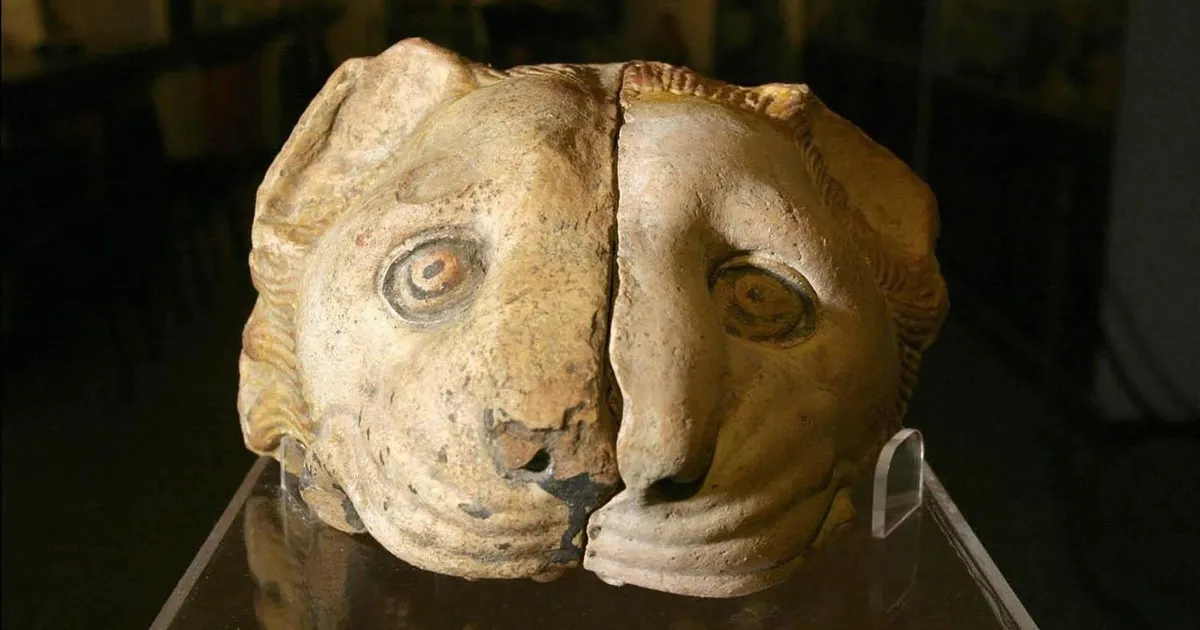
Current sectionIsrael NewsThe 12-day war between Iran and Israel was dubbed Am KeLavi in Hebrew, an example of linguistic archaeology in actionShare to FacebookShare to XArticle printing is available to subscribers onlyPrint in a simple, ad-free formatSubscribeComments: Zen reading is available to subscribers onlyAd-free and in a comfortable reading formatSubscribeThe symbolism of a lion: ~500 BCE, terracotta, from an ancient Greek temple Credit: Newcastle University, Mark Pinder/APThe symbolism of a lion: ~500 BCE, terracotta, from an ancient Greek temple Credit: Newcastle University, Mark Pinder/APAugust 12, 2025In the early hours of June 13, 2025, as Israeli aircraft crossed into Iranian airspace, they carried more than advanced weaponry – their campaign bore a name that connected contemporary warfare to a 3,000-year-old prophetic tradition. While international media reported on "Operation Rising Lion," the Hebrew designation told a deeper story: עַם כְּלָבִיא (Am KeLavi), meaning "A people like a lion."This wasn't just a codename; it was linguistic archaeology in action. It demonstrates how the revival of the Hebrew language enabled modern Israel to reach back across millennia to find words adequate to contemporary experience. The choice reveals something profound about how ancient texts continue to shape Israeli identity – and how a language returning from near-extinction can provide vocabulary for situations its biblical speakers could never have imagined.A beggar stands on a road beneath a digital billboard that reads in Hebrew, 'The nation is rising like a lion', Tel Aviv, June 21, 2025. Credit: Oded Balilty/ APA beggar stands on a road beneath a digital billboard that reads in Hebrew, 'The nation is rising like a lion', Tel Aviv, June 21, 2025. Credit: Oded Balilty/ APThe lion's roarThe name Am KeLavi derives from Numbers 23:24, where the prophet Balaam declares: "הן עם כלביא יקום ומצא כליש ישתה" ("Behold, a people rises like a lion, and lifts itself up like a young lion"). The verse appears within one of the Hebrew Bible's most sophisticated narrative reversals – a hired curse that becomes an unexpected blessing.The linguistic structure itself deserves attention. Hebrew biblical poetry frequently employs parallelism, where successive lines reinforce meaning through synonymous phrasing. Here, "lavi" (לביא) and "layish" (ליש) represent two terms for lion, creating what scholars call "semantic intensification" – the second lion metaphor amplifies the first. The choice of "lavi" rather than the more common biblical lion terms "aryeh" (אריה) or "ari" proves significant. "Lavi" appears only eight times in the Hebrew Bible, always in contexts emphasizing power and fearlessness. In Job 4:11, it describes "the old lion" that "perishes for lack of prey." In Proverbs 30:30, it represents "the lion, mightiest among beasts, who does not turn back before any." Lion. You tell him to turn back Credit: 2021 Photography / Shutterstock.Lion. You tell him to turn back Credit: 2021 Photography / Shutterstock.This semantic specificity makes the military designation Am KeLavi particularly resonant – it invokes not just any lion metaphor, but the biblical tradition's most formidable leonine imagery.A curse gone wrongTo understand the power of Am KeLavi as a military designation, we must first examine the remarkable narrative from which it springs. The story of Balaam unfolds in Numbers 22-24 as one of the Hebrew Bible's most sophisticated explorations of divine irony – a tale where an intention to harm becomes an unexpected blessing.The drama begins with fear. The Israelites, having defeated the Amorite kings Sihon and Og, are encamped in Moab's plains. King Balak, in a management decision that would resonate through the ages, decides conventional warfare offers little hope. Desperate, he opts for supernatural intervention, a form of ancient public relations and unconventional warfare rolled into one. He dispatches messengers to hire Balaam, a renowned prophet whose curses, up to that point, had enjoyed a five-star rating.What follows reveals the narrative's theological sophistication. Three times Balak leads Balaam to different vantage points overlooking the Israelite camp, hoping perspective might yield the desired curse. Three times, instead of curses, blessings pour forth. The first establishes Israel's distinctiveness: "How can I curse whom the Lord has not cursed, How doom when the Lord has not doomed?" (Numbers 23:8). The second contains our key verse about the people rising like a lion. The third reaches prophetic crescendo: "How fair are your tents, O Jacob, Your dwellings, O Israel!" (Numbers 24:5).Lion shown attacking bull, relief from Persepolis Credit: Franco Pecchio, from Milano, ItalyLion shown attacking bull, relief from Persepolis Credit: Franco Pecchio, from Milano, ItalyEach successive blessing grows more elaborate and more contrary to Balak's intentions. The hired curse becomes divine endorsement, and the foreign prophet becomes Israel's inadvertent advocate. This pattern of reversal – curse becoming blessing, threat becoming triumph – provides the template that the military operation Am KeLavi invokes, suggesting that contemporary events will follow the ancient paradigm. They planned to destroy us, but this only turned out to be their downfall.Digging up the prophetThe Balaam narrative gains additional credibility through archaeological discovery that would have seemed impossible when biblical criticism emerged in the 19th century. In 1967, excavations at Tell Deir 'Alla in Jordan's Jordan Valley uncovered an 8th-century B.C.E. Aramaic inscription mentioning "Balaam bar Beor, the man who was a seer of the gods."The text, written in red and black ink on plastered walls, describes Balaam receiving divine visions about approaching disaster. While the inscription inconveniently details a different prophecy entirely, it confirms that Balaam existed as a historical figure known for prophetic abilities across the ancient Near East.The discovery transforms how we understand the operation's nomenclature. When Israeli military planners chose Am KeLavi, they weren't simply selecting evocative biblical language. They were connecting to a prophetic tradition now verified by archaeological evidence, grounding contemporary action in historically documented patterns of divine reversal.The traveling lionThe Hebrew term "lavi" also carries linguistic weight extending far beyond its immediate biblical context. Within Semitic languages, related forms appear across the ancient Near East: Aramaic "leva," Ugaritic "labu," and Arabic "labu'ah" (lioness). This shared vocabulary suggests the lion's symbolic power transcended individual cultures, representing sovereignty and strength throughout the ancient world. Lion-inspired Sphinx statue from ancient Egypt Credit: Olivier FitoussiLion-inspired Sphinx statue from ancient Egypt Credit: Olivier FitoussiFurthermore, lavi is likely far older than its use in the Semitic languages. We find cognate words for lion in African languages such as la''at in Tangale spoken in Nigeria and librī in Somali, spoken in Somalia. This might mean that this was the original word for lion in Africa, before the Semitic people even reached the Middle East.More intriguingly, this ancient Semitic word appears to have influenced European languages through ancient cultural contact. The Ancient Greek word for lion "leon" is believed to be a borrowing from one of the Semitic languages – possibly Phoenician. It was borrowed into Latin as "leo," from which it spread throughout Europe: Russian "lev," Polish "lew," Czech "lev," and of course English "lion."Ancient words, modern warsThe successful deployment of "Am KeLavi" as military nomenclature illustrates Hebrew's unique position as a revived language. When Eliezer Ben-Yehuda and a collection of Jewish intellectuals and teachers began systematically reviving Hebrew as a spoken tongue in the late 19th century, they faced the challenge of adapting ancient religious vocabulary to modern secular needs. This process proved particularly complex for military terminology. Biblical Hebrew contained extensive vocabulary for warfare, but it described ancient combat involving chariots, spears, and siege engines. How could a language suspended in the third century C.E. provide adequate terminology for 20th and 21st-century military operations?The solution emerged through what linguists call "semantic extension" – expanding ancient terms to cover modern concepts while maintaining etymological continuity. Thus biblical words were recast as names of modern weaponry."Totakh" (Job 41:21, club) came to refer to artillery, "roveh" (Genesis 21:20, bow) a rifle, and "qel'a" (I Samuel 17:50, slingshot) was used to create "miqlah" – machine gun. This deep connection between Modern Hebrew and its biblical predecessor continues to this day with the names of military operations which draw on biblical precedents: Operation Kadesh (1956) in the Sinai desert invoked the biblical location where Moses struck the rock, while the extensive 2021 military operation in Gaza was dubbed "Shomer HaKhomot" ("Guard of the Walls"), evoking a verse in Song of Songs 5:7. "Am KeLavi" represents the culmination of this linguistic archaeology. Rather than creating new terminology, Israeli strategic communication reached back to the most ancient layers of Hebrew literature to find language adequate to Israel's contemporary challenges. The choice demonstrates Hebrew's remarkable capacity to bridge millennia – using prophetic vocabulary pronounced by ancient seers to describe precision airstrikes guided by satellite navigation.The public prosecutor's office of the Evin prison, Tehran, Iran, June 29, 2025, after an Israeli strike Credit: Vahid Salemi/APThe public prosecutor's office of the Evin prison, Tehran, Iran, June 29, 2025, after an Israeli strike Credit: Vahid Salemi/APWhat the rabbis sawThe enduring resonance of Balaam's lion imagery becomes apparent through its treatment in medieval Jewish commentary. Rashi (11th century France), taking a distinctly spiritual path, explained that Israel "rises like a lion" because "when they awaken from sleep, they are strengthened like a lion to seize mitzvot" (to do good deeds). His interpretation transforms military metaphor into spiritual practice – the lion's power becomes the energy with which Jews approach religious obligation.Avraham Ibn Ezra (12th century Spain), with perhaps a more pragmatic military eye, offered a different reading, arguing that the lion imagery describes Israel's prowess in warfare: "When they go out to battle, they are like lions." More provocatively, he suggested the verse contains prophetic implications: "this refers to the wars they will fight in the days of King David and in the days of the Messiah."People of many cultures aspire to be like what they think a lion is like. Credit: Petr David Josek/APPeople of many cultures aspire to be like what they think a lion is like. Credit: Petr David Josek/APRabbi Chaim Ibn Atar (18th century Morocco), author of the mystical commentary "Or HaChaim," developed these military implications further. He described Israel's "prowess at nighttime attacks" and their ability to "decimate enemies without losing a single soldier." His commentary on Numbers 24:9 states that Israel's enemies "will not be able to stand against them" because divine protection ensures their military superiority.These interpretations prove significant for understanding Am KeLavi's contemporary use as a military codename. Medieval commentators consistently read Balaam's lion imagery as a prophetic description of Israel's military capabilities. When modern Israeli strategists invoke this language, they draw upon a millennium of exegetical tradition that sees these verses as divine promises of battlefield success.Names that biteThe practice of naming military operations reflects deeper cultural assumptions about language's power to shape reality. In many traditions, names aren't merely labels but invocations that can influence outcomes. This belief proves particularly strong in Hebrew culture, where the divine act of creation occurs through speech and where changing names (Abraham, Sarah, Jacob) marks transformative moments.Am KeLavi represents the sophistication of this naming tradition. Rather than selecting obvious military terminology, planners chose language that operates on multiple levels simultaneously. For Israeli domestic audiences, the name connects contemporary action to prophetic tradition, suggesting divine endorsement of military necessity. For international observers, it demonstrates cultural continuity – showing how ancient Jewish texts continue to provide vocabulary for modern Jewish experience.The name also functions as what anthropologists call "performative speech" – language that doesn't merely describe reality but attempts to create it. By invoking Balaam's blessing, the operation's designation suggests that contemporary events will follow the ancient pattern: what enemies intend as Israel's destruction will become instruments of Israel's empowerment.Portable lion symbol, found in ancient Ashkelon Credit: Moshe GiladPortable lion symbol, found in ancient Ashkelon Credit: Moshe GiladHistory doesn't repeat, but the parallels are strikingThe choice of Am KeLavi gains additional significance when considered alongside the specific historical moment of its deployment. The operation followed months of escalating tension during which Iran's regional alliance network – what Tehran called its "Axis of Resistance" – had been systematically weakened. Hamas' capabilities were degraded through the Gaza conflict, Hezbollah forces in Lebanon were diminished through targeted strikes, and the Syrian government collapsed.This regional configuration mirrors the biblical scenario where Balak, king of Moab, seeks supernatural intervention because conventional military options appear insufficient. Like the ancient Moabite ruler, Iran's leadership pursued indirect strategies – proxy warfare, nuclear development, diplomatic isolation – rather than direct confrontation. The parallel proves striking: in both cases, a threatened regional power turns to unconventional means to counter Israel's demonstrated military superiority.The operation's execution revealed patterns that medieval commentators would have recognized. Rabbi Ibn Atar's reference to Israel's "prowess at nighttime attacks" proved prescient – Am KeLavi began in the pre-dawn hours with coordinated strikes across multiple targets. His description of enemies being unable "to stand against them" found contemporary expression in the systematic degradation of Iranian air defenses before conventional aircraft arrived.Most remarkably, the ancient pattern of reversal manifested in modern form. Iran's years-long strategy to encircle Israel through proxy forces and nuclear deterrence instead created vulnerabilities that enabled unprecedented Israeli penetration of Iranian territory. Pre-positioned intelligence assets, compromised security networks, and successful targeting of key personnel suggested that Iran's anti-Israel strategy had become a vehicle for its own strategic exposure – the contemporary equivalent of Balak's hired curse becoming an instrument of his enemy's blessing, a strategic own-goal King Balak would have grimly understood.The royal symbol of Sultan Baibars, at Nimrod Fort, northern Israel Credit: Gil EliahuThe royal symbol of Sultan Baibars, at Nimrod Fort, northern Israel Credit: Gil EliahuWords that won't dieWhen Israeli aircraft returned to base in the hours following Am KeLavi's execution, they had visited a dimension beyond a mere military operation. They had enacted a form of linguistic time travel, using vocabulary that connected ancient prophecy to precision-guided munitions, biblical lion imagery to satellite reconnaissance, and prophetic blessing to contemporary strategic action.The operation's name illustrates Hebrew's unique capacity to collapse temporal boundaries. Languages typically evolve through gradual change, with ancient vocabulary becoming archaic and eventually unintelligible. Hebrew's peculiar history – its suspension as a spoken language for nearly 17 centuries followed by systematic revival – created different possibilities. Contemporary Hebrew speakers can employ biblical vocabulary with the same immediacy their ancestors used, creating what linguists call "synchronic archaism" – the use of genuinely ancient language in thoroughly modern contexts.Am KeLavi isn't just an academic curiosity:; it's a living example of how Hebrew's revival connects the ancient with the modern, enabling the language to maintain relevance for today's challenges. In invoking Am KeLavi, Israel doesn't just employ military power, but channels the enduring strength of prophecy, transforming ancient words into modern triumphs.In the NewsSuspect Arrested After Arab Israeli Council Head, Deputy Shot Outside Event HallOrthodox Rabbi at U.S. Christian Prayer Rally: 'Antisemitism Is un-American'Huge Fireball in the Israeli Sky? Just Preparations for Possible War With IranThey Attempted to Lynch an Arab Man on Camera. 5 Years On, Most Are Still FreeUltra-Orthodox Push Knesset Dissolution as Netanyahu Tries to Pass Draft BillRemembering and rebuilding two years laterICYMIHundreds Protest at New York Times HQ Over Column Alleging Abuse by IsraelisStarlink Users, Beware – Israeli Tech Can Reveal Your IdentityEverybody Loses in the Cynical Israeli-Palestinian Sexual Violence CompetitionWelcome to the Most Shameful Day in the Jewish CalendarIsraeli Teens Storm Muslim Quarter in Old City, Haaretz Reporter AttackedIsrael Attacks New York Times for Report on Sexual Violence by Israeli Forces
'Rising Lion': How an ancient blessing became modern Israel's battle cry
The 12-day War Between Iran and Israel Was Dubbed Am KeLavi in Hebrew, an Example of Linguistic Archaeology in Action
2,547 words~12 min read