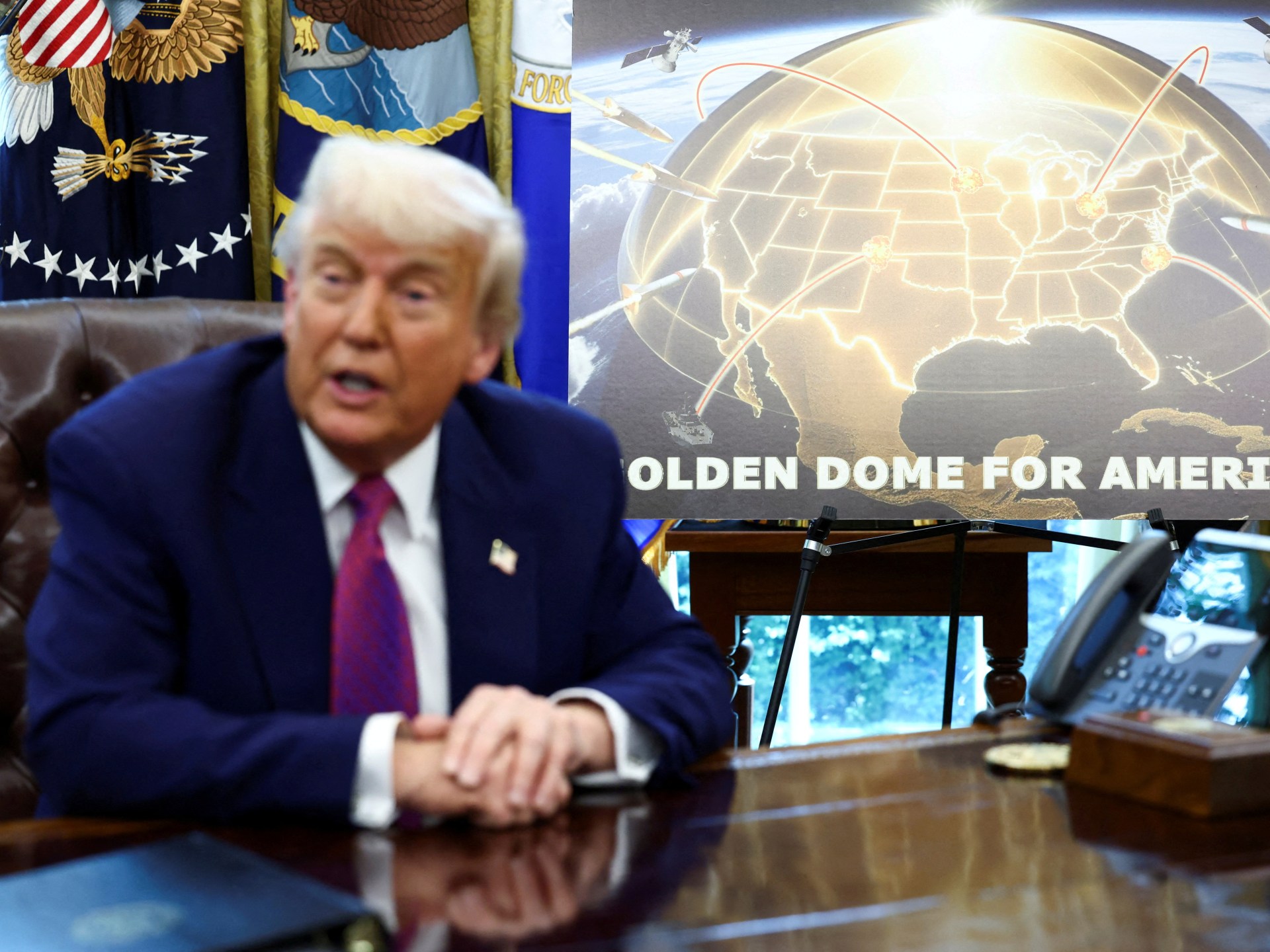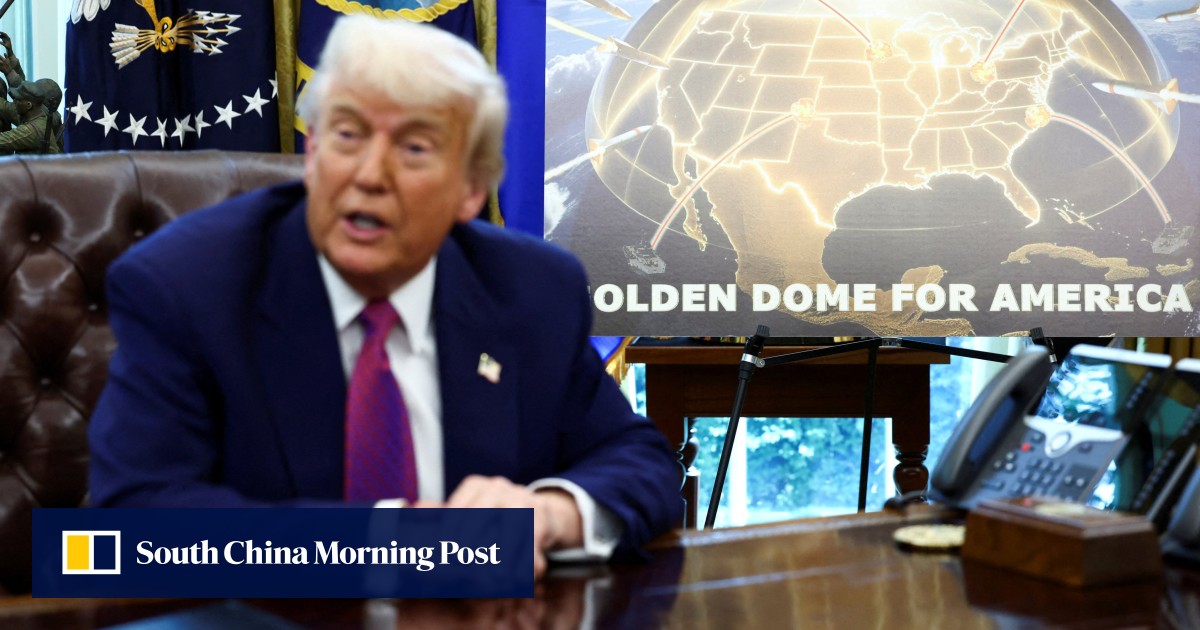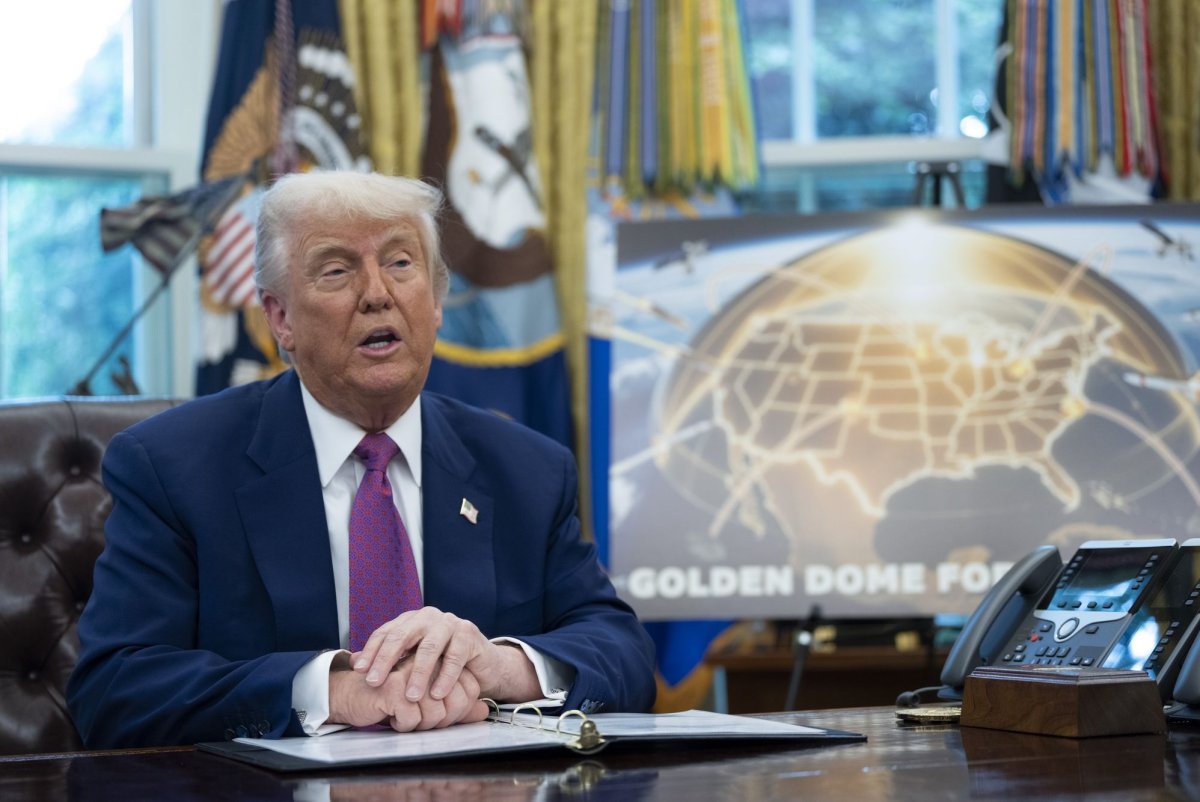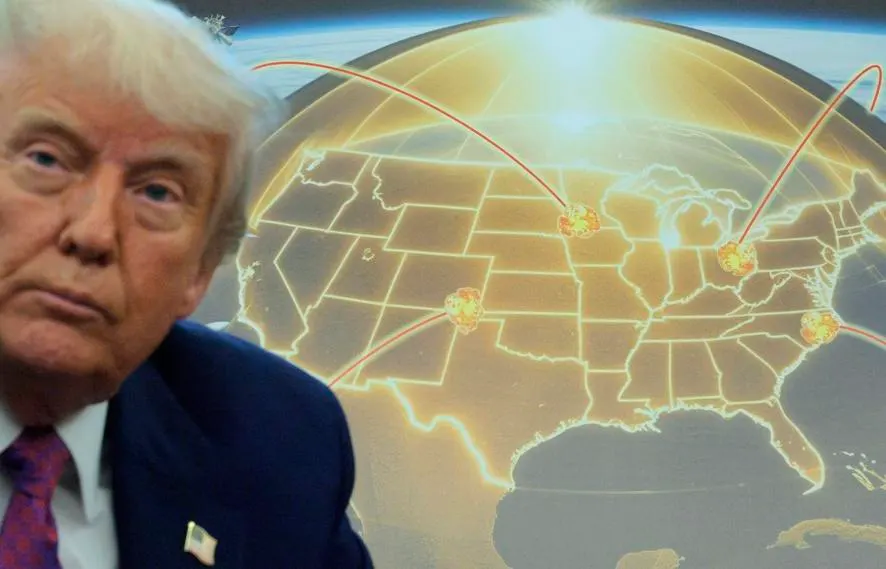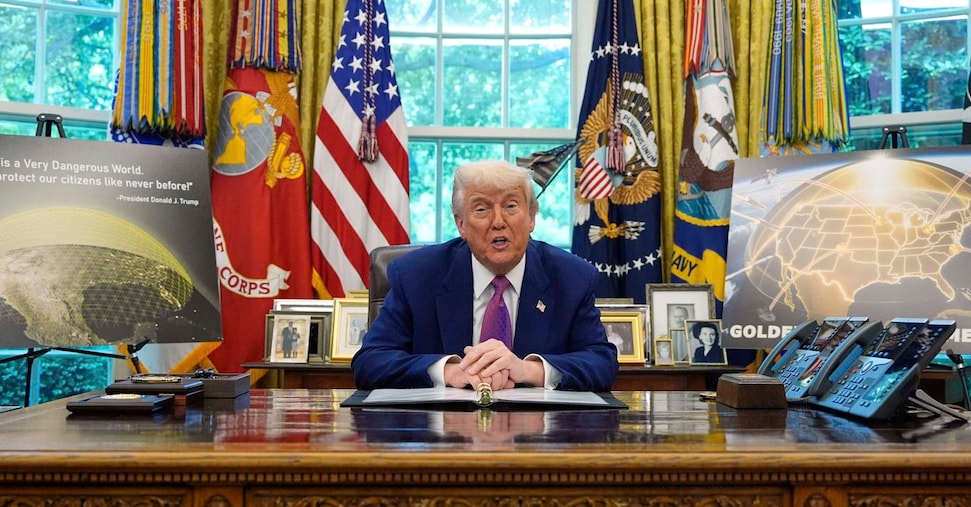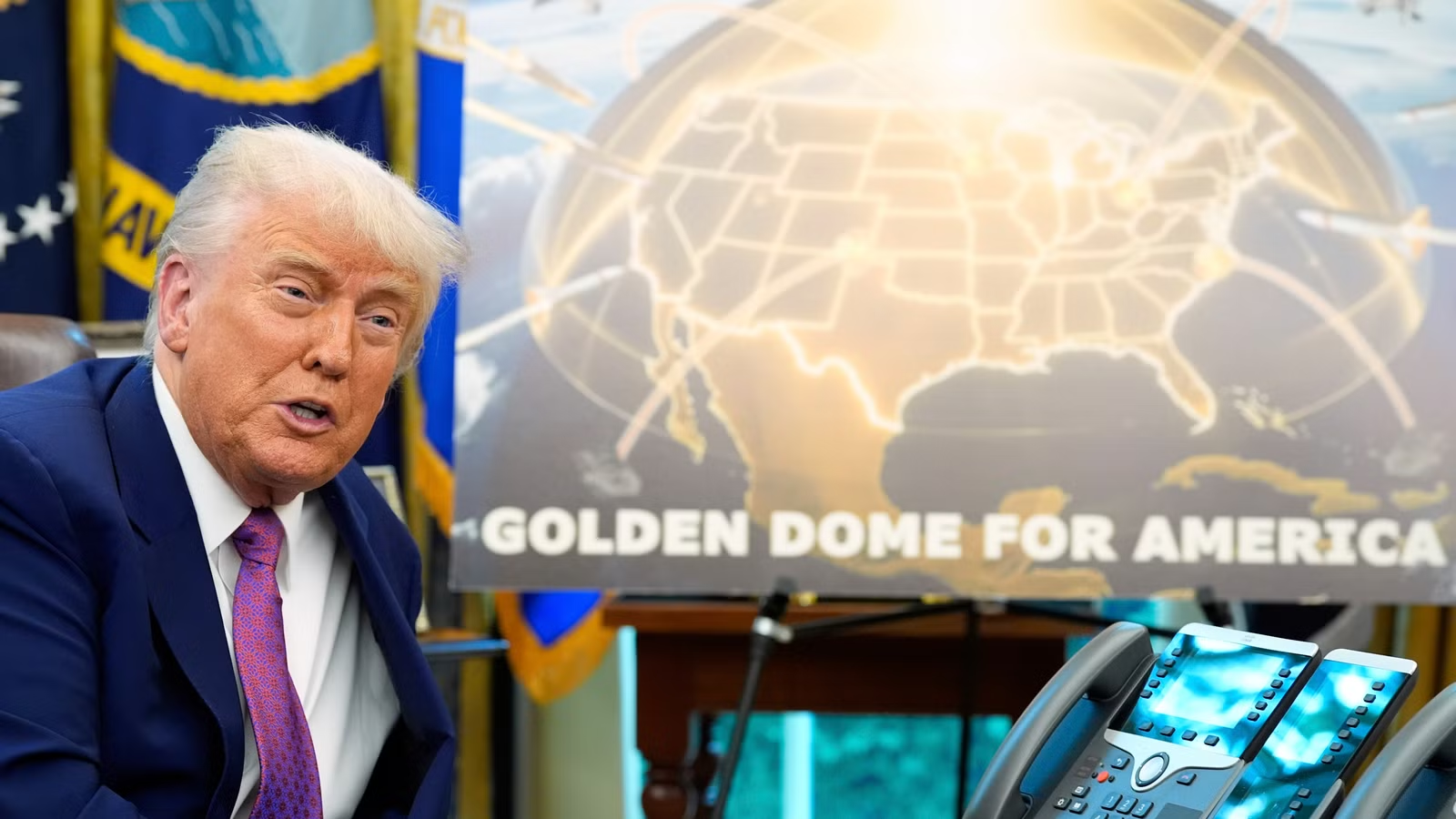
President Trump has proposed building an antimissile “golden dome” around the United States. But do cinematic spectacles actually enhance national security?
In 1940, a fresh-faced Ronald Reagan starred as US Secret Service agent Brass Bancroft in Murder in the Air, an action film centered on a fictional “superweapon” that could stop enemy aircraft midflight. A mock newspaper in the movie hails it as the “greatest peace argument ever invented.” The experimental weapon is “the exclusive property of Uncle Sam,” Reagan’s character declares.
More than 40 years later, this cinematic vision—an American superweapon capable of neutralizing assaults and ushering in global peace—became a real-life centerpiece of Reagan’s presidency. Some have suggested that Reagan’s Strategic Defense Initiative (SDI), a quixotic plan for a space-based missile shield, may have been partly inspired by his silver-screen past; indeed, the concept was so fantastical it’s now better known by its Hollywood-referencing nickname, “Star Wars.”
In January 2024, Donald Trump revived the space-shield dream at a primary campaign rally in Laconia, New Hampshire, using the Star Wars nickname that Reagan hated. It didn’t work in the 1980s, Trump said, because the technology wasn’t there. But times have changed.