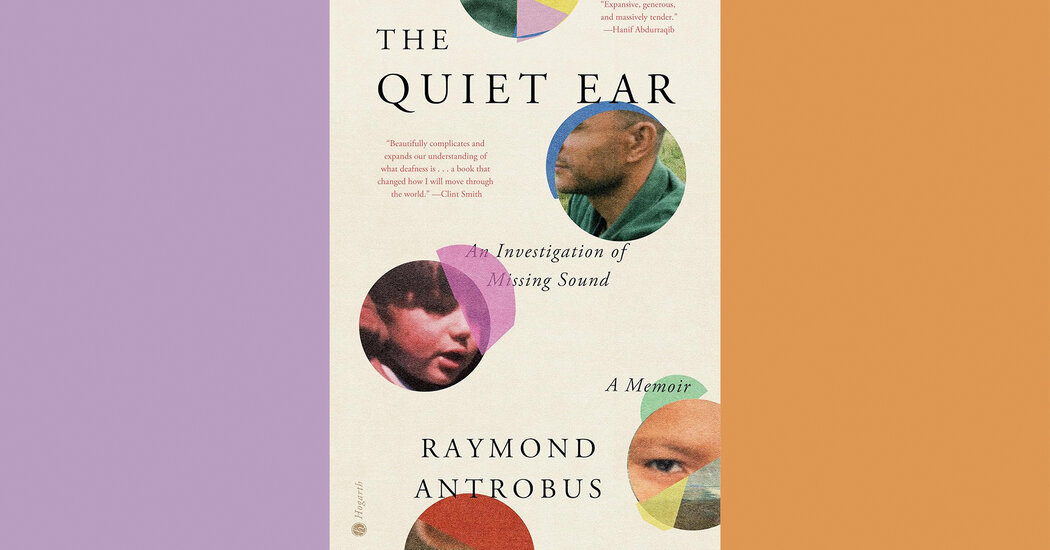
The poet reflects on his heritage, his new life as a father in Margate – and why his memoir is a call to arms
W
hen Raymond Antrobus was a child, he writes in his new book, The Quiet Ear, his father would call him “white” when he was drunk, and “black” when he was sober. “White” was meant as an insult, the author explains over tea in his flat in Margate, where a pile of toys indicate the recent presence of his own young son. In his cruellest moments, it was a way for Antrobus’s black father, who died in 2014, to say “I don’t understand you. I don’t love you. You don’t understand my pain.”
Antrobus, 38, is calm and reflective when he talks about this. As a deaf person who relies on hearing aids and lip-reading to communicate, he says he has long had to “make sense of myself for other people”.
“I got to this point where I was like: what would happen if I didn’t have to do that? What does freedom look like for me?” It was writing poetry that got him to that place, and with that has come a great deal of critical acclaim: his first collection, The Perseverance, published in 2018, won the Rathbones Folio prize (now the Writers’ prize), the Sunday Times young writer of the year award and the Ted Hughes award. That last felt somewhat ironic, given that The Perseverance contains a redacted version of Hughes’s poem Deaf School, along with Antrobus’s response, which grapples with its hurtful depiction of deaf children. In Hughes’s poem, the students “lacked a subtle wavering aura of sound” and are “alert and simple”; Antrobus’s poem After Reading Deaf School by the Mississippi River flips it: “Ted is alert and simple. / Ted lacked a subtle wavering aura of sound”.