The much-hyped release makes several enhancements to the ChatGPT user experience. But it’s still far short of AGI.
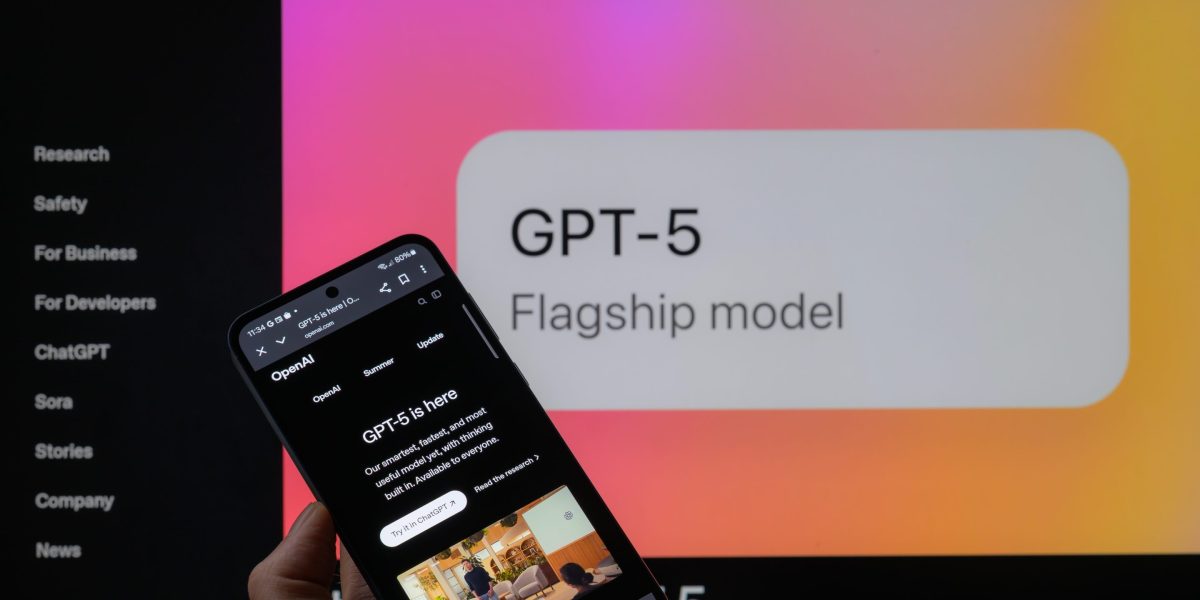
At long last, OpenAI has released GPT-5. The new system abandons the distinction between OpenAI’s flagship models and its o series of reasoning models, automatically routing user queries to a fast nonreasoning model or a slower reasoning version. It is now available to everyone through the ChatGPT web interface—though nonpaying users may need to wait a few days to gain full access to the new capabilities.
It’s tempting to compare GPT-5 with its explicit predecessor, GPT-4, but the more illuminating juxtaposition is with o1, OpenAI’s first reasoning model, which was released last year. In contrast to GPT-5’s broad release, o1 was initially available only to Plus and Team subscribers. Those users got access to a completely new kind of language model—one that would “reason” through its answers by generating additional text before providing a final response, enabling it to solve much more challenging problems than its nonreasoning counterparts.
The term is everywhere this week, but its meaning is as vague as ever. Working on a definition matters.
Whereas o1 was a major technological advancement, GPT-5 is, above all else, a refined product. During a press briefing, Sam Altman compared GPT-5 to Apple’s Retina displays, and it’s an apt analogy, though perhaps not in the way that he intended. Much like an unprecedentedly crisp screen, GPT-5 will furnish a more pleasant and seamless user experience. That’s not nothing, but it falls far short of the transformative AI future that Altman has spent much of the past year hyping. In the briefing, Altman called GPT-5 “a significant step along the path to AGI,” or artificial general intelligence, and maybe he’s right—but if so, it’s a very small step.