Crisp Sardinian flatbreads, layered up with tomato and lasagne, make a fine stand-in for pasta
T
he process of making Sardinian pane carasau is similarly hypnotic to pitta: a disc of durum wheat dough is baked on a hot surface until it puffs up into an almost-ball. The reason for this puffing is the contrast between the rapidly drying surface of the dough and the evaporating water within the dough. The water turns into steam, causing the centre to balloon and the two layers to separate, creating a pocket and making the whole thing look a bit like an inflated whoopee cushion.
In order to make pane carasau, which in Sardinia is a domestic, artisan and industrial art, the puffed-up dough is swiftly separated into two thin discs with a sharp knife, then the discs are returned – possibly folded in half or quarters – to the oven to dry and toast for a second time according to the maker’s taste. Fortunately for us, there are hundreds of makers and the whole point of pane carasau, also known as carta di musica (music paper bread), is that it is brilliantly transportable and enduring: it lasts and lasts, which is why it’s one of my favourite things to have in the cupboard.
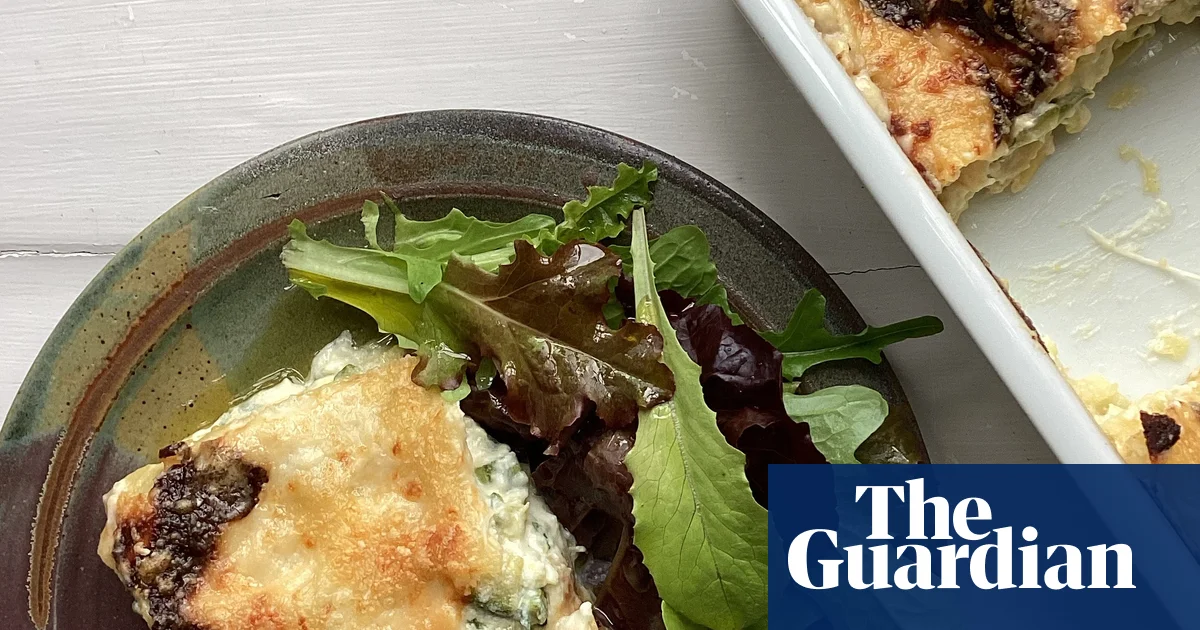
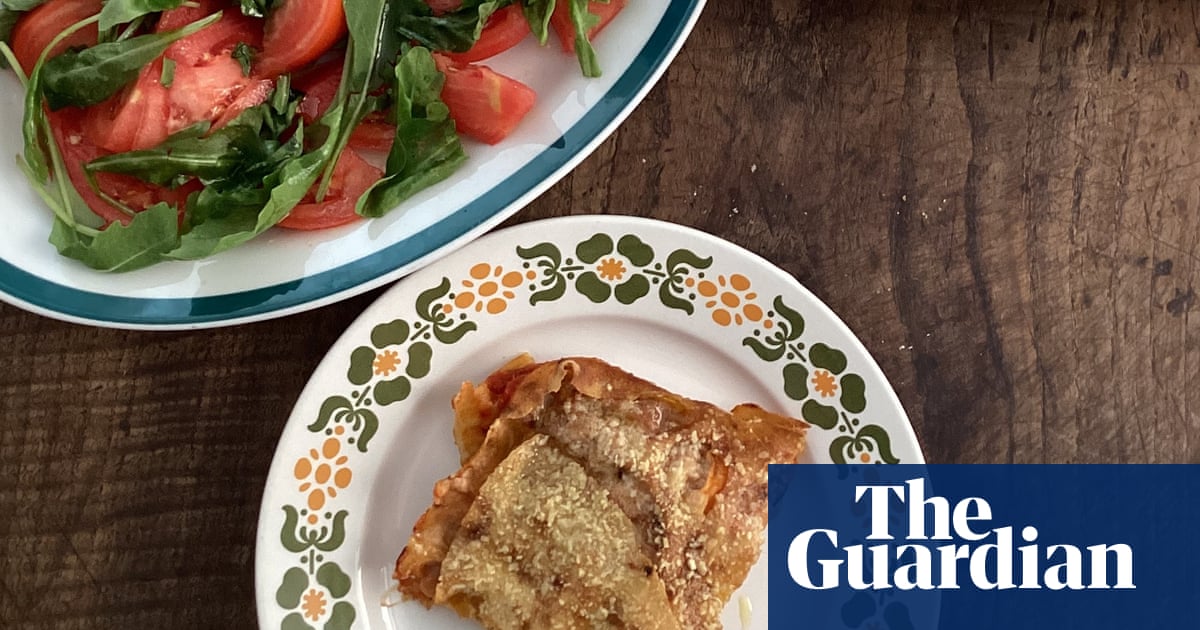
Pane carasau can be eaten in various ways: its crisp, brittle, cracker-like nature makes it a natural partner for cheese (and honey) and soft toppings; it can also be eaten like bread and filled, dipped or broken into soup or stews, or used as part of a salad; or quickly immersed in cold water (or passed under a running tap), which restores moisture, making the discs pliable enough to fold or roll around. Pane carasau can also be used in the same way as sheets of pasta to make – and I am inspired by the magazine La Cucina Italiana here – all sorts of lasagne. I have chosen to make one with a tomato sauce using both fresh and tinned tomatoes, mozzarella (it needs to be well drained) and parmesan. Opinions vary as to whether it is better to use dry or slightly damp pane carasau, but I have come to the conclusion that a mix is best: three dry layers then a final damp layer, which ensures that the top doesn’t dry out too rapidly before the cheese melts, and a golden crust forms.