https://arab.news/wf3j4
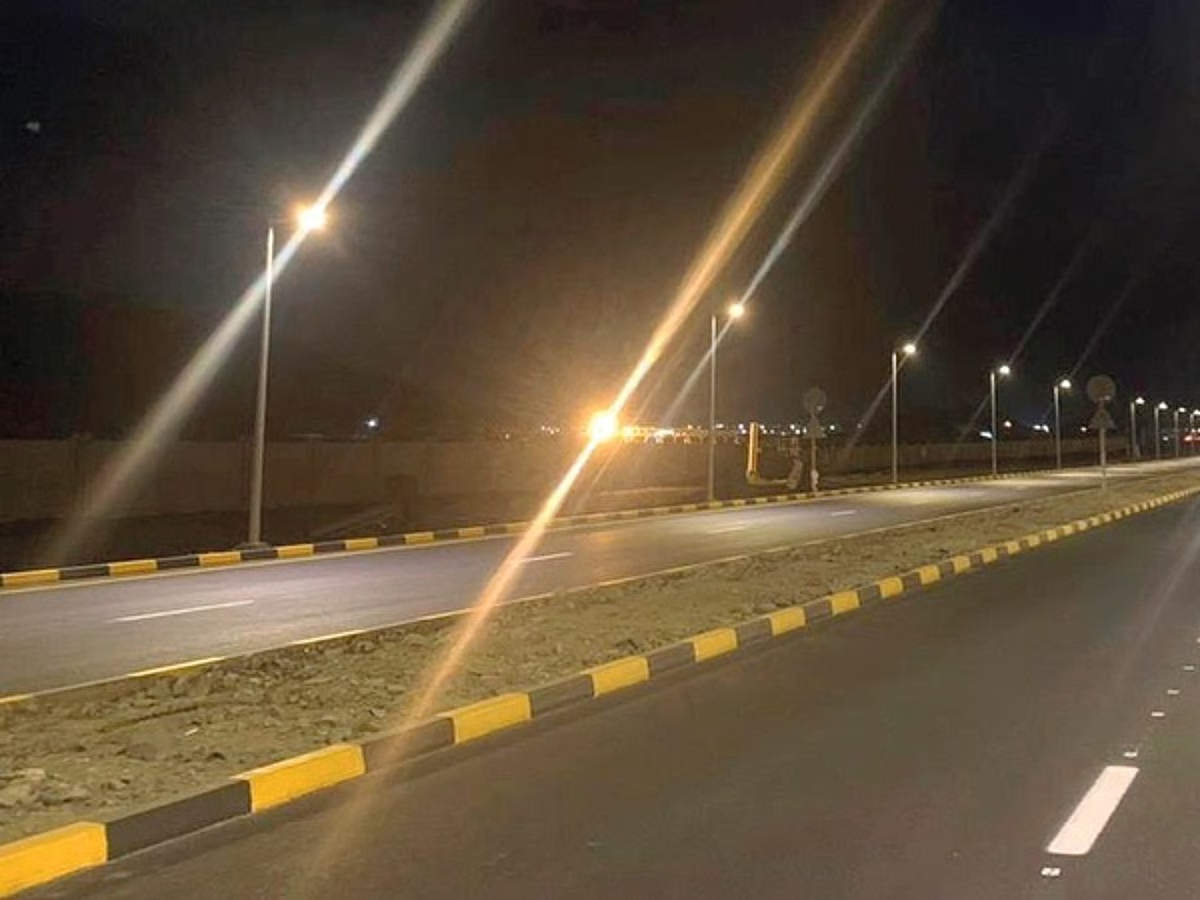
Amid the growing push for sustainability across the Middle East, Kuwait is setting a bold example with its innovative initiatives. A standout project is the recent installation of renewable energy-powered smart street lighting in South Abdullah Al-Mubarak. Launched by the Kuwait Authority for Partnership Projects, this initiative embodies Kuwait’s ambitious vision of transitioning from an oil-dependent economy to one that is diversified, resilient and aligned with global sustainability goals.
However, Kuwait is not alone in this effort. Across the Middle East and North Africa, countries are increasingly adopting similar smart infrastructure projects, signaling a collective regional movement toward sustainable and tech-driven urban futures.
Historically reliant on hydrocarbons, Kuwait, currently the ninth-largest global producer, derives more than 70 percent of its government revenue from oil. However, growing international pressure to cut carbon emissions has shown flaws in this paradigm.
Kuwait is proactively adopting renewable energy, setting a goal of generating 15 percent of its power from renewable sources by 2030. This ambition is demonstrated by recent initiatives, such as the establishment of a $165 billion state investment fund devoted to smart cities, renewable energy and sustainable transport infrastructure. Adding to this are the two significant solar power projects at Al-Dibdibah and Al-Shagaya, with a combined capacity of 500 megawatts.