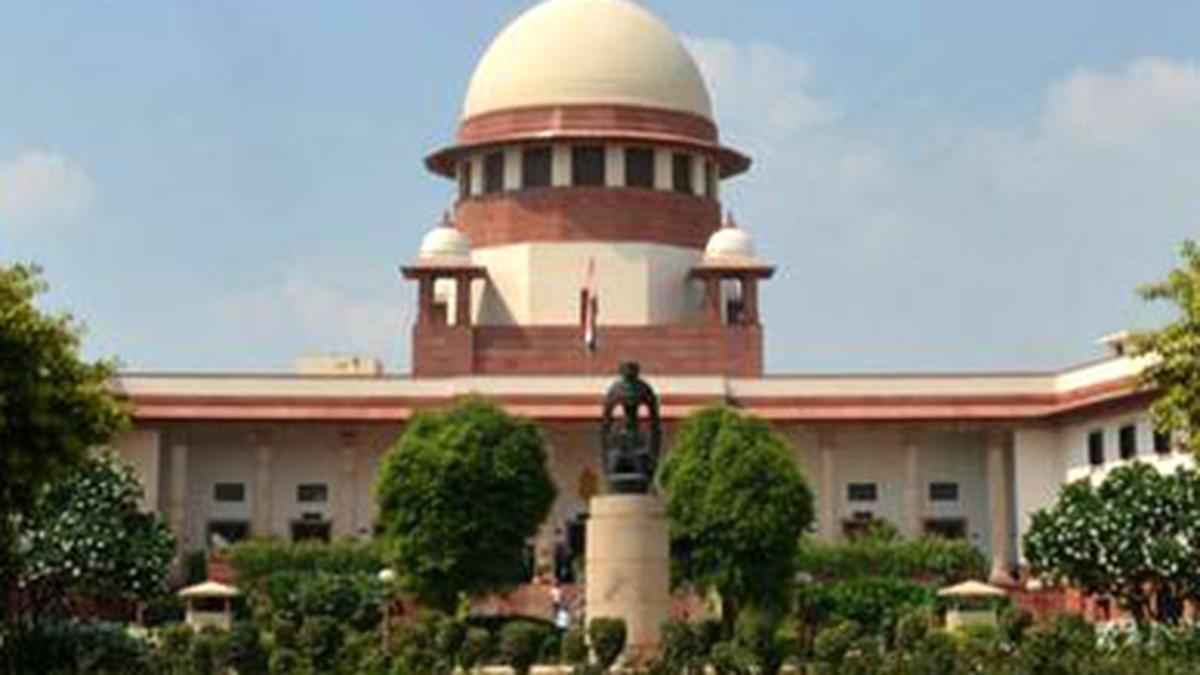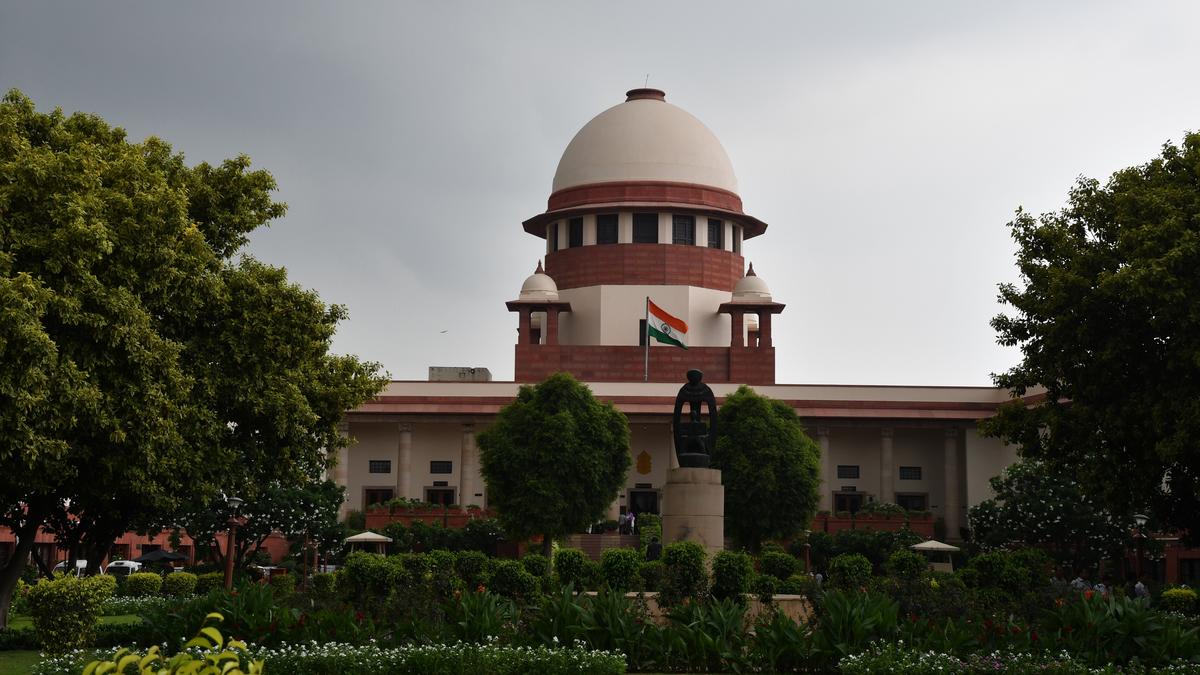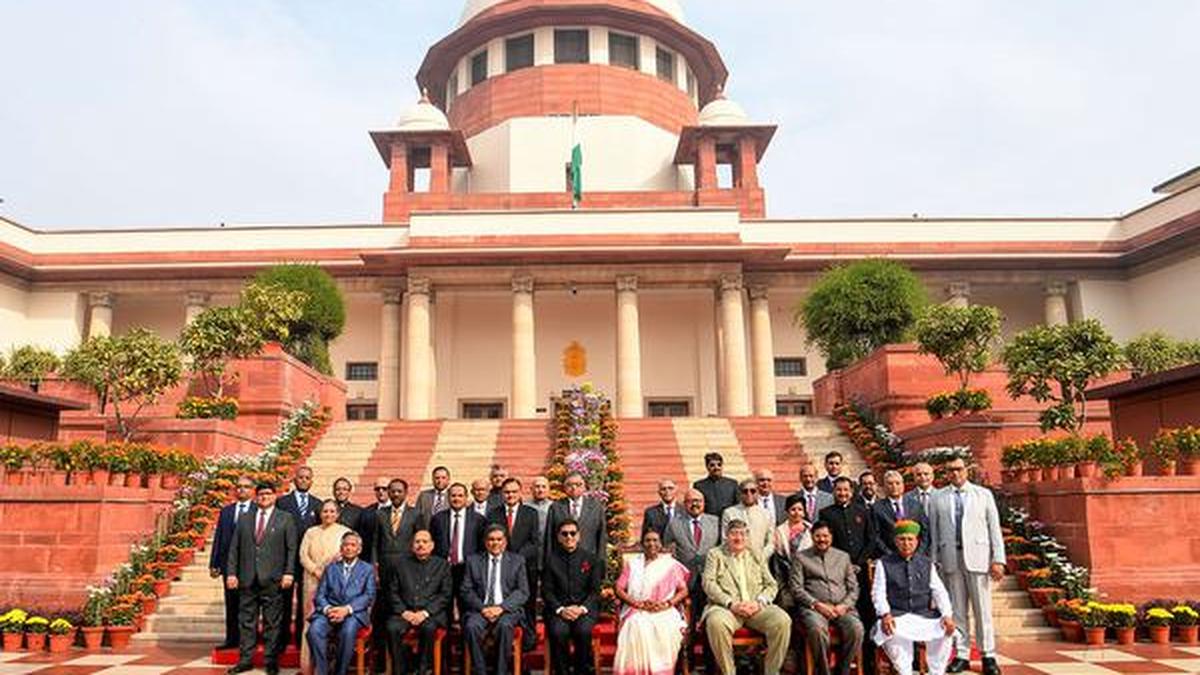
The Constitution, the State said, does not allow the Supreme Court to sit in appeal of its own judgments, nor can the President vest appellate jurisdiction in the court through a Presidential Reference. File
| Photo Credit: R.V. Moorthy
The States of Tamil Nadu and Kerala urged the Supreme Court on Monday (July 28, 2025) to dismiss the Presidential Reference seeking clarity on whether judiciary can fix timelines for the President and State Governors to clear State Bills, saying it is a ruse to make the apex court sit in appeal of its own authoritative pronouncement in the Tamil Nadu Governor case.The Constitution, both States said, did not allow the apex court to sit in appeal of its own judgments, nor can the President vest appellate jurisdiction in the court through a Presidential Reference. Tamil Nadu and Kerala termed the Reference as “misleading” replete with “suppressed facts”.Tamil Nadu, represented by senior advocate P. Wilson , said the Reference was an “appeal in disguise” and should be “returned as unanswered in whole”.Kerala, represented by senior advocate K.K. Venugopal and C.K. Sasi, said the President could only refer questions to the Supreme Court under its advisory jurisdiction of Article 143 of the Constitution if they had not been decided by the apex court.Quoting judicial precedents, including the 1993 Reference in the Cauvery Water Disputes Tribunal, the State said powers of the Governors and the President under Article 200 and 201 of the Constitution have been the subject of three separate authoritative judgments in the cases filed by the States of Telangana, Punjab and, finally, Tamil Nadu on April 8.“When the Supreme Court in its adjudicatory jurisdiction pronounces its authoritative opinion on a question of law, it cannot be said that there is any doubt about the question of law or the same is res integra so as to require the President to know what the true position of law on the question is. The decision of this court on a question of law is binding on all courts and authorities. Hence, the President can refer a question of law only when this court has not decided it,” Kerala submitted.The State pointed out that the Tamil Nadu Governor case judgment authored by Justice J.B. Pardiwala on April 8 has already addressed in detail the questions raised in the Presidential Reference in May.If the government wanted to challenge the April 8 judgment, it should have filed a review or a curative petition in the Supreme Court, and not take the route of Presidential Reference, Kerala said.The State argued the very fact the government has not sought a review of the April 8 judgment, establishing it as settled law.“The Union of India has not filed any review or curative petition against the judgment delivered by the court in the Tamil Nadu case, and has thus accepted the judgment…The judgment, having not been assailed or set aside in any validly constituted proceedings, has attained finality and is binding on all concerned under Article 141, and cannot be challenged obliquely in collateral proceedings such as in the instant reference. The President and the Council of Ministers have to act in aid of the Supreme Court under Article 144 of the Constitution,” the State of Kerala reasoned. Published - July 28, 2025 11:51 am IST