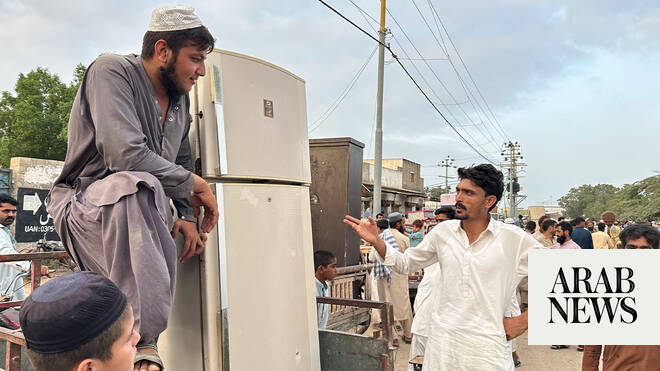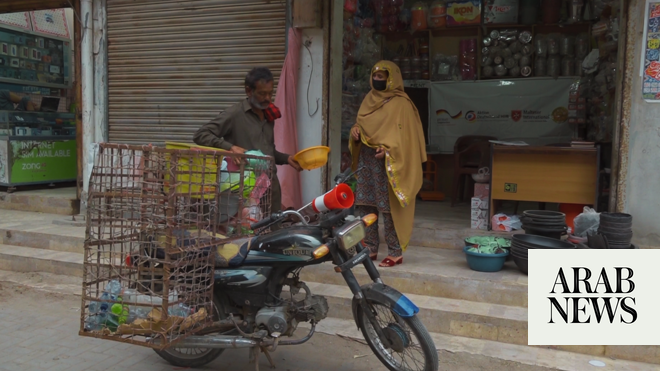
JHUDDO, Pakistan: On any given morning in this flood-ravaged town in southern Sindh, Shamim Akhtar’s team of three men fans out on motorbikes, collecting scrap metal and plastic from doorsteps.
In return, they hand over household essentials: pots, mugs, jugs — items many families need but can no longer afford.
It’s a barter economy, resurrected not by nostalgia but by necessity.
Once a farmer scraping by on unstable harvests, Akhtar, now 48, has become a self-made entrepreneur, running what she calls a modern twist on a traditional system. The shift has brought her stability and income — nearly Rs50,000 ($175) in monthly profit — in a region where formal employment is rare and inflation relentless.
“What we do [in this business] is that we take scrap from people’s houses and in return give them new things,” Akhtar told Arab News.