An old colleague always had a curious request at lunchtime. For health reasons, he was vegetarian, but he still missed the taste of ground beef. So he’d ask the chef in the cafeteria for a veggie burger that was cooked next to the beef patties. The grease that seeped over made the plant substitute taste that much better.
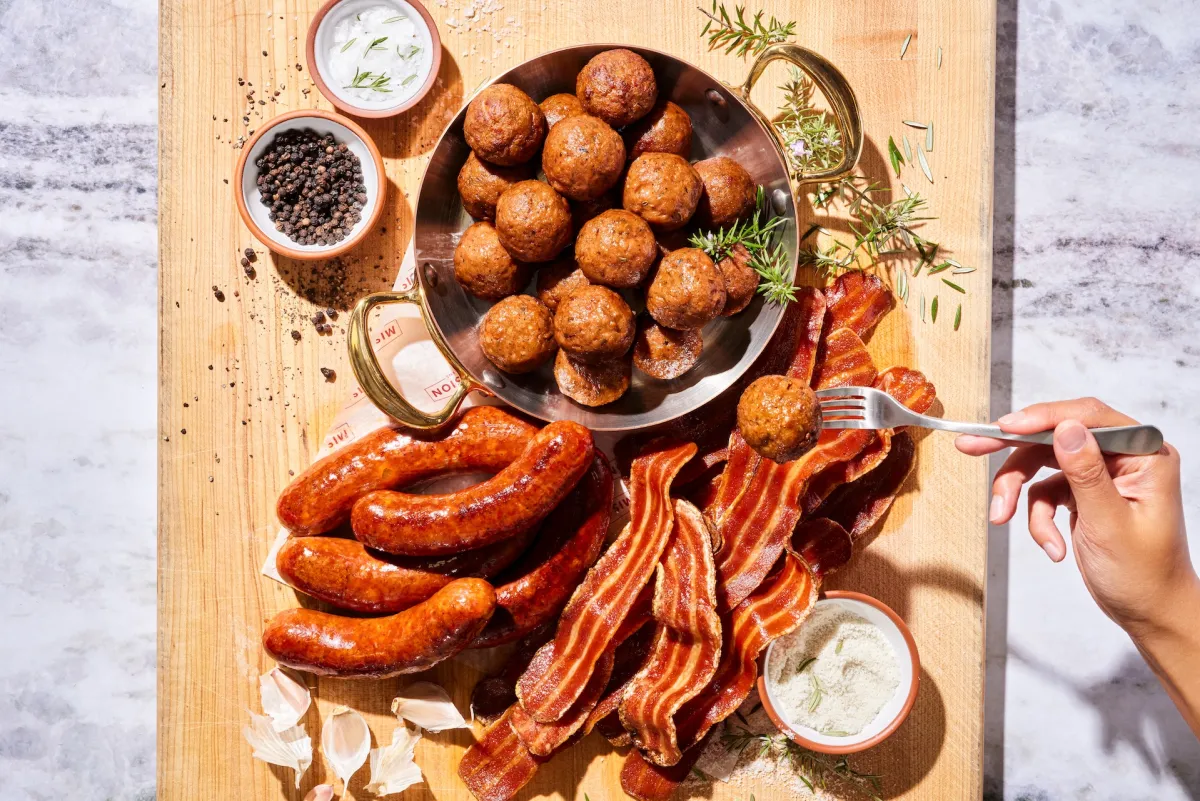
The folks at Mission Barns must have overheard our lunchtime conversation. They have developed animal-free, cultured pork fat. The product just received approval from the U.S. Department of Agriculture, the company exclusively told TechCrunch. The stamp of approval allows the startup to sell the fat to consumers.
It’s the first such product to reach the market, and it could unlock a host of fattened-up meat alternatives.
“It really enables anyone, any of our partners who are using our ingredient, to also launch a product into market,” Cecilia Chang, chief business officer at Mission Barns, told TechCrunch.
Scientists have been trying to culture meat for years. The world’s first lab-grown burger hit food critics’ mouths in 2013, though it cost an estimated $330,000. The costs have come down significantly since then, but a burger made from lab-grown beef still costs several times that of a McDonald’s classic. Part of the problem is that muscle cells require something to grow on, whereas most cells cultured today grow in large vats of liquid media.