Want smarter insights in your inbox? Sign up for our weekly newsletters to get only what matters to enterprise AI, data, and security leaders. Subscribe Now
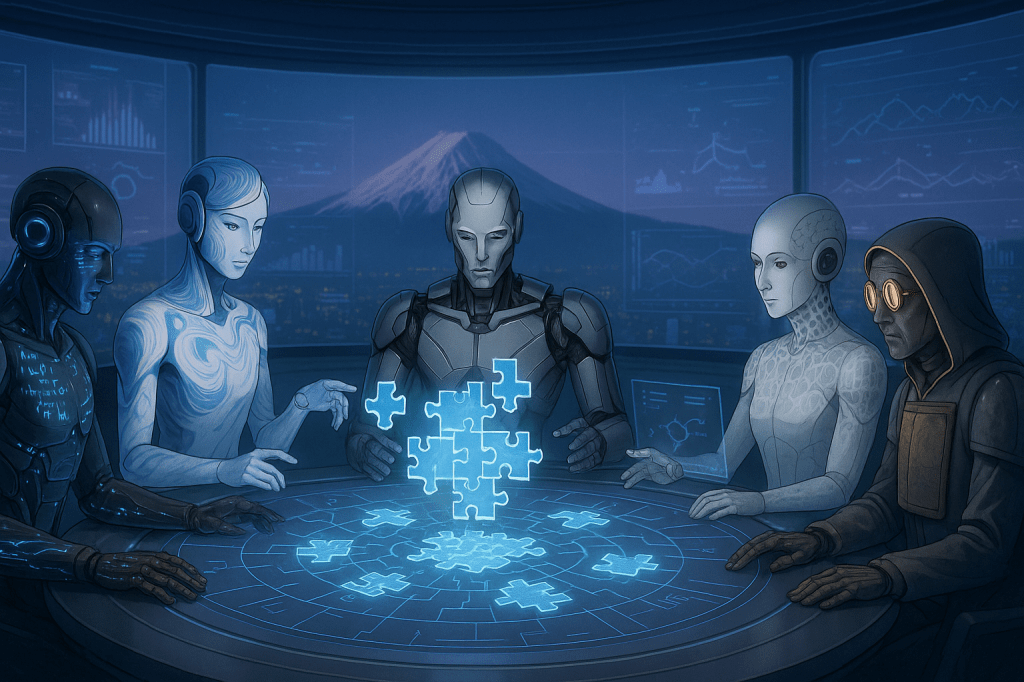
Japanese AI lab Sakana AI has introduced a new technique that allows multiple large language models (LLMs) to cooperate on a single task, effectively creating a “dream team” of AI agents. The method, called Multi-LLM AB-MCTS, enables models to perform trial-and-error and combine their unique strengths to solve problems that are too complex for any individual model.
For enterprises, this approach provides a means to develop more robust and capable AI systems. Instead of being locked into a single provider or model, businesses could dynamically leverage the best aspects of different frontier models, assigning the right AI for the right part of a task to achieve superior results.
The power of collective intelligence
Frontier AI models are evolving rapidly. However, each model has its own distinct strengths and weaknesses derived from its unique training data and architecture. One might excel at coding, while another excels at creative writing. Sakana AI’s researchers argue that these differences are not a bug, but a feature.