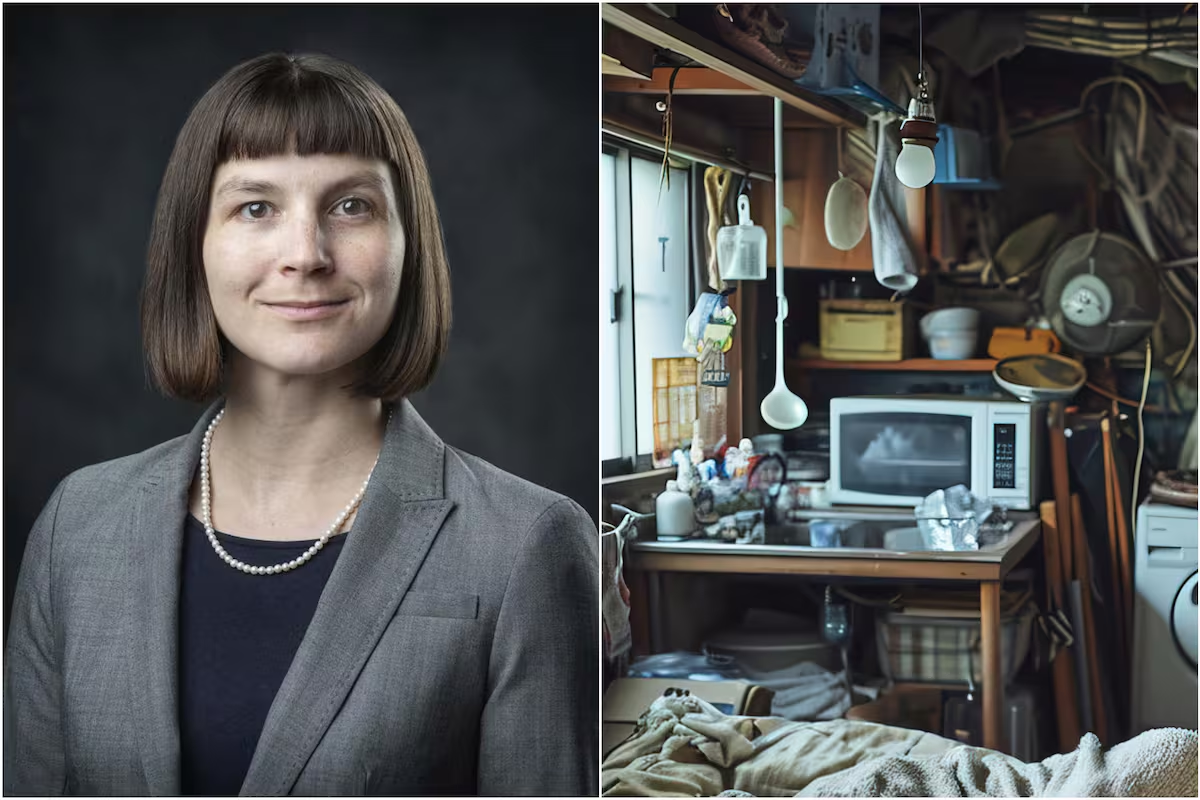
ST. PAUL. Minn., June 27 (UPI) -- Compulsive hoarders feel stigmatized and are more likely to view their neighborhoods as less safe and more chaotic than counterparts do, according to researchers who are seeking to promote empathy for sufferers.
Tapping data made available from a wide-ranging National Institutes of Health initiative, the analysts found that people with hoarding reported "significantly higher" perceived neighborhood social disorder, neighborhood physical disorder and everyday discrimination than did matched counterparts.
That perceived "daily discrimination" was also found to be a strong predictor of hoarding disorder relative to other participants, even those diagnosed with related types of obsessive-compulsive disorders, according to a recent study online in the Journal of Affective Disorders.
The study comes as medical science is struggling with how to effectively address hoarding that when left untreated can put sufferers and family members at serious risk of heath problems, injury, removal of at-risk children or older adults from the home, homelessness or in the worst case, even death.
Hoarding also comes with high public costs. Between 2014 and 2022, more than 5,200 residential fires connected to cluttered environments resulted in 1,367 fire service injuries, 1,119 civilian injuries and over $396 million in losses, according to data collected through the National Fire Incident Reporting System.