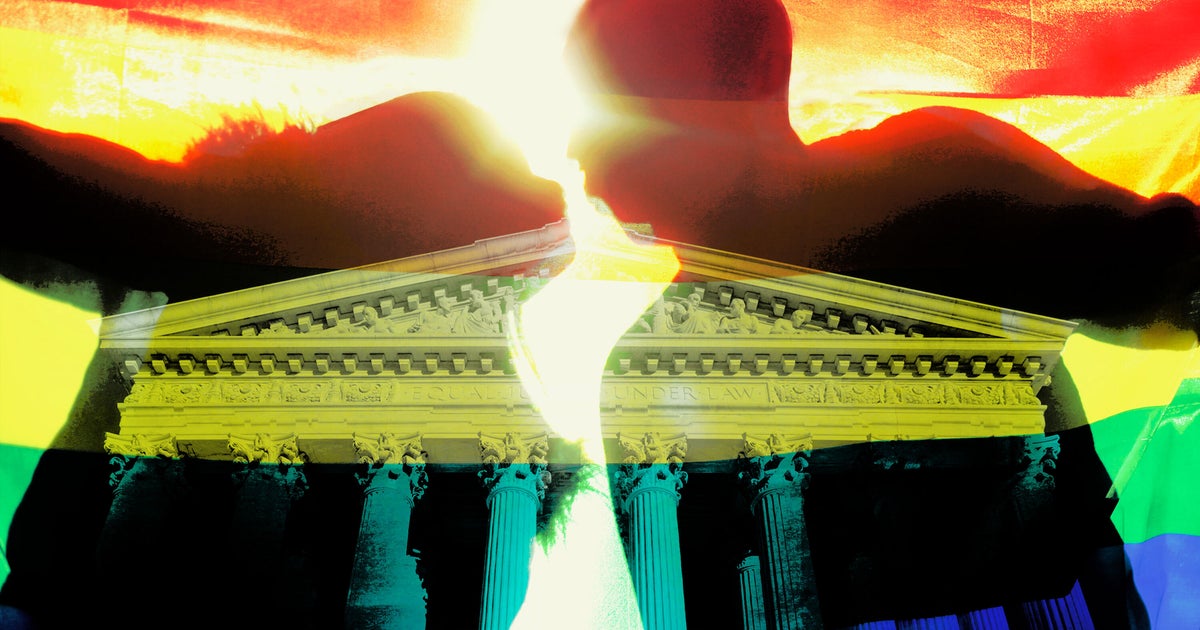
Twelve years ago, on June 21, 2013, Paul Richmond and his partner, Dennis Niekro, boarded a bus to Washington, D.C., from Ohio. The couple was one of two dozen gay couples that had traveled to the nation’s capital to participate in a large marriage ceremony on the sidewalk of the Supreme Court building.
“I remember standing there, holding [Dennis’] hands and just staring into his eyes. Even though there were so many people around us, it just felt like the two of us,” Richmond, now 45, said. “It was a special moment for us because it was something we had wanted for so long. We both grew up in family situations where the kind of life we were living was never even an option.”
At the time, same-sex couples could only get married in 12 states — Ohio was not one of them — and Washington, D.C. The highest court was still considering several marriage equality cases. Even as Richmond and Niekro exchanged vows, a group of protesters against same-sex marriage flanked the celebrants.
But five days later, the Supreme Court struck down the Defense of Marriage Act, which had defined marriage as between one man and one woman, in Windsor v. United States. Then, two years later in 2015, the modern gay rights movement secured an even bigger victory when the Supreme Court held in Obergefell v. Hodges that same-sex couples were guaranteed the fundamental right to marriage nationwide