We and our vendors use cookies and similar methods (“Cookies”) to recognize visitors and remember their preferences. We also use Cookies for a variety of purposes, including analytics, to measure marketing effectiveness and to target and measure the effectiveness of ads. You can accept or reject the use of Cookies for individual purposes below. Some vendors process your data on the basis of their legitimate interest - you can object to such processing below. Your preferences will be saved in a cookie named “fides_consent” for a maximum duration of 12 months, as well as in your registered user account if you are logged in. If you previously accepted these methods through our prior banner, then we will use your data for targeting. Your preferences will apply on nytimes.com, as well as our News, Cooking, Games and Audio apps. Your preferences here are unrelated to Apple’s App Tracking Transparency Framework.
Supported by
By Lydia Polgreen
Opinion Columnist
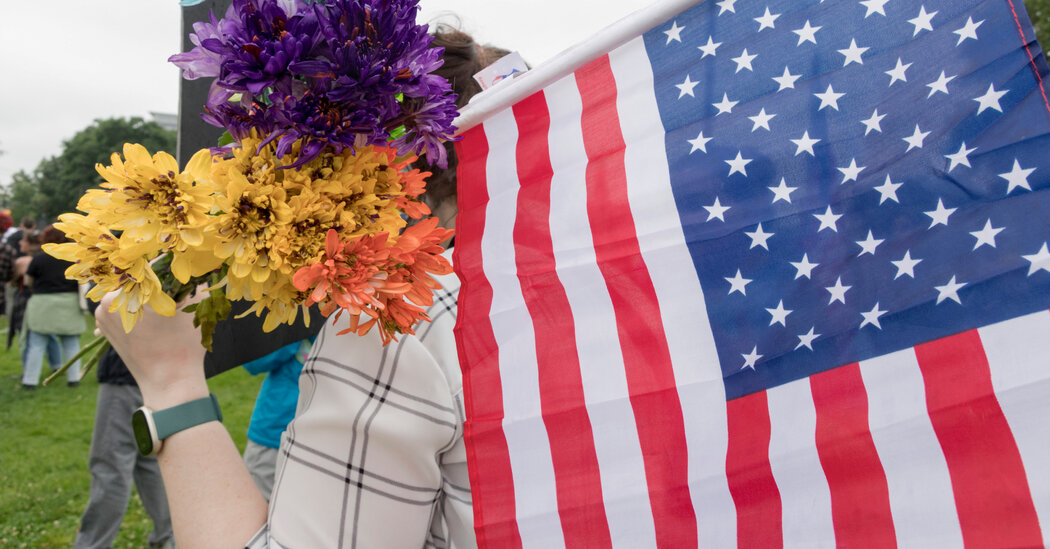
Two Saturdays ago, I found myself on the streets of a small, down-at-heel Republican town in northwestern Connecticut where dozens of protesters had gathered to join the millions who took to the streets across the nation to oppose Donald Trump’s increasingly autocratic presidency. Wielding handmade signs filled with corny puns, they braved the spitting rain to declare that the United States would not be ruled by a self-proclaimed king. It was, by some estimates, the biggest single-day protest in American history, driven by genuine anger at, among other outrages, Trump’s aggressive and unlawful deployment of the American military on the streets of Los Angeles.