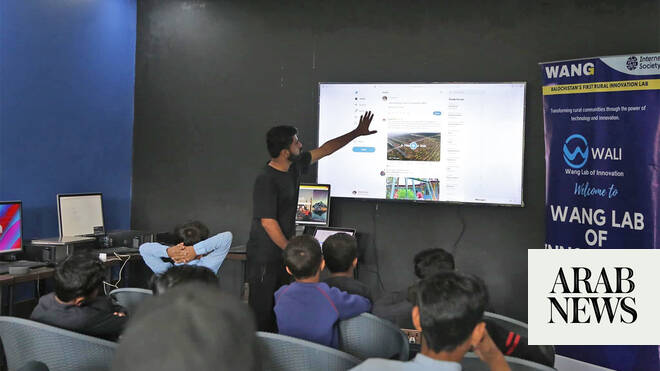
LASBELA, Pakistan: When Abrar Roonjha returned to his hometown near Bela in Pakistan’s southwestern Balochistan province during the COVID-19 lockdown, he was faced with a major dilemma: how would he attend online classes without reliable Internet connectivity.
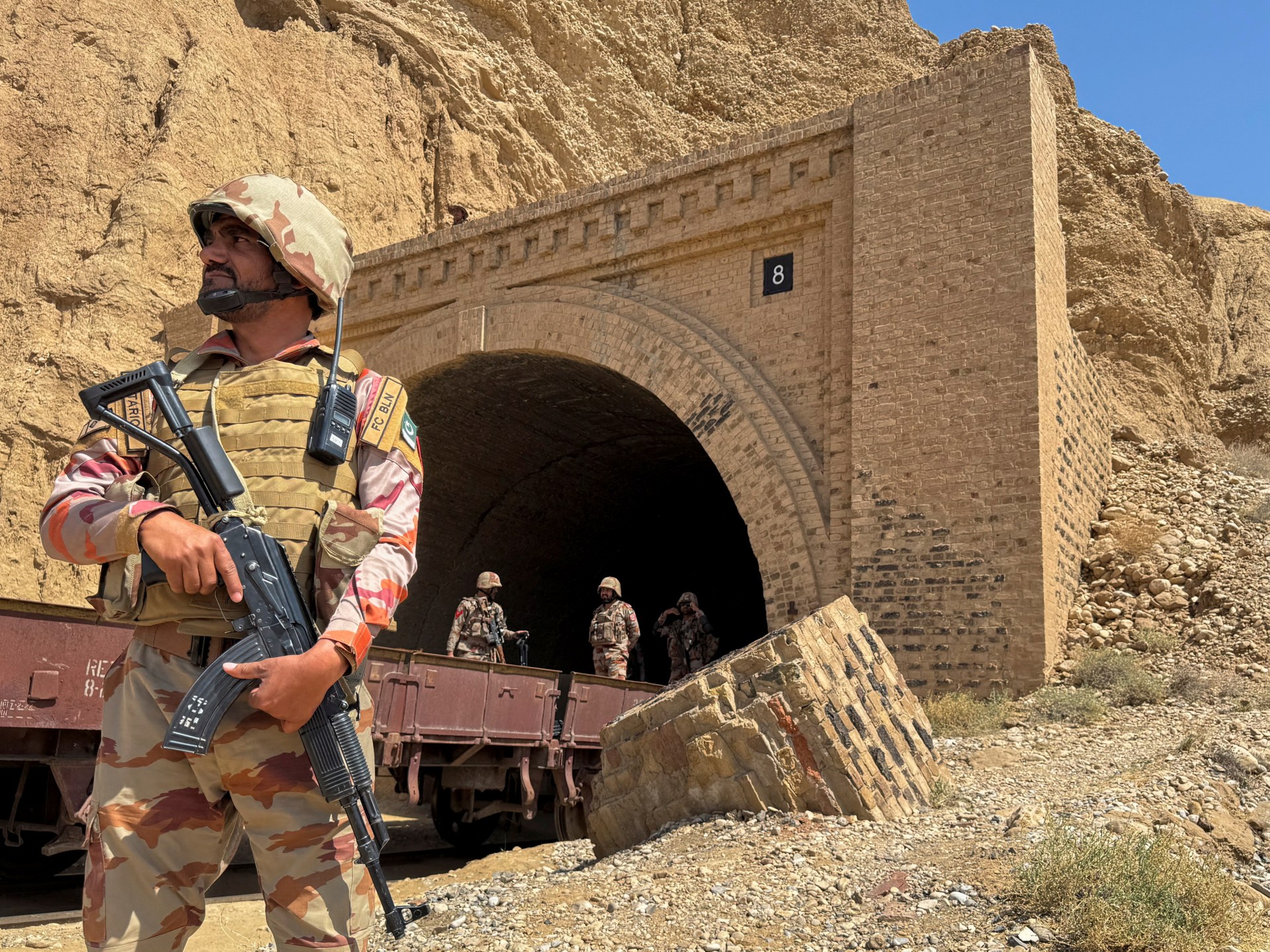
Balochistan, Pakistan’s largest province by area, accounts for nearly 44% of the country’s landmass but only around 6% of its population. Despite its mineral wealth and geostrategic location, the militancy-plagued region remains the country’s most underserved in infrastructure and connectivity.
Combine that with the COVID-19 pandemic, which had a devastating impact on education across Pakistan, with prolonged school closures affecting more than 40 million students nationwide. According to a 2021 UNICEF report, around 23 million school-going children were unable to access remote learning during the pandemic due to limited or no Internet connectivity and a lack of digital devices.
The situation was especially dire in rural and underserved areas like Balochistan, where infrastructure gaps meant many students were entirely cut off from their lessons.
“I used to hang my mobile phone on a tree and try to connect to its hotspot to continue my studies but it was very difficult,” Roonjha, now 21, told Arab News.