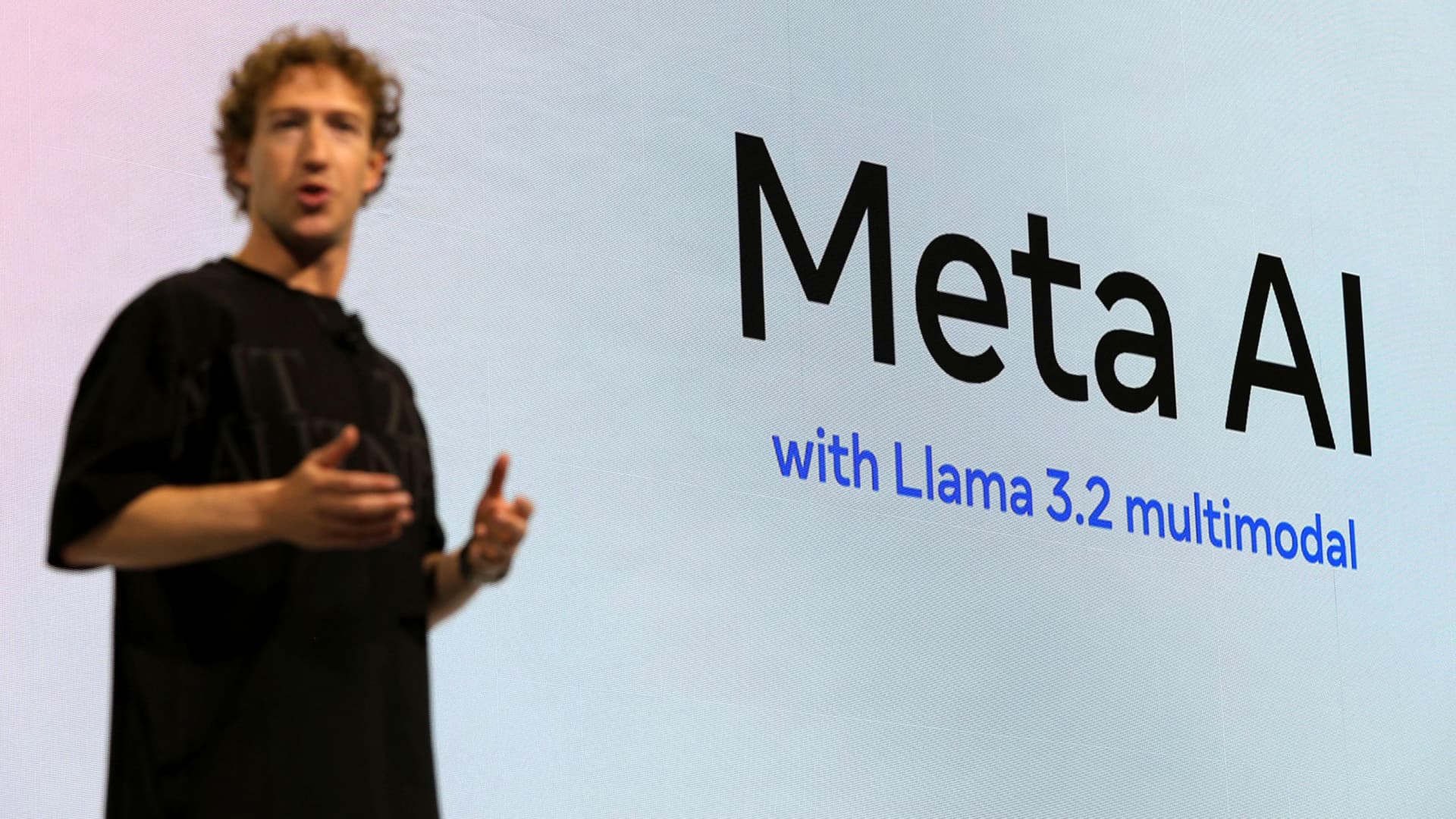
on Wednesday prevailed against a group of 13 authors in a major copyright case involving the company’s Llama artificial intelligence model, but the judge made clear his ruling was limited to this case.
U.S. District Judge Vince Chhabria sided with Meta’s argument that the company’s use of books to train its large language models, or LLMs, is protected under the fair use doctrine of U.S. copyright law.
Lawyers representing the plaintiffs, including Sarah Silverman and Ta-Nehisi Coates, alleged that Meta violated the nation’s copyright law because the company did not seek permission from the authors to use their books for the company’s AI model, among other claims.
Notably, Chhabria said that it “is generally illegal to copy protected works without permission,” but in this case, the plaintiffs failed to present a compelling argument that Meta’s use of books to train Llama caused “market harm.” Chhabria wrote that the plaintiffs had put forward two flawed arguments for their case.
“On this record Meta has defeated the plaintiffs’ half-hearted argument that its copying causes or threatens significant market harm,” Chhabria said. “That conclusion may be in significant tension with reality.”