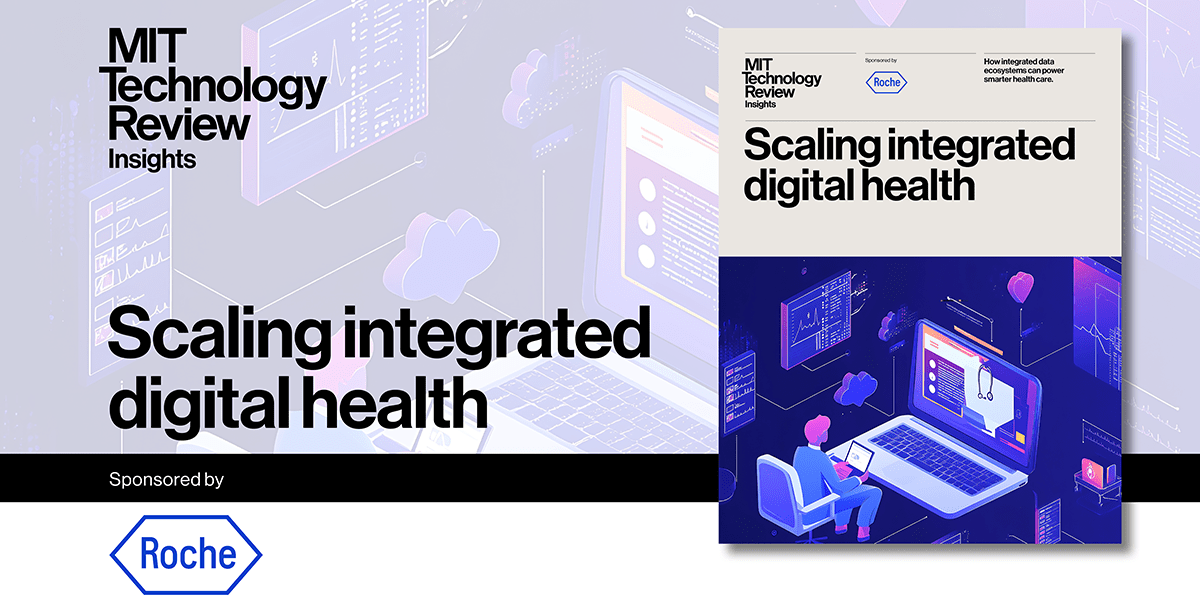
How integrated data ecosystems can power smarter health care.
Sponsored byRoche
Around the world, countries are facing the challenges of aging populations, growing rates of chronic disease, and workforce shortages, leading to a growing burden on health care systems. From diagnosis to treatment, AI and other digital solutions can enhance the efficiency and effectiveness of health care, easing the burden on straining systems. According to the World Health Organization (WHO), spending an additional $0.24 per patient per year on digital health interventions could save more than two million lives from non-communicable diseases over the next decade.
To work most effectively, digital solutions need to be scaled and embedded in an ecosystem that ensures a high degree of interoperability, data security, and governance. If not, the proliferation of point solutions— where specialized software or tools focus on just one specific area or function—could lead to silos and digital canyons, complicating rather than easing the workloads of health care professionals, and potentially impacting patient treatment. Importantly, technologies that enhance workforce productivity should keep humans in the loop, aiming to augment their capabilities, rather than replace them.