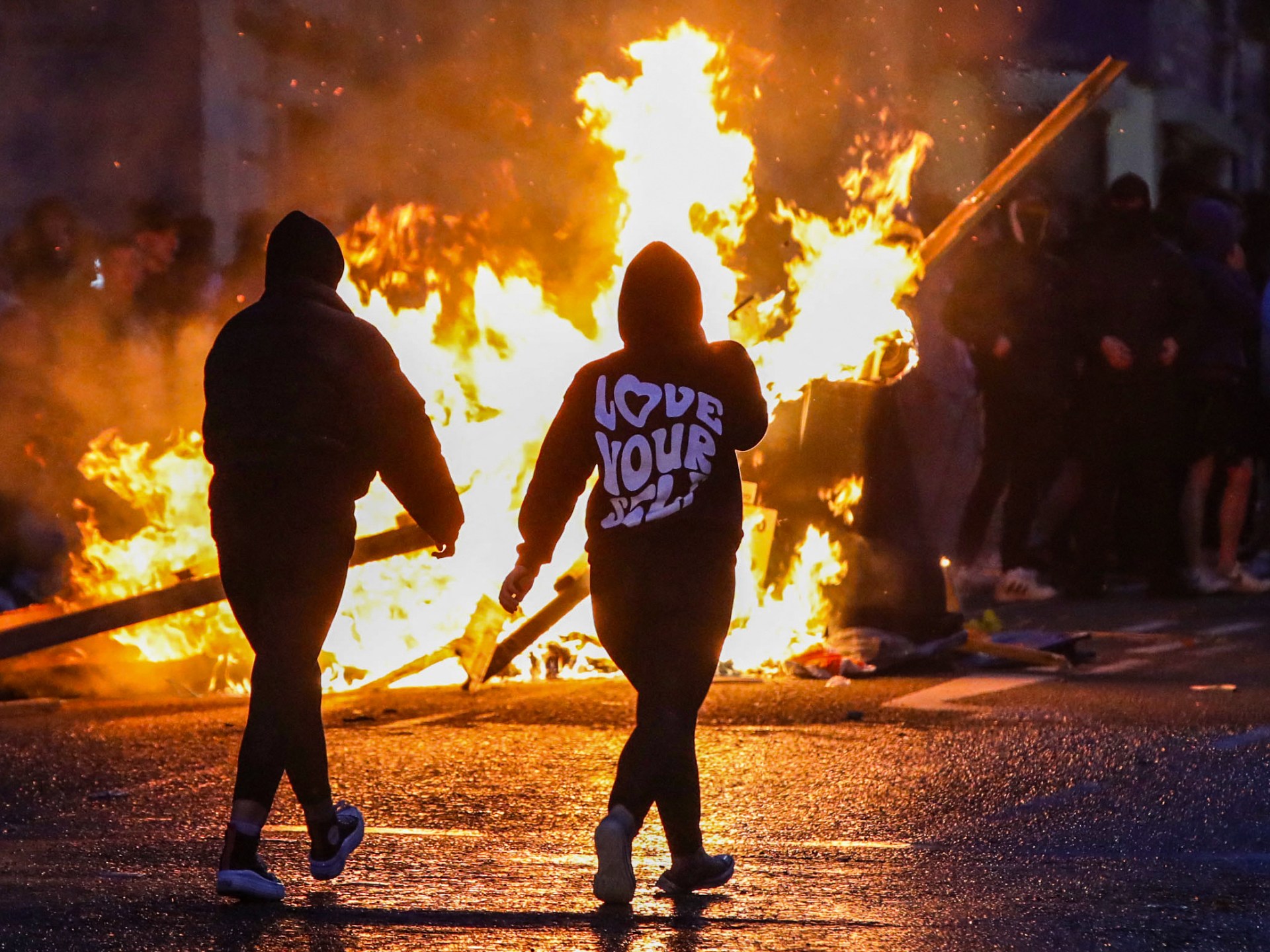
History tells us attacks on migrants are a predictable result of political failings, distorted media coverage and far-right opportunism
I
n early June, the violence began. Rumours of a foreigner assaulting a local woman resulted in groups roaming through a small British town, breaking windows of homes belonging to “outsiders”. A few days later, the police attempted to stop mobs from reaching another nearby multiracial area. Eventually they broke through, ransacking shops and burning down a house, while local media reported that the violence had developed into “something like a fever”.
Sound familiar? This isn’t Ballymena, the County Antrim town in Northern Ireland that has seen several nights of unrest in which immigrant homes were attacked after reports of an alleged sexual assault on a local girl by two teenagers, who had a Romanian interpreter read them the charges. These incidents actually took place more than a century ago, during the summer of 1919, as racial violence spread throughout south Wales, eventually reaching Cardiff and the diverse district of Tiger Bay.
Back then, a number of things were blamed for the violence, among them a lack of jobs and housing for returning white servicemen, many of whom were disgusted by the relationships between local women and black men who had served in the merchant navy and made Wales their home during the first world war. The media also played their part. The South Wales Daily News claimed that it had never seen “so black a blot on an otherwise fair and thriving town”, before suggesting a fire like the Great Fire of London “would be a godsend” that could cleanse Tiger Bay (now known as Butetown).