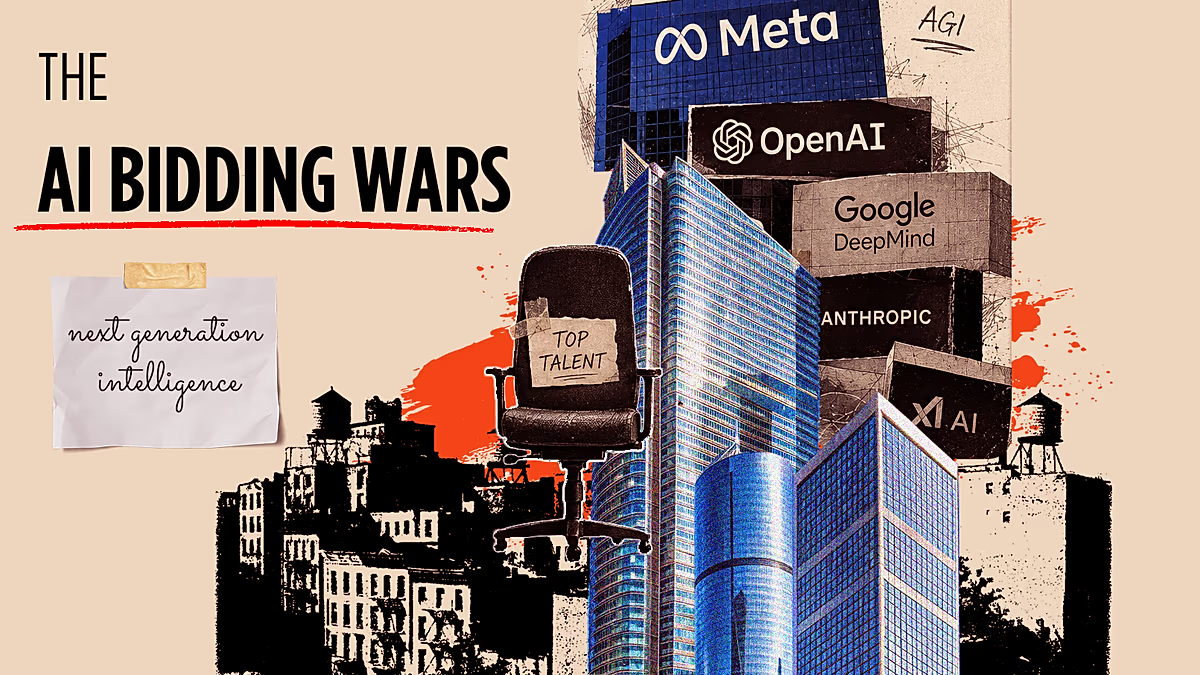
On the front cover of their initial business plan for DeepMind, the AI lab they set up in 2010, Sir Demis Hassabis, Mustafa Suleyman and Shane Legg wrote a single sentence: Build the world’s first artificial general intelligence.
Their view, which remains true today, is that traditional AI technologies were too “narrow”, able to perform brilliantly, but only after humans had laboriously trained them using vast data sets. That made AI excellent at tasks such as analysing spreadsheets or even playing chess. But, artificial “general” intelligence, known as AGI, had the potential to go even further.
Fifteen years on, technology CEOs are united in the belief that AGI is the next big breakthrough and are waxing lyrical about its potential.
Among them is OpenAI chief executive Sam Altman, who has written that AGI could “help us elevate humanity by increasing abundance, turbocharging the global economy, and aiding in the discovery of new scientific knowledge that changes the limits of possibility”.
Hassabis, whose company DeepMind merged with Google to become one of the world’s most influential AI labs, has said that AGI has the potential to solve global problems such as curing diseases, and help people lead healthier, longer lives, or find new sources of energy.