https://arab.news/rwpba
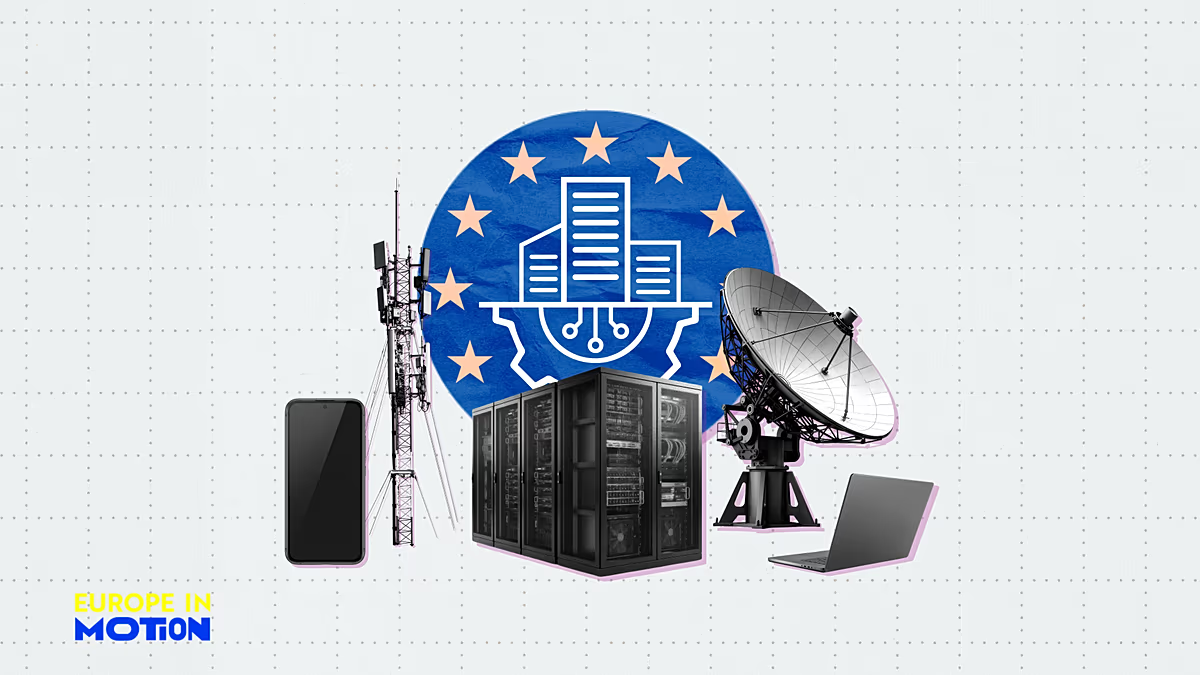
Over the past few decades, the EU has been relegated from global technology player to passive consumer of technologies developed elsewhere. Today, 80 percent of the technologies and services Europe needs for its digital transformation are designed and manufactured beyond its borders, mostly in the US and China. So deep is this consumer mindset that it has even shaped the philosophy behind its laws: the goal of recent tech regulations like the Digital Services Act and the Digital Markets Act was to protect Europeans as consumers by keeping them safe online and ensuring fair competition.
To their credit, these laws offer strong protections for EU citizens and they have even served as blueprints for competition policy and online safety worldwide. Regulatory excellence has become Europe’s trademark. But without a complementary innovation policy — and an assessment of whether the bloc’s current rules promote or impede it — the EU risks becoming a mere spectator in the global tech race, particularly in the artificial intelligence domain.
Despite the deals announced during the AI Action Summit in Paris earlier this year, overall foreign direct investment into Europe fell to its lowest level in nine years in 2024, with France and Germany experiencing double-digit declines. And this decline is accompanied by other worrying figures: the EU’s share of the global information and communications technology market fell from 21.8 percent in 2013 to 11.3 percent in 2022.