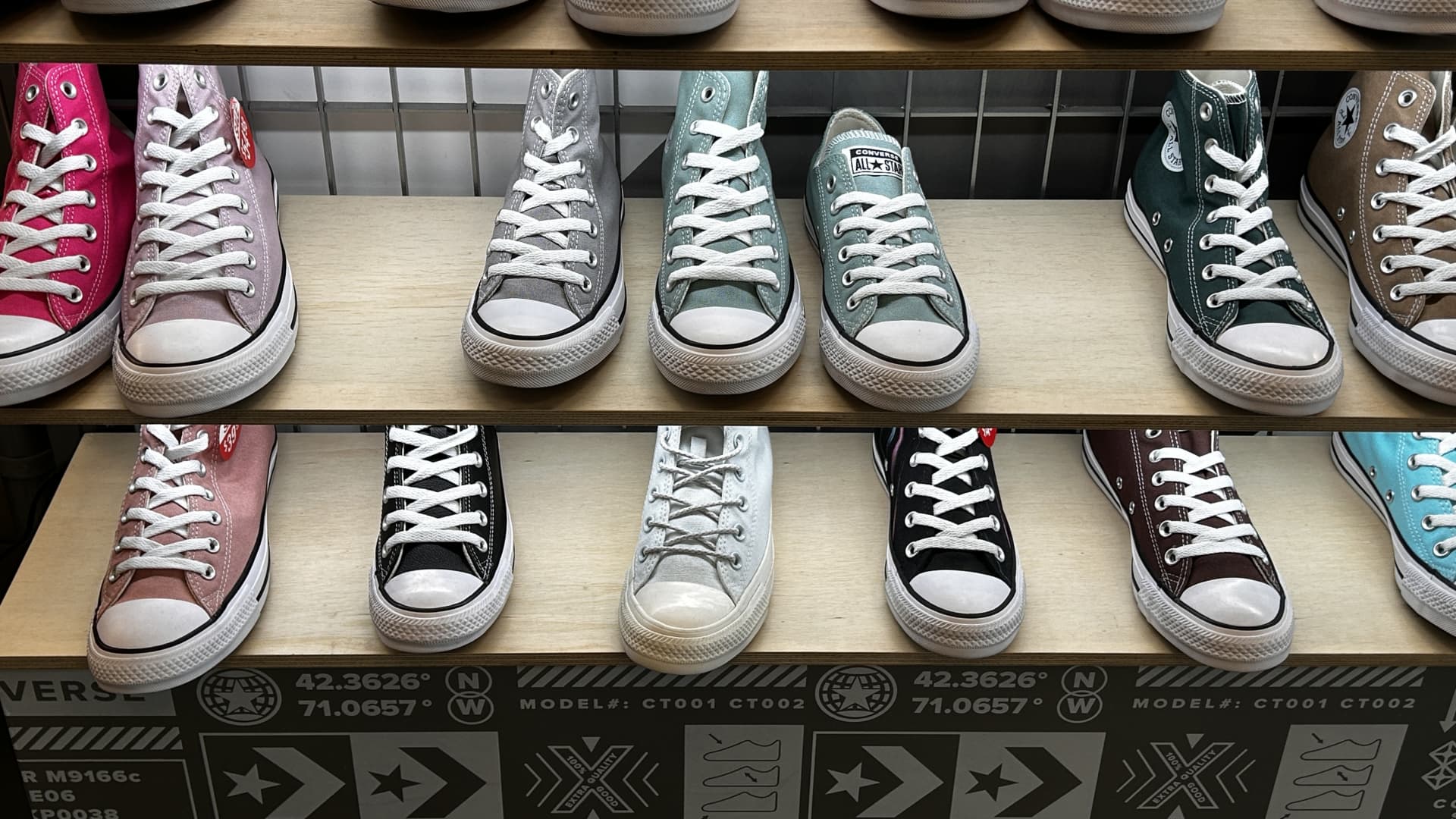
Would you be bothered if your coat was officially classified as a windbreaker or a raincoat, or your shoes as slippers? Businesses do care though, as classifications under a preferred category can help them pay lower tariff rates.
As U.S. President Donald Trump imposes duties on friends and foes alike, manufacturers are increasingly rethinking the classification of their products and resorting to “tariff engineering” to incur lower duties, several customs lawyers, supply chain and shipping experts told CNBC.
Tariff engineering — a practice that precedes Trump — involves changing an item’s materials, altering its dimensions or compositions so that the finished products can be justified to fit in a different “harmonized system code,” legal experts said.
Although most new tariffs added during Trump’s second term are broad-based, the U.S. government has carved out exemptions for certain products, leaving doors open for companies to benefit through tariff engineering, trade lawyers pointed out.
After Trump unveiled sweeping “reciprocal” tariffs in April, several overseas manufacturers moved to bundle steel and aluminum elements into their final products to qualify a lower 25% duty under Section 232, said David Forgue, a partner at Chicago law firm Barnes, Richardson & Colburn.