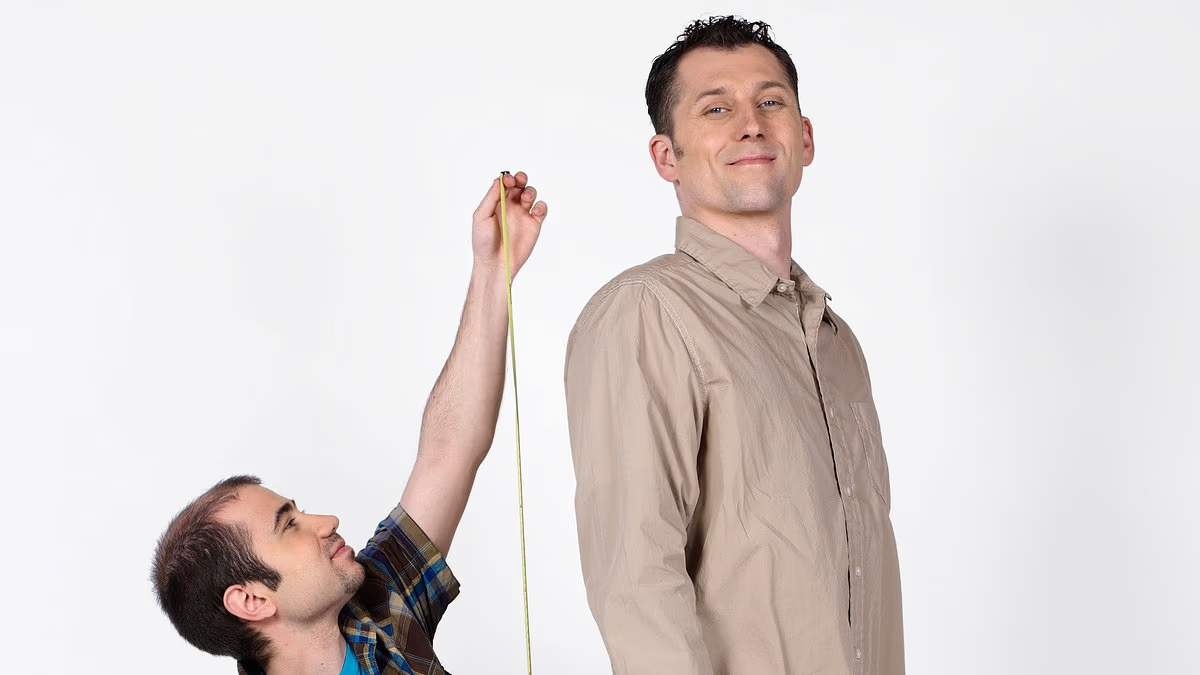
Tinder is trialling a height filter, following in the footsteps of some other popular apps. What is behind the ‘6ft fixation’ in dating – and could it be scuppering the chance of true connection?
H
eight is often seen as a dealbreaker when it comes to romance, particularly within heterosexual relationships. But when Tinder recently said that it was trialling a feature that allows some premium users to filter potential matches by height, it quickly proved controversial. “Oh God. They added a height filter,” lamented one Reddit thread, while an X user claimed: “It’s over for short men.”
“I’ve experimented with not putting my height on my dating profile, or lying about it just to see, and the number of likes I get shoots up massively,” says Stuart, who is in his 50s and from the Midlands. “I know I get screened out by the majority of women from the off.” At 5ft 7in (170cm), Stuart is just two inches below the UK and US male average height of 5ft 9in, but a height filter would probably prevent him from receiving as many matches.
Since height is such a sticking point, it’s no surprise that some apps, including Bumble and Hinge, already allow users to filter by this metric. A recent YouGov poll found that most Britons think being able to filter by height is acceptable; it was least popular with under-30s, of whom 36% were not in favour of height filters, compared with 26% of the wider public. (A common counter-argument is that, if users can filter by height, they should also be able to filter by weight – something that the same survey found 51% of men supported, compared with 36% of women.)